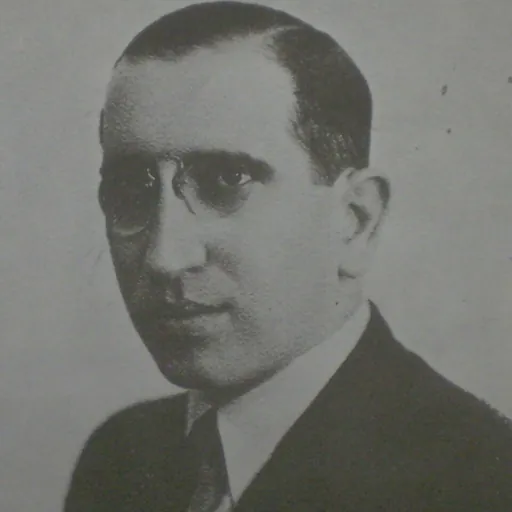
About Ángel Borlenghi
Lived 1904 – 1962 (aged 58). Ángel Borlenghi was an Argentine politician and trade unionist.
Ángel Borlenghi (February 1, 1904 – August 6, 1962) was an Argentine labour leader and politician closely associated with the Peronist movement.
Life and times
Early life and the labor movement Ángel Gabriel Borlenghi was born in Buenos Aires to Italian immigrants, in 1904. Becoming a retail clerk by profession, Borlenghi's socialist ideology soon led him to join the Commercial Employees' Federation (FEC). His position in the union rose after his fellow socialists advanced the 1926 formation of the Argentine Workers' Confederation (COA), and Borlenghi was named Secretary General of the FEC when the COA fused with another, leftist union (the Union of Argentine Syndicates, or USA) to become the CGT (still the nation's preeminent labor union), in 1930.
Borlengh was named director of the Interunion Committee, and thus given the twin responsibilities of coordinating policy among the myriad unions in the CGT, as well as resolving conflict as it appeared. The CGT presented its first platform in 1931, drafting a program calling for a guaranteed freedom to organize, greater pay and benefits, and a formal say in public policy, among other reforms. Sparing use of strike actions and intense lobbying, particularly on Borlenghi's part as the Interunion Committee head, resulted in Congressional passage of the landmark Law 11729 (formalizing labor contracts in the service sector), in 1936.
A new alliance The decision did not permanently divide the labor movement, however, because one of the coup's leaders, Lt. Col. Domingo Mercante, was tied through family connections to the railway workers' union. Its leader, José Domenech, was also the Secretary General of the CGT-1. The Railway Union's chief counsel, Juan Atilio Bramuglia, seized this opening to create a close alliance with the government, and was joined in these talks by Borlenghi and Pérez Leirós (whose banned CGT-2 was larger). The negotiations were soon joined by the Secretary of Labor and personal friend of Mercante's: Col. Juan Perón.
Union representatives found in Perón a sympathetic and charismatic voice through whom they could be a strong influence in government policy. Only around 10 percent of Argentina's labor force was unionized at the time, and many union leaders saw a unique opportunity in Perón, who obtained their support for his request to the president that the Labor Secretariat by made into a cabinet-level ministry. Others supported the idea of backing Perón in a Labor Party ticket, outright. Borlenghi was initially opposed to such a mutually-binding endorsement, though by 1945, the Labor Minister's record had won him over, as well as much of the now-reunified CGT. Through his control of the nation's largest police department, the 25,000-man "Policía Federal," Borlenghi had numerous opposition figures jailed. Some of the most intransigent were taken to a basement in the newly expanded Ramos Mejía Hospital (one of Buenos Aires' largest), where torture became routine.
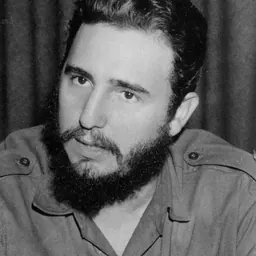
The president's confidence in Borlenghi was buttressed by the creation of the Federal Security Council in 1951, which included transferring the National Gendarmery and the Naval Prefecture (akin to the Coast Guard) from military control. Faced with such measures, some among the opposition began making conciliatory overtures to the powerful Interior Minister; a June 1953 meeting with a delegation from the conservative Democratic Party, for instance, led to the release of former Finance Minister Federico Pinedo and others in their leadership. Others soon followed, though the Peronists' main opposition, the centrist UCR, refused this approach, leading Borlenghi to publicly blame them for the continuation of the state of siege declared in April. Borlenghi never abandoned the idea of Perón's return to power, and in early 1961, he held informal discussions with Che Guevara on the possibility of an alliance between Fidel Castro's new regime and the Peronist movement. Borlenghi died suddenly in Italy in 1962, at age 58.
Don’t just read it —
keep it.
Full-length biographies made to live with: read them, listen on the way to work, watch them tonight.
- E-book
- Audio
- Video
Instant download · yours to keep · every purchase keeps this site free
Important facts
People in Ángel Borlenghi's life
Named in this biography and alive at the same time



Related people
Same field, nearest in time





Contemporaries
People whose lives overlapped Ángel Borlenghi's

Frequently asked questions
Who was Ángel Borlenghi?
Argentine politician
When was Ángel Borlenghi born?
Ángel Borlenghi was born on 1 February 1904 in Buenos Aires.
When did Ángel Borlenghi die?
Ángel Borlenghi died on 6 August 1962 in Rome.
What was Ángel Borlenghi's occupation?
Ángel Borlenghi was a politician and trade unionist.
What nationality was Ángel Borlenghi?
Ángel Borlenghi was Argentine.
Sources & further reading
Cite this page
APA: Biography.guide. (2026). Ángel Borlenghi. https://biography.guide/angel-borlenghi/
MLA: "Ángel Borlenghi." Biography.guide, https://biography.guide/angel-borlenghi/.
Chicago: "Ángel Borlenghi." Biography.guide. https://biography.guide/angel-borlenghi/.
Data last updated: 2026-09-22 · Spot an error? Report a correction.
Portrait: Wikimedia Commons · author & licence
Page generated 2026-09-27 05:04 UTC