
About Andrija Hebrang
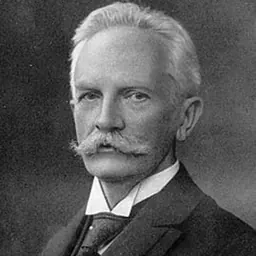
Lived 1899 – 1949 (aged 49). Andrija Hebrang was a Yugoslav politician, political commissar and revolutionary.
Andrija Hebrang (22 October 1899 – 11 June 1949 ) was a Croatian and Yugoslav communist revolutionary and politician. A member of the Communist Party of Yugoslavia until his dismissal, he served as the 4th Secretary of the Central Committee of the Communist Party of Croatia.
Early life Andrija Hebrang was born in the village of Bačevac near Gradina to Andrija Hebrang Sr. and Cela Strasser, a mixed Croatian-Jewish mercantile family. In World War I, he was stationed in Osijek, Zagreb, and finally the battlefields in Gorizia, Italy where he stayed until the end of the war. Not long afterward, in 1919, he joined the Communist Party of Yugoslavia and became heavily involved in socialist political causes.
Political involvement He became a member of the Socialist Workers' Party of Yugoslavia (communists) in 1919 in Osijek, distinguished himself and was a member of the Local Committee of the CPY for Zagreb. In 1920, the Yugoslav government banned Obzan from the Communist Party. However, the unresolved Croatian issue was far more dangerous for the government than the communist activity. At the beginning of 1923, the communists illegally founded the Independent Workers' Party of Yugoslavia. In the same year, Hebrang settled in Zagreb. He was first arrested for street demonstrations in March 1924, after which he spent several days in prison. In the 1925 elections, the Independent Workers' Party won only 1.1% of the vote and was left without a seat in the National Assembly. The following year, Hebrang joined the Board of Directors of a branch of the Union of Private Employees as treasurer, and before their congress in October 1927 he was expelled from the union and administration. In 1928, Pantovčak was presided over by VIII. conference of the Zagreb Communists where, together with Tito, he opposed factional struggles within the Party. The victory of their anti-factional current, with the support of Antun Mavrak, secretary of the CPY Provincial Committee for Croatia and Slavonia, enabled the consolidation of party ranks.
Hebrang was appointed an envoy of the Zagreb Local Committee at the April session of the Comintern in Moscow, but was arrested on April 13, 1928, while crossing the border. He was detained for three months for "wandering and communism," but was soon released for lack of evidence. He was expelled to Bačevac, but returned illegally to Zagreb, where, after the murder of Pavle Radić and Đuro Basaričko, the wounding of Ivan Pernar and Ivan Granđa, and the fatal wounding of Stjepan Radić in the National Assembly on June 20, 1928, the work of the Party intensified. Following the assassinations, the ensuing protests intensified police persecution of opponents of the regime, especially HSS members and communists.
Imprisonment (1928–1941) In Zagreb, meanwhile, the management of the Workers' Cultural Society, of which Hebrang was a member, was arrested and served a month in prison. At the same time, he was expelled to Bačevac for five years, but as soon as the circumstances allowed, he returned illegally to Zagreb. Hebrang was arrested again on September 7, 1928, together with Mihail Vraneš, in Zagreb, in front of the house in Gundulićeva Street, where the secret Party archives were located. Because he was arrested with compromising letters and documents, he was taken to remand prison. At that time, communism, under the State Protection Act, was characterized as a coup d'état, which made it impossible to punish Hebrang more leniently. At the trial in Belgrade, he did not admit his affiliation with the Communist Party, but declared himself a communist by conviction. As his communist activity was indisputably proven, the State Court for the Protection of the State sentenced him, on November 13, 1928, to 12 years in prison. He was sent to serve his sentence in Lepoglava, but at the end of 1933, together with other political prisoners, communists, he was transferred to Srijemska Mitrovica, because after the strike in Lepoglava the penitentiary administration decided to gather political prisoners in one place.
In March 1941, shortly after his release from prison, he became a member of the Central Committee of the Communist Party of Croatia. He traveled to Bihać to attend the Anti-fascist Council of the National Liberation of Yugoslavia (AVNOJ). He also helped form the State Antifascist Council of the National Liberation of Croatia (ZAVNOH) and served as the vice-president.
The following day Broz also sent a telegram to Edvard Kardelj: Urgently travel to Croatia. They're creating some unbelievable idiocy. First, ZAVNOH adopted a resolution according to which religious education is a mandatory subject in schools. Second, they've founded some telegraph agency - TAH. This all demonstrates that separatist tendencies are fairly strong and this is true of our comrades. With this there is no kidding, for we will have to undertake the sharpest measures. For all this I blame Andrija. Make inquiries and if Andrija is not of this opinion, we will have to immediately remove him from the post of secretary of the CC [Central Committee].
Later years and death Around the beginning of the Tito–Stalin Split in 1948, Hebrang was suspected of being Stalin's prime candidate for replacing Tito.
Afterwards
Not long after Hebrang's arrest, his wife Olga was sentenced to twelve years in prison, and his children were sent to live with his sister, Ilona, in Zagreb. His family changed their surname as the government blacklisted anyone with the surname Hebrang. In 1992, the government of the Republic of Croatia rehabilitated Hebrang as a "victim of communism". His sons Andrija and Branko were active in the efforts to rehabilitate their father and return his remains.
Legacy A street in central Zagreb, Ulica Andrije Hebranga, is named for Hebrang.
Don’t just read it —
keep it.
Full-length biographies made to live with: read them, listen on the way to work, watch them tonight.
- E-book
- Audio
- Video
Instant download · yours to keep · every purchase keeps this site free
Important facts
Family & relationships
People in Andrija Hebrang's life
Named in this biography and alive at the same time
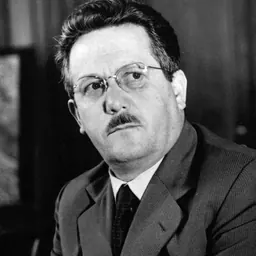
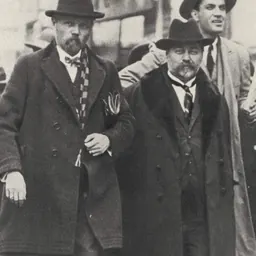



Related people
Same field, nearest in time





Contemporaries
People whose lives overlapped Andrija Hebrang's
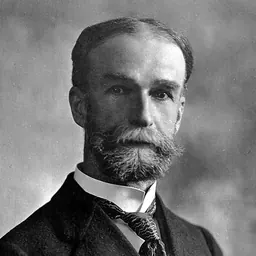
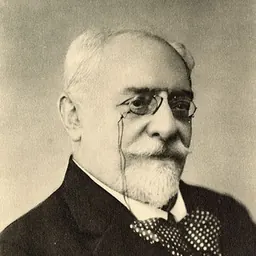

Frequently asked questions
Who was Andrija Hebrang?
Yugoslav politician (1899-1949)
When was Andrija Hebrang born?
Andrija Hebrang was born on 21 October 1899 in Virovitica.
When did Andrija Hebrang die?
Andrija Hebrang died on 11 June 1949 in Belgrade.
What was Andrija Hebrang's occupation?
Andrija Hebrang was a politician, political commissar and revolutionary.
What nationality was Andrija Hebrang?
Andrija Hebrang was Yugoslav.
Sources & further reading
· DBpedia: Andrija Hebrang (politician, born 1899)
Cite this page
APA: Biography.guide. (2026). Andrija Hebrang. https://biography.guide/andrija-hebrang/
MLA: "Andrija Hebrang." Biography.guide, https://biography.guide/andrija-hebrang/.
Chicago: "Andrija Hebrang." Biography.guide. https://biography.guide/andrija-hebrang/.
Data last updated: 2026-09-20 · Spot an error? Report a correction.
Page generated 2026-09-27 05:24 UTC