
About Andrew Hamilton
Lived 1676 – 1741 (aged 64–65). Andrew Hamilton was an American lawyer, politician and architect.
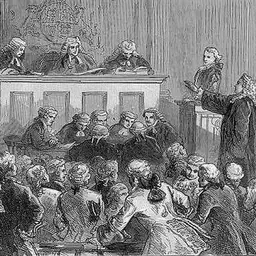
Andrew Hamilton (1676 – August 4, 1741) was a Scottish lawyer in the Thirteen Colonies who settled in Philadelphia. He was best known for his legal victory on behalf of the printer and newspaper publisher John Peter Zenger. His involvement with the 1735 decision in New York helped to establish that truth is a defense to an accusation of libel. His eloquent defense concluded with saying that the press has "a liberty both of exposing and opposing tyrannical power by speaking and writing truth."
His success in this case has been said to have inspired the term "Philadelphia lawyer", meaning a particularly adept and clever attorney, as in "It would take a Philadelphia lawyer to get him off." His estate in Philadelphia, known as Bush Hill, was inherited by his son, William Hamilton, who leased it for use as the vice-president's house during the years that the city was the temporary capital of the United States.
Early life Hamilton was believed to be born in the Kingdom of Scotland in approximately 1676. Hamilton did not talk about his parentage, career, or name in the Old World. At one time he was called Trent, although he returned to his name of Andrew when Queen Anne came to the throne in 1702.
Career About 1697, Hamilton immigrated to Accomac County, Virginia in British America, where he continued his study of law and taught a classical school. He later found employment as steward of a plantation owned by Joseph Preeson, one of his former students. After Preeson's death in 1705, Hamilton continued working the Preeson estate.
On March 6, 1706, The marriage is said to have brought Hamilton influential connections, and he began to practice law.
Two years after his marriage, on March 26, 1708, Hamilton purchased from John Toads a 600-acre estate, known as "Henberry", on the north side of the Chester River in Kent County, Maryland. Millington, Maryland was later developed on Henberry's land. Hamilton also maintained a residence in Virginia, and drew clients from both colonial states.
At some point during 1715, Hamilton moved to Philadelphia. He and his family occupied Clark Hall, owned by William Clark Jr. and Rebecca Clark, and managed by their relative Clement Plumsted. It was located at the corner of Third and Chestnut Streets.
Hamilton feared that the advocate, who had subsequently been appointed by the court, might be overawed by the bench, at the head of which was Chief Justice De Lancey, a member of the governor's council. He voluntarily went to New York and appeared in the case on Zenger's behalf. He admitted that Zenger had printed and published the article but advanced the doctrine, novel at the time, that the truth of the facts in the alleged libel could be set up as a defense. He said that in this proceeding, the jury were judges of both the law and the facts.
The offer of evidence to prove the truth of Zenger's statements was rejected, but Hamilton appealed to the jury to find or acknowledge from the evidence of their daily lives that the contents of the defendant's article were true. He argued that the definition of criminal libel, which didn't require the accusations to be false, came from the hated Star Chamber. His eloquence secured a verdict of "not guilty". His fame spread to England, an account of the trial passing through four editions there within three months.
From 1736 to his death in 1741, Hamilton was the mentor of young Benjamin Chew, who later became Attorney General and Chief Justice of Pennsylvania. Hamilton, in company with his son-in-law, William Allen, purchased the ground now known as Independence Square, whereon to erect "a suitable building" to be used as a legislative hall. Prior to 1729, the assembly met in a private residence. The statehouse was not completed until after Hamilton's death, and the conveyance of the land to the province was made by his son and son-in-law. The community was located on a 500-acre (2 km2) tract owned by Hamilton, on which he laid out Lancaster Townstead around 1730. By 1734, James, now proprietor of Lancaster town, won a seat in the Assembly and became the political leader of the county. In 1742 James Hamilton secured the original charter of government, which gave the settlement the status of borough (this charter can be found today in the city clerk's office).
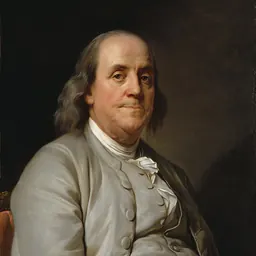
Later life Hamilton's wife Anne is believed to have died around the year 1736. On August 6, two days after Hamilton's death, Benjamin Franklin published in his Pennsylvania Gazette an editorial of appreciation for the attorney and politician.
On February 16, 1734, Margaret Hamilton married William Allen, a mayor of Philadelphia who founded Allentown, Pennsylvania. William and Margaret had six children together. Andrew Hamilton had a close working relationship with his son-in-law. They both worked in the Philadelphia and Pennsylvania governments. Along with James Hamilton, they acquired the land for the state house, now Independence Hall, and its surrounding yard.
Don’t just read it —
keep it.
Full-length biographies made to live with: read them, listen on the way to work, watch them tonight.
- E-book
- Audio
- Video
Instant download · yours to keep · every purchase keeps this site free
Important facts
People in Andrew Hamilton's life
Named in this biography and alive at the same time



Related people
Same field, nearest in time

Contemporaries
People whose lives overlapped Andrew Hamilton's


Frequently asked questions
Who was Andrew Hamilton?
American lawyer (1676–1741)
When was Andrew Hamilton born?
Andrew Hamilton was born in 1676 in Scotland.
When did Andrew Hamilton die?
Andrew Hamilton died on 4 August 1741 in Philadelphia.
What was Andrew Hamilton's occupation?
Andrew Hamilton was a lawyer, politician and architect.
What nationality was Andrew Hamilton?
Andrew Hamilton was American.
Sources & further reading
· DBpedia: Andrew Hamilton (lawyer)
Cite this page
APA: Biography.guide. (2026). Andrew Hamilton. https://biography.guide/andrew-hamilton-lawyer/
MLA: "Andrew Hamilton." Biography.guide, https://biography.guide/andrew-hamilton-lawyer/.
Chicago: "Andrew Hamilton." Biography.guide. https://biography.guide/andrew-hamilton-lawyer/.
Data last updated: 2026-09-20 · Spot an error? Report a correction.
Page generated 2026-09-27 05:25 UTC