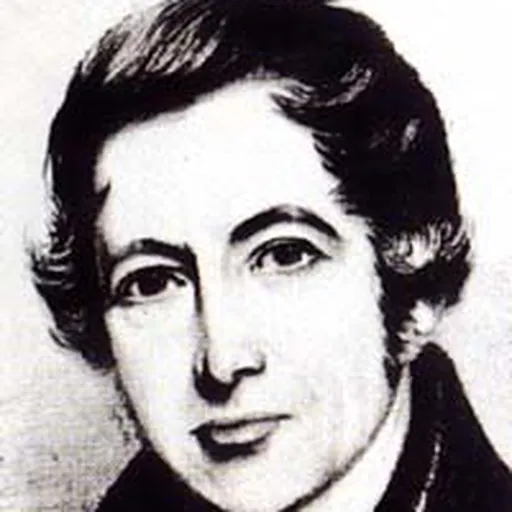
About Andrew Crosse
Lived 1784 – 1855 (aged 70). Andrew Crosse was a British physicist, known for Electrolysis.
Andrew Crosse (17 June 1784 – 6 July 1855) was a British scientist who was born and died at Fyne Court, Broomfield, Somerset.
Around the age of 12, Crosse persuaded one of his teachers to let him attend a series of lectures on the natural sciences, the second of which was on the subject of electricity. This was the cause of his lifelong interest in the subject. Although it was not the largest he built, Henry Minchin Noad's Manual of Electricity describes a battery consisting of 50 jars containing of coated surface. Using his wires Crosse was able to charge and discharge it some 20 times a minute, "accompanied by reports almost as loud as those of a cannon".
In 1836, Crosse was persuaded to attend a meeting of the British Association for the Advancement of Science in Bristol. After describing his discoveries over dinner at the house of a friend in Bristol, he was further persuaded to recount them to both the chemical and the geological sections of the meeting. They included his electrocrystallization and atmospheric experiments, and his improvements to the voltaic battery. although he did not do research in these areas himself.
Controversy
A few months after the meeting of the British Association for the Advancement of Science Crosse was conducting another electrocrystallization experiment when, on the 26th day of the experiment, he saw what he described as "the perfect insect, standing erect on a few bristles which formed its tail". More creatures appeared and two days later they began moving their legs. Over the next few weeks hundreds more appeared. They crawled around the table and hid themselves wherever they could find shelter. Crosse identified them as being members of the genus Acarus.
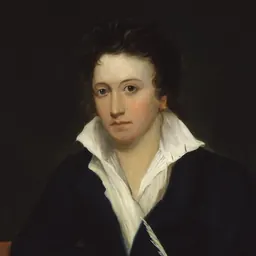
Puzzled, Crosse mentioned the incident to a couple of friends. but this cannot have been the case, since Crosse's experiments took place almost 20 years after the novel was first published. The idea appears to have originated in the book The Man Who Was Frankenstein (1979) by Peter Haining. Mary Shelley did, however, know Crosse through a mutual friend, the poet Robert Southey. Percy Bysshe Shelley and Mary Shelley reportedly attended a lecture by Crosse in London in December 1814, in which he allegedly explained his experiments with atmospheric electricity. However, Mary Shelley's diary speaks only of "Garnerin" as the lecturer. Similarly dubious is a claim that Edward W. Cox wrote a report of their visits to Fyne Court to see Crosse's work in the Taunton Courier in Autumn 1836. Percy had been dead for over a dozen years by then.
Other interests Crosse also wrote a great many poems and enjoyed walking on the Quantock Hills, in which Fyne Court is set, "at all hours of day and night, in all seasons".
Crosse advocated the benefits of education for the lower classes, argued against emigration, and supported a campaign by local farmers against falling food prices and high taxes during the 1820s. He was also active in party politics, speaking in support of friends at election meetings.
Personal life Crosse married Mary Anne Hamilton in 1809. They had seven children, although three died in childhood. Mary died in 1846 following several years of ill health.
On 22 July 1850 Crosse married again, aged 66. His second wife was the 23-year-old Cornelia Augusta Hewett Berkeley. They went on to have three children.
Crosse's home, Fyne Court, was largely destroyed by fire in 1894.
Don’t just read it —
keep it.
Full-length biographies made to live with: read them, listen on the way to work, watch them tonight.
- E-book
- Audio
- Video
Instant download · yours to keep · every purchase keeps this site free
Important facts
People in Andrew Crosse's life
Named in this biography and alive at the same time
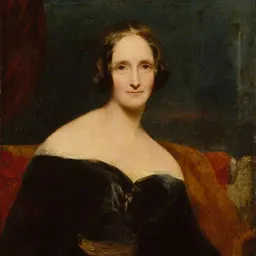
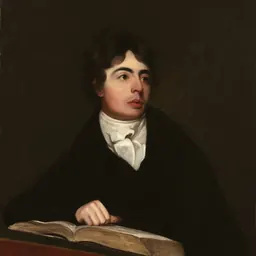

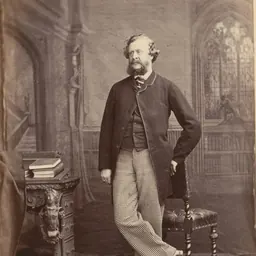
Related people
Same field, nearest in time



Contemporaries
People whose lives overlapped Andrew Crosse's



Frequently asked questions
Who was Andrew Crosse?
British amateur scientist (1784–1855)
When was Andrew Crosse born?
Andrew Crosse was born on 17 July 1784 in Somerset.
When did Andrew Crosse die?
Andrew Crosse died on 6 July 1855 in Fyne Court.
What was Andrew Crosse's occupation?
Andrew Crosse was a physicist.
What was Andrew Crosse known for?
Andrew Crosse was known for Electrolysis.
What nationality was Andrew Crosse?
Andrew Crosse was British.
Sources & further reading
Cite this page
APA: Biography.guide. (2026). Andrew Crosse. https://biography.guide/andrew-crosse/
MLA: "Andrew Crosse." Biography.guide, https://biography.guide/andrew-crosse/.
Chicago: "Andrew Crosse." Biography.guide. https://biography.guide/andrew-crosse/.
Data last updated: 2026-09-22 · Spot an error? Report a correction.
Portrait: Wikimedia Commons · author & licence
Page generated 2026-09-27 04:59 UTC