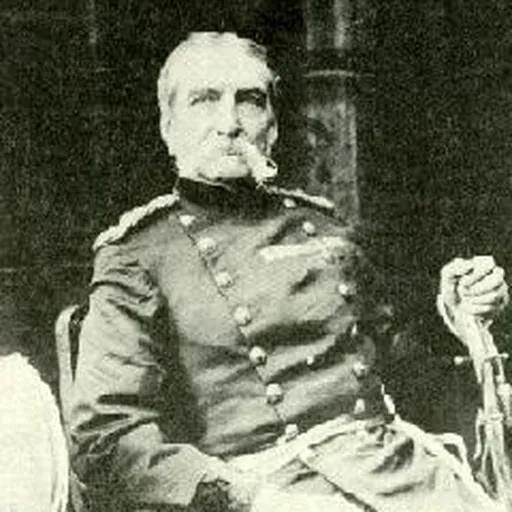
Andrew Clarke
British Army officer, Governor of the Straits Settlements 1873–1875, and surveyor and politician in Australia
About Andrew Clarke
Lived 1824 – 1902 (aged 77). Andrew Clarke was a British engineer.
Background and education Born in Southsea, Hampshire, Clarke was the eldest of the four sons of Lieutenant-Colonel Andrew Clarke, the governor of Western Australia (1793–1847). Clarke's early years were spent in India with his parents. He was later brought up by his paternal grandfather and two uncles, one of whom was the father of Marcus Clarke, at the family home of Belmont, near Lifford, Ireland. He was educated at The King's School, Canterbury, and at Portora Royal School at Enniskillen, Ireland. At 16 he entered the Royal Military Academy, Woolwich, where one of his teachers was Michael Faraday. He and his detachment worked mainly on road building, and Clarke discovered his gift for dealing with native peoples when he was sent on a peace-making mission to the Bay of Islands.
In 1849 Clarke returned to Hobart to become private secretary to William Denison, Governor of Tasmania and New South Wales, and was also an official nominee in the Tasmanian Legislative Council in 1851–53 and controller of the mounted police.
Clarke entered the Victorian Legislative Council in August 1853 as an official representative, where he was active in the drafting of the new constitution. He was also responsible for the drafting and successful inauguration of the Municipal Institutions Act in December 1854, which provided for local government based on the English model in Melbourne's growing suburbs, on the goldfields, and in the country.
Governor of the Straits Settlements
Sir Andrew Clarke served as the governor of Singapore and the governor of the Straits Settlements from 4 November 1873 until 8 May 1875. Clarke played a key role in positioning Singapore as the main port for the Malay states of Perak, Selangor and Sungei Ujong.
Due to his contributions, Singapore's Clarke Quay was named after him. Clarke Street, located next to Clarke Quay, was officially named in 1896 and was originally two streets known simply as East Street and West Street in north Kampong Malacca. Today it is a pedestrian mall and a popular nightspot.
Pangkor Treaty
As Governor of the Straits Settlements, Clarke was famous for signing the Treaty of Pangkor in 1874, which established a British protectorate over the Malay States. In that same year, Clarke successfully enforced a check on the abuse of coolies with support of the prominent Chinese leaders and European merchants. Clarke achieved fame through his negotiations in regard to Sungei Ujong in Malaya, sorting out the differences between different leaders in Negeri Sembilan.
Clarke was blamed for the death of the first British resident in Perak, James Wheeler Woodford Birch, due to his ignorance of a complaint, when Sultan Abdullah of Perak wrote a letter to inform him about Birch's rudeness against the Malay rulers, because at that time he was about to retire and did not want that problem to destroy his reputation as one of the most successful colonial administrators.
Klang War
Clarke was instrumental in determining the outcome of the Klang War which took place from 1867 to 1874 as well as placing Selangor under British protection.
The Straits Settlements were becoming increasingly dependent on the economy of Selangor. Selangor through the 19th and the 20th was one of the world's major tin producers. Since Selangor's security affected tin trade, the British felt it needed to have a say in Selangor politics. The British saw Tengku Kudin as a ticket to reach out to Selangor's royal court. Therefore, the Straits Settlements led by Clarke implicitly supported Tengku Kudin in the war.
Throughout the war, Tengku Kudin brought in soldiers from Kedah and Pahang along with mercenaries and European officers from the Straits Settlements. The end result was a victory for Tengku Kudin.
While the British through Clarke was on Tengku Kudin's side, the post-war situation had weakened Tengku Kudin's power base due to the Selangor royal family's suspicion of Tengku Kudin and the British. Therefore, Andrew Clarke was forced to freeze the plan to reach out to the royal family through Tengku Kudin.
In November 1873 however, a ship from Penang was attacked by pirates near Kuala Langat, Selangor. After a number of piracy attacks took place in Selangor, Andrew Clarke assigned Frank Swettenham as a live-in advisor to Sultan Abdul Samad in August 1874. Sultan Abdul Samad accepted James Guthrie Davidson, a lawyer from Singapore, as the first British Resident of Selangor in 1875. In October the same year, Sultan Abdul Samad sent a letter to Andrew Clarke requesting for Selangor to be placed under the British protectorate.
Further service
From 1875 to 1880 Clarke was on the council of the Viceroy of India. He was Commandant of the Royal School of Military Engineering at Chatham from 1881 to 1882, and finally was Inspector-General of Fortifications in England from 1882 to 1886.
After Clarke's retirement from the army, he unsuccessfully contested Chatham for the House of Commons of the United Kingdom in 1886 and 1892 as a follower of William Ewart Gladstone and Home Rule. Clarke retained an interest in the Australian colonies, and briefly acted as Agent-General for Victoria in 1886, 1891, and 1893, before being appointed agent-general in 1899, which post he held until his death.
Clarke also served as a director of Palmers Shipbuilding and Iron Company, the Colonial Life Assurance Society, the Delhi-Umbala Railway Co. and the British North Borneo Company.
In December 1901 he was appointed Colonel Commandant of the Royal Engineers.
Death
Clarke died at his house in Portland Place, London, on 29 March 1902. He was predeceased by his wife, Mary Margaret MacKillop, whom he had married on 17 September 1867, and he was survived by their only child, Elinor Mary de Winton.
Don’t just read it —
keep it.
Full-length biographies made to live with: read them, listen on the way to work, watch them tonight.
- E-book
- Audio
- Video
Instant download · yours to keep · every purchase keeps this site free
Important facts
People in Andrew Clarke's life
Named in this biography and alive at the same time



Related people
Same field, nearest in time

Contemporaries
People whose lives overlapped Andrew Clarke's



Frequently asked questions
Who was Andrew Clarke?
British Army officer, Governor of the Straits Settlements 1873–1875, and surveyor and politician in Australia (1824–1902)
When was Andrew Clarke born?
Andrew Clarke was born on 27 July 1824 in Southsea.
When did Andrew Clarke die?
Andrew Clarke died on 29 March 1902 in Bath.
What was Andrew Clarke's occupation?
Andrew Clarke was an engineer.
What nationality was Andrew Clarke?
Andrew Clarke was British.
Sources & further reading
· DBpedia: Andrew Clarke (British Army officer, born 1824)
Cite this page
APA: Biography.guide. (2026). Andrew Clarke. https://biography.guide/andrew-clarke-engineer/
MLA: "Andrew Clarke." Biography.guide, https://biography.guide/andrew-clarke-engineer/.
Chicago: "Andrew Clarke." Biography.guide. https://biography.guide/andrew-clarke-engineer/.
Data last updated: 2026-09-23 · Spot an error? Report a correction.
Portrait: Wikimedia Commons · author & licence
Page generated 2026-09-27 05:07 UTC