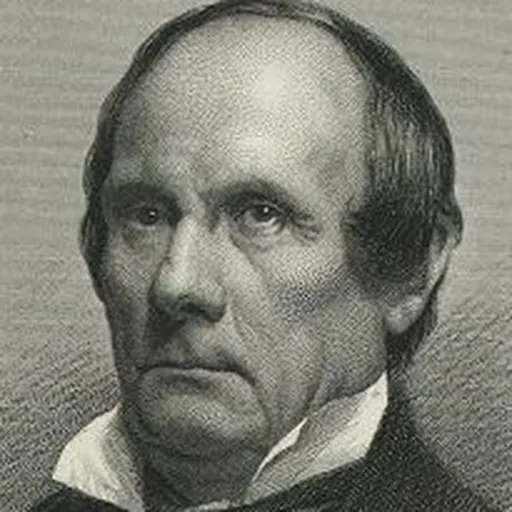
About James Guthrie
Lived 1792 – 1869 (aged 76). James Guthrie was an American politician and lawyer.
Career Admitted to the Kentucky bar in 1817, Guthrie began his private legal practice in Bardstown.
In 1820, Governor John Adair appointed Guthrie as Commonwealth's Attorney for Jefferson County, Kentucky, whereupon Guthrie relocated to what was then the town of Louisville. The effort failed, but Guthrie was elected to the town's board of trustees, and later became its chair.
Kentucky politician Jefferson County voters elected Guthrie, who ran as a Democrat, to the Kentucky House of Representatives in 1827. In his first year, he chaired the Internal Improvements Committee. In this capacity, he promoted construction of a number of roads and canals, as well as a railroad connecting Louisville to Frankfort. He served on the Finance and Education Committees.
In 1836, a dispute arose among the medical faculty at Transylvania University. Guthrie encouraged some of the disgruntled faculty members to relocate to Louisville and start the Louisville Medical Institute, a precursor to the University of Louisville. In 1843, Guthrie became the third president of Louisville Medical Institute. In 1846, the Kentucky General Assembly chartered the University of Louisville, which subsumed the Louisville Medical Institute. Guthrie became president of the university on December 7, 1847, and served until his death. In 1845, he was a delegate to a convention on internal improvements held in Memphis, Tennessee, and chaired by John C. Calhoun.
Guthrie represented Louisville at the Kentucky Constitutional Convention of 1849. The major question the convention addressed was slavery. Guthrie owned enslaved persons, and believed that, if freed, the slaves would become vicious and ungovernable. Instead, Guthrie advocated adoption of a universal currency that would be convertible to gold on demand. He encouraged more efficient processes in the Treasury Department as a whole, and required monthly, rather than quarterly, reports from customs agents. He continued as the railroad's president through the Civil War, and after he became incapacitated in 1868 advocated the board's electing former Union General William Tecumseh Sherman as his successor, although the board selected Russell Houston in 1869.
Meanwhile, Kentucky, delegates to the 1860 Democratic National Convention in Charleston, South Carolina, favored Guthrie for the office of President. On the first of many ballots, Guthrie received 35.5 votes; by the thirty-ninth, he was up to 66.5, but still trailed the leading vote-getter Stephen Douglas, by 85 votes. He received 5.5 on the second ballot, which finally saw Douglas attain the necessary majority. On this topic, he stated "I hate that word secession, because it is a cheat! Call things by their right names! The Southern States have... originated a revolution."
At age 70, Guthrie was elected as one of Kentucky's six delegates to the Peace Conference of 1861 in Washington, D.C., to devise means to prevent the impending Civil War. Guthrie supported President Andrew Johnson, opposed the Freedmen's Bureau and the passage of the Fourteenth Amendment. On June 11, 1868, he resigned as president of the Louisville and Nashville Railroad, recommending General William Tecumseh Sherman to be his successor.
The United States Revenue Cutter Service, a branch of the Treasury, named small patrol vessels after Guthrie, in 1868, 1888 and 1895.
Don’t just read it —
keep it.
Full-length biographies made to live with: read them, listen on the way to work, watch them tonight.
- E-book
- Audio
- Video
Instant download · yours to keep · every purchase keeps this site free
Important facts
People in James Guthrie's life
Named in this biography and alive at the same time


Related people
Same field, nearest in time



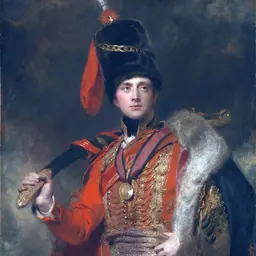

Contemporaries
People whose lives overlapped James Guthrie's
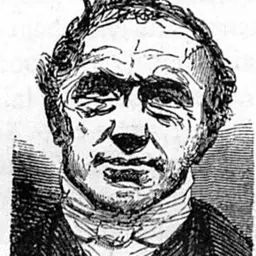
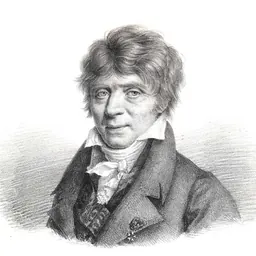


Frequently asked questions
Who was James Guthrie?
American politician and businessman (1792–1869)
When was James Guthrie born?
James Guthrie was born on 5 December 1792 in Nelson County.
When did James Guthrie die?
James Guthrie died on 13 March 1869 in Louisville.
What was James Guthrie's occupation?
James Guthrie was a politician and lawyer.
What nationality was James Guthrie?
James Guthrie was American.
Sources & further reading
· DBpedia: James Guthrie (Kentucky politician)
Cite this page
APA: Biography.guide. (2026). James Guthrie. https://biography.guide/james-guthrie/
MLA: "James Guthrie." Biography.guide, https://biography.guide/james-guthrie/.
Chicago: "James Guthrie." Biography.guide. https://biography.guide/james-guthrie/.
Data last updated: 2026-09-23 · Spot an error? Report a correction.
Portrait: Wikimedia Commons · author & licence
Page generated 2026-09-27 05:06 UTC