
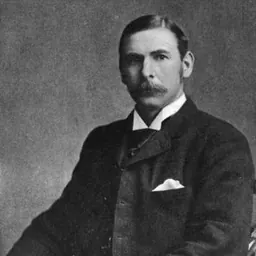
Andrei Bubnov
Russian revolutionary leader
About Andrei Bubnov
Lived 1884 – 1938 (aged 54). Andrei Bubnov was a Russian politician, military personnel and opinion journalist.
Andrei Sergeyevich Bubnov (; – 1 August 1938) was a Russian Bolshevik revolutionary leader, Soviet politician and military leader, member of the Left Opposition, and an important Bolshevik figure in Ukraine.
Life
Early career Bubnov was born in Ivanovo-Voznesensk in Vladimir Governorate (now Ivanovo, Ivanovo Oblast, Russia) into a local Russian merchant's family. He studied at the Moscow Agricultural Institute, where he was involved in revolutionary circles beginning in 1900. He failed to graduate from the institute. In 1903, he joined the Bolshevik wing of the Russian Social Democratic Labour Party (RSDLP). He was arrested in 1908. but Trotsky's recollection was that this group was "completely impractical", since Lenin and Zinoviev were in hiding, and Zinoviev and Kamenev opposed the planned revolution, and "never once assembled." Bubnov's real importance was as a member of the Military Revolutionary Committee. "It was this body rather than the party 'politburo' which made the military preparations for the revolution." Together, they directed the inner-workings of would become known as the October Revolution. His role was to supervise the seizure of the postal and telegraph systems. After the successful execution of the October Revolution, he was appointed Commissar for Railways, before being sent to Rostov-on-Don to organise resistance to the newly formed White Army of General Kaledin. In February 1918, he joined the Left Communists, and moved to Ukraine, to organise partisan detachments in the 'neutral zone' east of the German front line.
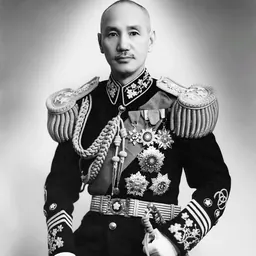
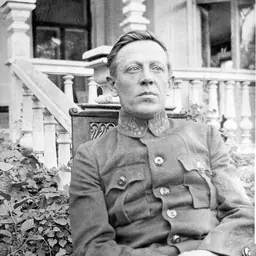
In October 1918, Bubnov moved to Kyiv, which was ruled by Hetman Skoropadskiy, with German backing, and later by the Ukrainian nationalist Symon Petliura. Bubnov acted as the chairman of the clandestine Kyiv soviet, retaining that position after the Red Army had taken Kyiv. He was again removed from the Central Committee and, soon afterwards, he was recalled to Moscow to take charge of the textile industry. At the next party congress, in March 1921, he acted as a spokesman for the "Democratic Centralists", who demanded less centralised control of the communist party, but on hearing of the outbreak of the Kronstadt rebellion, rushed north to take part in suppressing, for which he was awarded the Order of the Red Banner. Following the Canton Coup on 20 March 1926, he worked out an agreement with the new Nationalist leader Chiang Kai-shek. He then worked with Grigori Voitinsky and Fedor Raskolnikov on the "Preliminary Theses on the Situation in China", which was presented to the ECCI in November and December of that year.
Arrest and death In October 1937, during the Great Purge, Bubnov arrived at the Kremlin for a meeting of the Central Committee, but was barred by the guards from entering. Frightened, he went back to the Commissariat for Education, and heard on the radio that evening that he had been removed from his post of People's Commissar. He was arrested by the NKVD a few days later, on 17 October 1937. He was expelled from the Party Central Committee.
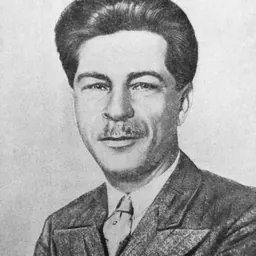
Though the charges were false, Bubnov did confess quite quickly and probably under torture. In fact, he became so co-operative that the NKVD put him in the same cell as Pavel Postyshev, who was refusing to incriminate himself, in the hope that Bubnov would help break his resolve. On 26 July, Bubnov's name was included in a death list of 138 individuals submitted to Stalin, who ordered them all to be shot. After a 20-minute trial on 1 August 1938, he was sentenced to death, and shot the same day.
The modus operandi of the Soviet regime was often to keep secret the fate of particular purged persons: whether they were sent to internal exile to a labor camp, sent to a psychiatric hospital (in which the regime disguised confinement and drugging as compassionate "health care"), or executed. This policy encouraged their families and the general public to believe that they were probably still alive in a camp or hospital somewhere.
Bubnov was posthumously rehabilitated in March 1956 during the de-Stalinization of the Khrushchev thaw. The Soviet government did not make public the lists of the purged persons who had already long been executed. Thus, their relatives were often still searching for them in various psychiatric hospitals in the 1970s, as was the case with Bubnov.
Works
Osnovnye momente v razvitii kommunisticheskoi partii v Rossii [Key Moments in the Development of the Communist Party in Russia]. Moscow: Gosizdat, 1921. Osnovnye voprosy istorii RKP [Key Questions in the History of the RKP]. Moscow: Gosizdat, 1924. (Revised second edition, 1925). Uroki Oktiabria i Trotskizm [Lessons of October and Trotskyism. Moscow: Krasnaia zvezda, 1925. 1924 god v voennom stroitel'stve [The Year 1924 in Military Construction]. Moscow: Voennoe izdatel'stvo, 1925. Partiia i oppozitsiia 1925 goda [The Party and the Opposition of 1925]. Moscow: Voennyi vestnik, 1926. Grazhdansakaia voina, partiia, i voennoe delo [Civil War, the Party, and Military Affairs]. Moscow: Voennyi vestnik, 1928.
Don’t just read it —
keep it.
Full-length biographies made to live with: read them, listen on the way to work, watch them tonight.
- E-book
- Audio
- Video
Instant download · yours to keep · every purchase keeps this site free
Important facts
People in Andrei Bubnov's life
Named in this biography and alive at the same time
Related people
Same field, nearest in time





Contemporaries
People whose lives overlapped Andrei Bubnov's

Frequently asked questions
Who was Andrei Bubnov?
Russian revolutionary leader (1884-1938)
When was Andrei Bubnov born?
Andrei Bubnov was born on 22 March 1884 in Ivanovo.
When did Andrei Bubnov die?
Andrei Bubnov died on 1 August 1938 in Kommunarka shooting ground.
What was Andrei Bubnov's occupation?
Andrei Bubnov was a politician, military personnel and opinion journalist.
What nationality was Andrei Bubnov?
Andrei Bubnov was Russian.
Sources & further reading
Cite this page
APA: Biography.guide. (2026). Andrei Bubnov. https://biography.guide/andrei-bubnov/
MLA: "Andrei Bubnov." Biography.guide, https://biography.guide/andrei-bubnov/.
Chicago: "Andrei Bubnov." Biography.guide. https://biography.guide/andrei-bubnov/.
Data last updated: 2026-09-20 · Spot an error? Report a correction.
Page generated 2026-09-27 05:33 UTC