
About Andreas Laskaratos
Lived 1811 – 1901 (aged 90). Andreas Laskaratos was a Greek poet and writer.
Andreas Laskaratos (; 1 May 1811 – 23/24 July 1901) was a satirical poet and writer from the Ionian island of Cefalonia (or Kefallinia), representative of the Heptanese school. He was excommunicated by the Greek Orthodox Church because his satire targeted many of the church's prominent members.
Biography
Andreas Laskaratos was born in Lixouri in 1811, at the time when the Ionian Islands were moving from the French to the British as a protectorate. He was considered to be highly spirited by nature, intelligent and glib. He was intensely satirical and constant in his views, publishing works which contrasted the views of his time. The fact that he did not hesitate to freely express his views by criticizing hypocrisy became the main reason behind his arrest and imprisonment, persecutions, and excommunication by the church.
He lived through the entire process of unification of the Ionian Islands with mainland Greece but he distanced himself from the opinions of most leaders of the pro-unification movement. During his persecution he lived at times in Corfu, Zakynthos, London and Argostoli, where he died in 1901.
Being brought up in a wealthy aristocratic family of land-owners, he studied law in Paris, but only practised law when he was in financial need. He was the student of the great poet Andreas Kalvos and also met Greece's 'national poet' Dionysios Solomos, both of whom influenced his later course. He worked as a journalist and published poetry but is more well known as a writer of satire. He married Penelope Korgialeniou (Πηνελόπη Κοργιαλένιου), also from a wealthy family, who bore him two sons and seven daughters. His niece Eleni Lambiri was a conductor, librettist and composer.
He published several satirical newspapers such as Lychnos (Λύχνος) that criticized immorality, injustice and hypocrisy. On many occasions he turned against politicians and their incompetence while he also fought against religious prejudices and the corruption of religious authority.
His main works include:
(Τα μυστήρια της Κεφαλονιάς) "The mysteries of Cephalonia" (Ιδού ο άνθρωπος ή ανθρώπινοι χαρακτήρες) "Ecce homo or human characters" (Ποιήματα και ανέκδοτα) "Poems and anecdotes" (Οι καταδρομές μου εξαιτίας του «Λύχνου») "The troubles Lychnos caused me" (Απόκριση στον αφορισμό) "Response to aphorism" Aftoviografia (Αυτοβιογραφία) "Autobiography"
Anecdotal incidents
On his birthday, a neighbour in order to make fun of him sent him a basket full of goat's horns (implying his wife's adultery) with the inscription "For your birthday". Laskaratos replied by sending him a basket full of flowers: "One can only give away what one has in plenty".
Published works
(Ποιήματα) "Poems", ed. Φέξης, Athens, 1916 (Στοχασμοί) "Ponderings", ed. Γανιάρης και Σία (Ganiaris et co.), 1921 (Ήθη, έθιμα και δοξασίες της Κεφαλλονιάς) "Ways, mores and beliefs of Cephalonia", ed. Ελευθερουδάκης, Athens, 1924 (Αυτοβιογραφία) "Autobiography", ed. Δημητράκος, Athens, 1927 (Τα παθήματά μου και οι παρατηρήσεις μου στις φυλακές της Κεφαλλονιάς) "My misfortunes and observations in the jail of Cephalonia", ed. Κοντομάρης και Σία, Athens, 1930 (Τέχνη του δημηγορείν και συγγράφειν) "Art of declaiming and writing", ed. Κολιατσάδα, Athens, 1954 (3 volumes) (Άπαντα) "Omnibus", Athens, 1959 (Βιογραφικά μου ενθυμήματα) "My biographical rememberings", Athens, 1966 (Ιδού ο άνθρωπος), ed. Πάπυρος, Athens, 1969 (Ένα ανέκδοτο ποίημα) "An unpublished poem", ed. Κείμενα, 1976
Don’t just read it —
keep it.
Full-length biographies made to live with: read them, listen on the way to work, watch them tonight.
- E-book
- Audio
- Video
Instant download · yours to keep · every purchase keeps this site free
Important facts
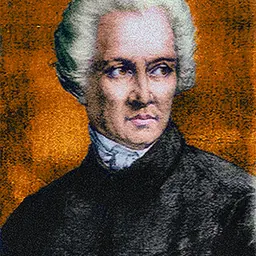
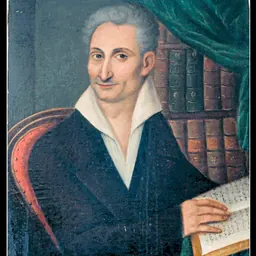
People in Andreas Laskaratos's life
Named in this biography and alive at the same time

Related people
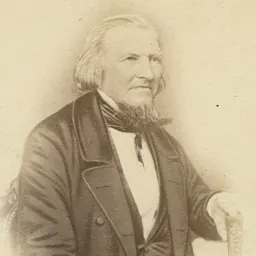
Same field, nearest in time

Contemporaries
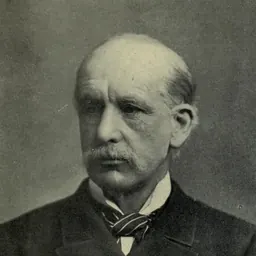
People whose lives overlapped Andreas Laskaratos's





Frequently asked questions
Who was Andreas Laskaratos?
Greek satirical poet and writer (1811–1901)
When was Andreas Laskaratos born?
Andreas Laskaratos was born on 1 May 1811 in Lixouri.
When did Andreas Laskaratos die?
Andreas Laskaratos died on 24 July 1901 in Argostoli.
What was Andreas Laskaratos's occupation?
Andreas Laskaratos was a poet and writer.
What nationality was Andreas Laskaratos?
Andreas Laskaratos was Greek.
Sources & further reading
· Wikipedia: Andreas Laskaratos
Cite this page
APA: Biography.guide. (2026). Andreas Laskaratos. https://biography.guide/andreas-laskaratos/
MLA: "Andreas Laskaratos." Biography.guide, https://biography.guide/andreas-laskaratos/.
Chicago: "Andreas Laskaratos." Biography.guide. https://biography.guide/andreas-laskaratos/.
Data last updated: 2026-09-26 · Spot an error? Report a correction.
Page generated 2026-09-27 05:16 UTC