
About André Leroi-Gourhan
Lived 1911 – 1986 (aged 74). André Leroi-Gourhan was a French anthropologist, paleontologist, prehistorian, university teacher, paleoanthropologist and archaeologist.
André Leroi-Gourhan (; ; 25 August 1911 – 19 February 1986) was a French archaeologist, paleontologist, paleoanthropologist, and anthropologist with an interest in technology and aesthetics and a penchant for philosophical reflection.
Biography Beginning in 1933, Leroi-Gourhan held various positions at museums around the world, including the British Museum and the Musée de l'Homme, as well as in Japan. Between 1940 and 1944 he worked at the Musée Guimet. In 1944 he was sent to the Château de Valençay to take care of works evacuated from the Louvre, including the Venus de Milo and the Winged Victory of Samothrace. He also participated in the French Resistance, for which he received the Croix de Guerre, the Médaille de la Résistance and the Légion d'honneur.
He completed his doctorate on the archaeology of the North Pacific in 1945 under the supervision of Marcel Mauss. He later completed a second doctorate in 1954.
In 1956, he succeeded Marcel Griaule at the Sorbonne, and from 1969 until 1982 he was a professor at the Collège de France. In 1973 he received the gold medal of the Centre national de la recherche scientifique.
Technicity, ethnicity, milieu
In L'Homme et la matière [Man and Matter] (1943), Leroi-Gourhan proposes the concept of technical tendencies, that is, universal technical dynamics that operate independently of the ethnic groupings which are nevertheless the only forms through which these tendencies are concretised. The concretisation of the technical tendency in a particular ethnicity he calls a technical fact.
In Milieu et techniques [Environment and Techniques] (1945), Leroi-Gourhan develops this into a general theory of the relation between the technical (as universal tendency) and the ethnic (as specific, differentiated concretisation). The human group, according to Leroi-Gourhan, behaves as though it were a living organism, assimilating its exterior milieu via "a curtain of objects", which he also calls an "interposed membrane" and an "artificial envelope", that is, technology. The milieu of the organism is divisible into the exterior milieu (geography, climate, animals and vegetation) and the interior milieu (the shared past of the group, thus "culture", etc.). This division enables a clarification of the concept of technical tendency. A tendency, according to Leroi-Gourhan, is a movement, within the interior milieu, that gains progressive foothold in the exterior milieu.
Leroi-Gourhan contributed to the methods of studying prehistoric technology, introducing the concept chaîne opératoire (operational chain) which denotes all the social acts involved in the life cycle of an artifact.
Evolution, memory, program Crucial to Leroi-Gourhan's understanding of human evolution is the notion that the transition to bipedality freed the hands for grasping, and the face for gesturing and speaking, and thus that the development of the cortex, of technology, and of language all follow from the adoption of an upright stance. What characterises humanity in its distinction from animals is thus the fact that tools and technology are a third kind of memory (in addition to the genetic memory contained in DNA and the individual memory of the nervous system), and thus a new form of anticipation, or programming. Anthropogenesis corresponds to technogenesis.
Legacy The French philosopher Jacques Derrida discusses Leroi-Gourhan in Of Grammatology (Baltimore & London: The Johns Hopkins University Press, 1997, corrected edition), in particular the concepts of "exteriorisation", "program", and "liberation of memory." This discussion was particularly important in the formulation of Derrida's neologism différance.
Leroi-Gourhan is frequently cited in the two volume collaboration by French philosopher Gilles Deleuze and psychiatrist Félix Guattari entitled Capitalism and Schizophrenia. The hand/tool and face/vocalization couplings of Leroi-Gourhan play an important role in the development of Deleuze and Guattari's concepts of becoming and deterritorialisation.
The French philosopher Bernard Stiegler gives an extensive reading of Leroi-Gourhan in Technics and Time, 1: The Fault of Epimetheus (Stanford: Stanford University Press, 1998).
Don’t just read it —
keep it.
Full-length biographies made to live with: read them, listen on the way to work, watch them tonight.
- E-book
- Audio
- Video
Instant download · yours to keep · every purchase keeps this site free
Important facts
Family & relationships
People in André Leroi-Gourhan's life
Named in this biography and alive at the same time

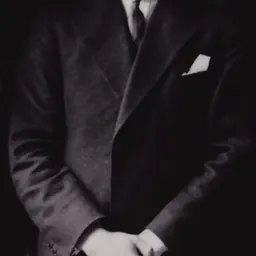
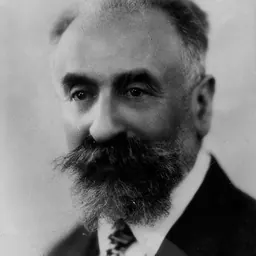




Related people
Same field, nearest in time

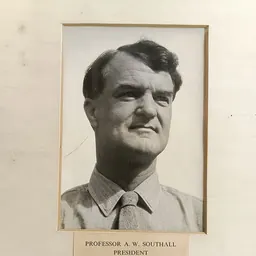
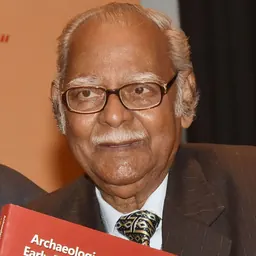
Contemporaries
People whose lives overlapped André Leroi-Gourhan's






Frequently asked questions
Who was André Leroi-Gourhan?
French archaeologist (1911-1986)
When was André Leroi-Gourhan born?
André Leroi-Gourhan was born on 25 August 1911 in 11th arrondissement of Paris.
When did André Leroi-Gourhan die?
André Leroi-Gourhan died on 19 February 1986 in 13th arrondissement of Paris.
What was André Leroi-Gourhan's occupation?
André Leroi-Gourhan was an anthropologist, paleontologist, prehistorian, university teacher, paleoanthropologist and archaeologist.
What nationality was André Leroi-Gourhan?
André Leroi-Gourhan was French.
Sources & further reading
· Wikipedia: André Leroi-Gourhan
· DBpedia: André Leroi-Gourhan
Cite this page
APA: Biography.guide. (2026). André Leroi-Gourhan. https://biography.guide/andre-leroi-gourhan/
MLA: "André Leroi-Gourhan." Biography.guide, https://biography.guide/andre-leroi-gourhan/.
Chicago: "André Leroi-Gourhan." Biography.guide. https://biography.guide/andre-leroi-gourhan/.
Data last updated: 2026-09-20 · Spot an error? Report a correction.
Page generated 2026-09-27 05:19 UTC