
About André Jobin
Lived 1786 – 1853 (aged 67). André Jobin was a Canadian politician.
André Jobin (August 8, 1786 – October 11, 1853) was a notary and political figure in Lower Canada and Canada East.
Family and early life
Jobin was born in 1786 in Montreal, in the old Province of Quebec. His parents were François Jobin and Angélique Sarrère, dit La Victoire. He studied at the Collège Saint-Raphaël in Montreal, then articled at law. Jobin qualified as a notary in 1813 and set up practice, originally in Montreal, later in Sainte-Geneviève on the island of Montreal.
Jobin gradually built up an extensive notarial practice, initially with a clientele drawn from labourers and artisans, often doing agreements between masters and journeymen. He also drew up agreements for the substitution of military service. By 1820 he was averaging more than one deed a day, and had expanded his practice to include merchants, builders, and real estate speculators. His deeds were carefully written with clear details. In 1834 he published an accurate map of the city of Montreal and the Island of Montreal.
Jobin was married four times. He had several children from his various marriages.
In August 1837 Jobin resigned his recently restored commission as a justice of the peace, saying that it lacked any meaning since it had not been given to him by the people. In his resignation letter, he set out his reasons:
His resignation letter was published with approval by the Patriote newspapers.
In response to the Rebellion, the British government passed an act of Parliament, suspending the constitution of Lower Canada, and replacing it with an appointed Special Council. Jobin lost his seat in the Assembly as a result.
Jobin continued his criticism of the government. In 1840, as agent for the Sulpician order in Montreal, he made a trip to St. Benoît, north of Montreal, to organise resistance to the government's plans to gradually disestablish the Sulpicians' extensive land-holdings. He made a fiery speech, strongly critical of the government:
When one magistrate alleged that the speech was seditious, Jobin made some attempt to deny having made it.
In the first general elections in 1841, Jobin was a candidate in the Vaudreuil constituency, campaigning against the union. The supporters of his opponent, John Simpson, used intimidation to discourage Jobin's supporters, and at one point Jobin had to jump out of a window to avoid being assaulted. He was defeated and Simpson was elected. Electoral violence of this sort was not uncommons in Canadian elections in the mid-19th century.
Two years later, in 1843, the sitting member for Montreal County, Alexandre-Maurice Delisle, resigned to take a civil service position. Jobin was elected in the resulting by-election. He became a member of the French-Canadian Group in the Assembly, led by Louis-Hippolyte LaFontaine. Jobin was elected in time to take part in the major issue at the end of the 1843 session, when the members of the ministry led by LaFontaine and Robert Baldwin from Upper Canada resigned in protest at Governor General Metcalfe's refusal to take advice from the ministry over certain appointments. The Legislative Assembly passed a resolution condemning the Governor General and supporting the position taken by LaFontaine and Baldwin. Jobin voted in favour of the resolution.
The 1844 Elections
After the resignation of the LaFontaine–Baldwin ministry, Governor General Metcalfe tried to find an alternative ministry. He had some success with some of the older members, who had been involved in politics prior to the Rebellion. Two of the leading members of the French-Canadian Group, Denis-Benjamin Viger and John Neilson, had voted against the resolution and in support of Governor Metcalfe. An older member from Upper Canada, William Henry Draper, was also willing to join a ministry in support of Governor Metcalfe. Viger and Draper were appointed to the Executive Council. However, in light of the strong support shown in the Legislative Assembly for the former LaFontaine–Baldwin ministry, Governor General Metcalfe prorogued Parliament in December 1843, ultimately for almost a year. Finally, in September 1844, he dissolved Parliament and called new elections.
Viger stood for election in two constituencies, as was allowed at that time, to ensure that he would be elected to the new Parliament. The two constituencies were Richelieu, which had been his seat in the previous Parliament, and Montreal County. Jobin again stood for election and defeated Viger by a large margin. Viger was also defeated in Richelieu, leaving him without a seat in the Assembly. However, overall the LaFontaine–Baldwin alliance did not win a majority of the seats in the Assembly, so they were in opposition for the next four years. Jobin continued as a steady supporter of LaFontaine and the French-Canadian Group.
The 1848 Elections and Responsible Government
In the 1848 general elections, the reform alliance of LaFontaine and Baldwin won a majority of seats in both Canada East and Canada West. The new governor general, Lord Elgin, had been instructed by the British government to implement the principle of responsible government, where the members of the Executive Council were drawn from the groups which commanded a majority in the Assembly. Elgin accordingly invited LaFontaine and Baldwin to form a government.
Jobin was a consistent supporter of LaFontaine and the French-Canadian Group in Parliament. In particular, he joined in voting for the controversial Rebellion Losses Bill, which would compensate individuals in Canada East who had suffered property damage during the Lower Canada Rebellion. After Elgin gave royal assent to the bill, Tories in Montreal rioted and burnt the Parliament buildings, but the principle of responsible government was firmly established.
In addition to the Rebellion Losses Bill, Jobin supported the LaFontaine–Baldwin ministry on other significant matters, particularly a bill to improve the status of the French language in the Parliament. He also supported Baldwin's bill to restrict secret societies, aimed at the Orange Order, which had a history of violent interventions in elections.
Jobin also worked on another project in the Assembly, namely changes to the governing structure of the notarial profession. In 1850, he introduced amendments which would increase the requirements for preservation of notarial deeds, give the notarial boards in Montreal, Trois-Rivières and Quebec greater financial independence by means of fees levied on the members, and decrease the supervisory role of the courts. The changes were controversial, particularly with notaries in Montreal whom Jobin had not consulted in advance, but Jobin was successful in having the bill passed. In addition to the notaries bill, Jobin was also active with other legislation in the Assembly relating to civil legal issues, such as land registration, mutual insurance companies, land ownership by Roman Catholic orders, and turnpikes and railways.
Later life, death and legacy
Jobin's standing with the reform movement was indicated when LaFontaine retired from politics in 1851. At a retirement dinner in Lafontaine's honour, Jobin was invited to sit at the head table with LaFontaine. Like LaFontaine, Jobin retired from politics in 1851, and was not a candidate in the general elections of that year.
In his later years, Jobin was highly respected in the Montreal business community. He was one of the first directors of the Montreal City and District Savings Bank, established in 1846 at the urging of Bishop Ignace Bourget to provide a savings bank for French-Canadians; the bank is still in business as of 2024 as the Laurentian Bank of Canada. In 1847 he was elected the first president of the Montreal Board of Notaries, although he resigned the position in 1849 as a result of the controversy over his proposed amendments to the law regulating notaries. In 1847 he was appointed a lieutenant-colonel in the local militia. In 1852, a year before his death, he was appointed inspector of Catholic schools in Montreal.
Jobin died in Sainte-Geneviève in 1853, and was buried from the parish church.
In 1911, the newspaper La Patrie published an article suggesting that the colonial government had imprisoned Patriotes in the old Montreal dungeon during the aftermath of the Rebellion. Another paper, Le Devoir, refuted the suggestion by citing the map that Jobin had drawn of the prison during his imprisonment.
Almost fifty years after his death, the Revue du notariat published a retrospective series on the development of the notarial profession in Quebec. The lead article was a biography of Jobin.
Don’t just read it —
keep it.
Full-length biographies made to live with: read them, listen on the way to work, watch them tonight.
- E-book
- Audio
- Video
Instant download · yours to keep · every purchase keeps this site free
Important facts
People in André Jobin's life
Named in this biography and alive at the same time


Related people
Same field, nearest in time

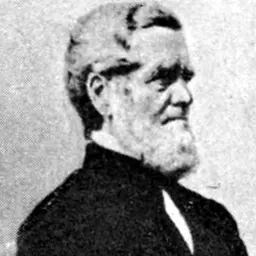
Contemporaries
People whose lives overlapped André Jobin's
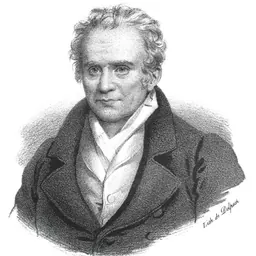

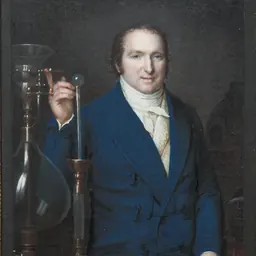
Frequently asked questions
Who was André Jobin?
Canadian politician (1786-1853)
When was André Jobin born?
André Jobin was born on 8 August 1786 in Montreal.
When did André Jobin die?
André Jobin died on 11 October 1853 in Sainte-Geneviève.
What was André Jobin's occupation?
André Jobin was a politician.
What nationality was André Jobin?
André Jobin was Canadian.
Sources & further reading
Cite this page
APA: Biography.guide. (2026). André Jobin. https://biography.guide/andre-jobin/
MLA: "André Jobin." Biography.guide, https://biography.guide/andre-jobin/.
Chicago: "André Jobin." Biography.guide. https://biography.guide/andre-jobin/.
Data last updated: 2026-09-20 · Spot an error? Report a correction.
Page generated 2026-09-27 05:17 UTC