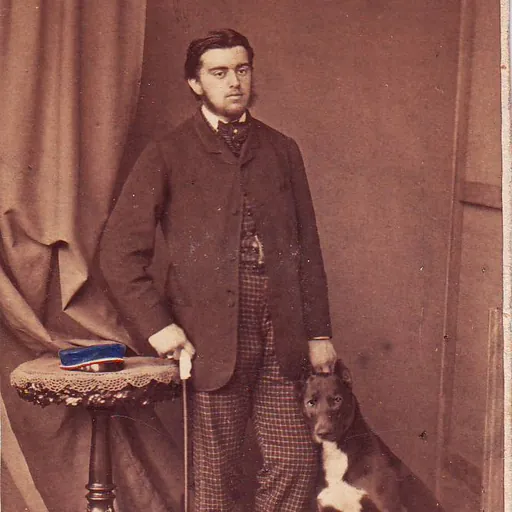
Anastasios Christomanos
Greek university professor and chemist
About Anastasios Christomanos
Lived 1841 – 1906 (aged 65). Anastasios Christomanos was a Greek university teacher and chemist.
Anastasios Christomanos (, March 22, 1841 – October 2, 1906) was a Greek chemist. He was one of the most important Greek scientists of the later part of the 19th century. His academic collaborators were some of the most important scientists in the world, including Robert Bunsen, Georg Ludwig Carius, Emil Erlenmeyer and Gustav Kirchhoff. He is the father of modern Greek chemical education. He wrote 73 books and dissertations. His fields of study included: Inorganic Chemistry, Organic Chemistry, and Analytical Chemistry. He helped restructure Greek education. Greek education was in the grasp of Korydalism for over 300 years. With the onset of the Industrial Revolution, Christomanos and his contemporaries were pioneers of modern education all over the world.
Christomanos was born in Vienna to a family that migrated from what is now Bulgaria. They were an important aristocratic Greek family, claiming roots in the Byzantine Empire. He showed an interest in science from an early age and was in Germany during the age of scientific revolution and discovery. He eventually became affiliated with the lab of Robert Bunsen. Bunsen was recruiting countless scientists to assist in his academic research. Christomanos was involved with Bunsen and his associates. He also worked at different chemical institutions. Around this period, Kirchhoff and Bunsen invented the spectroscope. Kirchhoff used the instrument to pioneer the identification of the elements in the Sun. In 1859, he showed that the Sun contained sodium. Kirchhoff and Bunsen discovered caesium and rubidium in 1861. In 1866, Christomanos brought the spectroscope to Greece and used the instrument on the island of Santorini to research the volcanic eruption of the Santorini caldera in 1866.
Christomanos continued to restructure the chemistry department at the University. He brought instrumentation from all over the world. With the onset of new research, the field of study became more popular towards the end of the 19th century. He implemented German educational standards. He brought the scientist Hans Max Jahn to the University of Athens. Christomanos' most important scientific work was the determination of the specific gravity of silver, methods for the determination of alkali metals, artificial biphenyl synthesis and the composition of chromite ores in Greece.
Early life Christomanos was born in Vienna. His father Konstantinos (1815-1861) was born in Meleniko, in what is now Bulgaria. At the age of eight, Konstantinos' family traveled to Vienna. He graduated from the School of Commerce, learned three languages and studied painting. Konstantinos married Maria Kazassi, in 1839. Her father was from Naousa, Greece and her mother was Austrian. Anastasios' parents moved to Greece in 1855, while Anastasios remained in Vienna to continue his studies. There he studied with notable Viennese scientist Franz Josef Pisko and Anton Schrötter von Kristelli. Anastasios' studies advanced very quickly he eventually was associated with Justus von Liebig and Robert Bunsen. In the late 1850s, Anastasios eventually participated in the lab experiments of Bunsen and Kirchhoff. He also worked in the chemical industry assisting factories in Moscow and Frankfort.
Heliocentrism was on the list of forbidden books until 1758. It was not acceptable as a physical fact until the middle to late part of the 19th century. Greek education was also restricted to Korydalism. The Methodios affair is an example of restrictive education until the middle part of the 1800s.
Scientific education was extremely unpopular across the world. Greek American naval artillery chemist and pyrotechnist George Marshall relayed the acceptable scientific education used by the U.S. Navy in his book Marshall's Practical Marine Gunnery in 1822. Newtonian physics was still not acceptable or recommended. A simple version of projectile motion was used instead. Chemical compounds were also called crude archaic names and the periodic table was not discovered. Chemistry research began to evolve during the latter part of the 19th century. Christomanos was one of the pioneers of modern chemistry in Greece.
Chemistry in Greece His contemporary in Greece was physicist Timoleon Argyropoulos. Anastasios Christomanos returned to Greece in 1862. He taught physics at the National School of Athens. The institution lacked the proper chemistry facilities. His predecessors were Francis Xaver Landerer and Alexander Venizelos. By the year 1863, he became a lecturer at the University. He founded a small chemistry laboratory in the basement of the university at his own expense. It was the first of its kind in Greece. He was the first Greek chemist to construct and implement Greek nomenclature for chemical processes and chemical compounds namely the new elements and procedures discovered by his academic professors and colleagues in Germany and other parts of the world. By the 1870s the academic education of chemistry in Greece followed the German standard. Anastasios invited world-renowned German scientist Hans Max Jahn to teach in Athens. Jahn wanted to continue his research while teaching in Greece. He was the first chair of the chemistry department. After his third year, he resigned due to time constraints. He could not balance his research and the demands of the chemistry department. He continued his work in electrochemistry and other chemical processes.
Later life and death In 1883, Anastasios undertook the organization and supervision of the municipal lighting of Athens. During the 1880s, he continued expanding his laboratories. He added three new chemical facilities and the massive university laboratory on Solonos Street. They were all built under his supervision. By the 1890s another important Greek student of Robert Bunsen was affiliated with the chemistry department named Anastasios Damvergis. He worked with Christomanos. During his busy schedule, Christomanos also found time to communicate and stay active within the academic community of chemistry. He constantly attended conferences and scientific conventions all over the world. Christomanos also studied the indirect estimation of Calcium and Magnesium and the combustion of Magnesium. He also did extensive research on the magnesites of Greece. Christomanos also researched the preparation of Phosphorus Tribromide. He conducted countless research projects with different molecules, elements and compounds. He died in Athens on October 2, 1906, from kidney cancer. His children continued his legacy.
Literary works Handbook of Chemistry Introduction to Chemistry (1871) To the knowledge of iodine trichloride; Athens 1877 Analysis of chrome iron stone; Athens 1877 Analysis Tables (Αναλυτικοί πίνακες), 1885 Elements of Chemistry (for use in Education) Στοιχεία Χημείας (δια την εκπαίδευσιν), 1887 Inorganic and Organic Chemistry, vol. I, (Ανόργανος και οργανική χημεία, τόμος Α΄), 1887 Inorganic and Organic Chemistry, vol. II, (Ανόργανος και οργανική χημεία, τόμος Β΄), 1887 Introduction to Chemistry, (Εισαγωγή εις την χημεία),1891
Don’t just read it —
keep it.
Full-length biographies made to live with: read them, listen on the way to work, watch them tonight.
- E-book
- Audio
- Video
Instant download · yours to keep · every purchase keeps this site free
Important facts
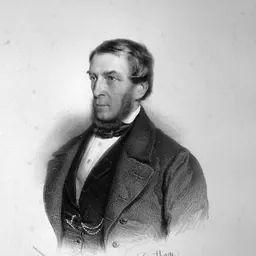
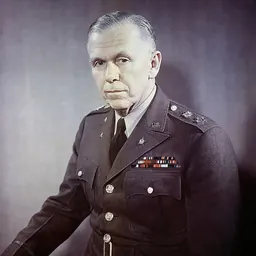
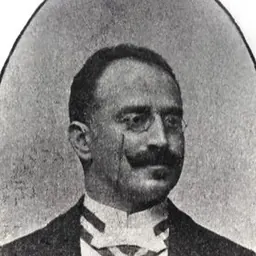
People in Anastasios Christomanos's life
Named in this biography and alive at the same time


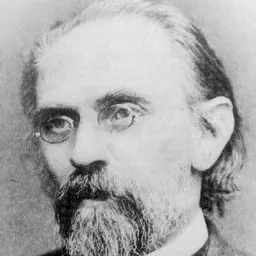
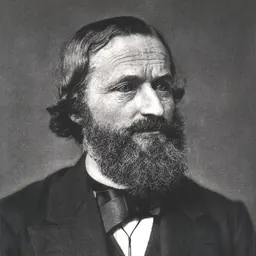
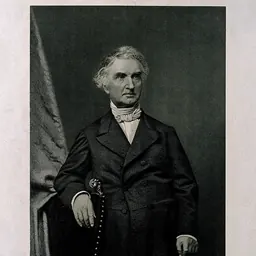
Related people
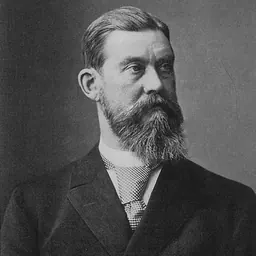
Same field, nearest in time

Contemporaries
People whose lives overlapped Anastasios Christomanos's


Frequently asked questions
Who was Anastasios Christomanos?
Greek university professor and chemist (1841–1906)
When was Anastasios Christomanos born?
Anastasios Christomanos was born on 8 March 1841 in Vienna.
When did Anastasios Christomanos die?
Anastasios Christomanos died on 2 October 1906 in Athens.
What was Anastasios Christomanos's occupation?
Anastasios Christomanos was a university teacher and chemist.
What nationality was Anastasios Christomanos?
Anastasios Christomanos was Greek.
Sources & further reading
· Wikipedia: Anastasios Christomanos
· DBpedia: Anastasios Christomanos
Cite this page
APA: Biography.guide. (2026). Anastasios Christomanos. https://biography.guide/anastasios-christomanos/
MLA: "Anastasios Christomanos." Biography.guide, https://biography.guide/anastasios-christomanos/.
Chicago: "Anastasios Christomanos." Biography.guide. https://biography.guide/anastasios-christomanos/.
Data last updated: 2026-09-22 · Spot an error? Report a correction.
Portrait: Wikimedia Commons · author & licence
Page generated 2026-09-27 05:02 UTC