
About Amelie Posse
Lived 1884 – 1957 (aged 73). Amelie Posse was a Swedish writer.
Amelie Posse-Brázdová (11 February 1884 – 3 March 1957) was a Swedish writer, journalist and political activist. Much of her literary work was autobiographical and reflected her experiences in Sweden, Italy and Czechoslovakia during the first half of the 20th century.
She lived for many years in Italy with her second husband, the Czech painter Oskar Brázda, and later in Czechoslovakia, where she became closely connected with figures including Tomáš Garrigue Masaryk and Edvard Beneš. A committed democrat and opponent of totalitarianism, she was active against Nazism during the Second World War and later opposed the Communist takeover of Czechoslovakia.
In Sweden she founded Tisdagsklubben ("The Tuesday Club") in 1940, an anti-Nazi discussion group intended to form part of a resistance network in the event of a German occupation of Sweden.
Early life and education
Amelie Posse was born in Stockholm on 11 February 1884. She was the daughter of Count Fredrik Arvidsson Posse and Auda Gunhild Wennerberg and granddaughter of Arvid Posse, Prime Minister of Sweden from 1880 to 1883.
The family moved to Scania, where her father acquired the Maryhill estate near Glumslöv, between Helsingborg and Landskrona, close to what later became Örenäs Castle. Following her father's death in 1897, the family moved to Lund.
Posse received a broad cultural education and developed an early interest in languages, literature, music and painting. She initially considered becoming a concert pianist, but health problems affecting her hands prevented her from pursuing a professional career in music.
She subsequently studied art and music in Copenhagen.
First marriage
In 1904 she married the Swedish criminal psychologist Andreas Bjerre. Their son, Sören Christer Bjerre, was born in 1905.
The marriage was unhappy and ended in divorce in 1912. Bjerre died in 1925.
After the divorce, Posse increasingly sought an independent life centred on her artistic and cultural interests.
Italy
Rome and Villa Strohl-Fern
Posse moved to Rome, attracted by Italy's artistic heritage and by the international cultural life of the Italian capital.
She became associated with the cosmopolitan artistic community surrounding Villa Strohl Fern, an artists' colony near Villa Borghese founded by the Alsatian artist and philanthropist Alfred Wilhelm Strohl.
The villa accommodated numerous Italian and foreign painters, sculptors, writers, musicians and models and became one of the centres of the international artistic community in Rome during the early 20th century.
There Posse met the Czech painter Oskar Brázda, known as "Oki", who had studied at the Academy of Fine Arts Vienna and had moved to Italy on an imperial scholarship.
Posse and Brázda married in Rome in 1915.
Their years at Villa Strohl-Fern placed them within a diverse artistic and intellectual milieu that Posse later described extensively in her autobiographical writings.
First World War and Sardinia
Italy's entry into the First World War against Austria-Hungary dramatically changed the couple's situation. Brázda, as a Bohemian subject of the Austro-Hungarian Empire, was classified as an enemy alien, and Posse shared his legal status through marriage.
The couple were consequently interned in Alghero, Sardinia, where they remained for approximately a year during 1915–1916.
The experience brought Posse into contact with Sardinian society, landscapes and traditions, which differed greatly from the aristocratic and cosmopolitan environments in which she had previously lived.
The Sardinian episode later became the basis for her first major autobiographical book, Den oförlikneliga fångenskapen (1931). The work was published in English in 1932 as Sardinian Sideshow and brought Posse international attention.
An Italian edition, Interludio di Sardegna, was published in 1998.
Return to Rome
Following their release from internment, Posse and Brázda returned to Rome.
Their return coincided with Brázda's increasing involvement in the movement for an independent Czechoslovakia. Through Milan Rastislav Štefánik, Edvard Beneš and other members of the Czechoslovak independence movement, the couple became involved in political and cultural circles connected with the creation of the future Czechoslovak state.
Brázda worked with Štefánik in Rome and painted a portrait of Beneš there in 1917, now preserved by the Military History Institute Prague.
Posse herself became strongly attached to the Czechoslovak cause. Together with Brázda she was also involved in the artistic realisation of a Czechoslovak flag produced in Rome in May 1918, based on a concept associated with Štefánik.
Don’t just read it —
keep it.
Full-length biographies made to live with: read them, listen on the way to work, watch them tonight.
- E-book
- Audio
- Video
Instant download · yours to keep · every purchase keeps this site free
Important facts
People in Amelie Posse's life
Named in this biography and alive at the same time
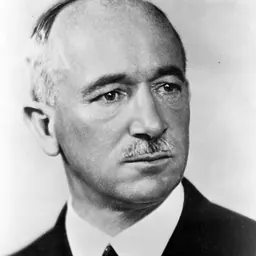



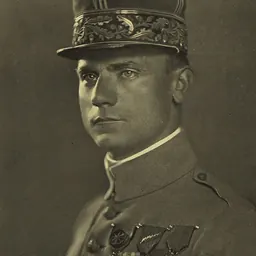
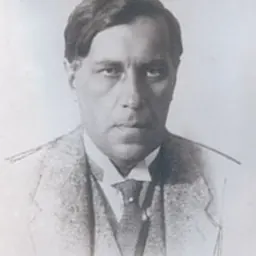
Related people
Same field, nearest in time




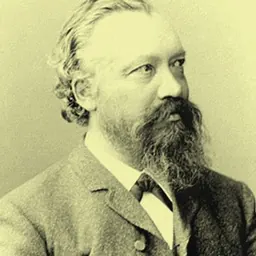
Contemporaries
People whose lives overlapped Amelie Posse's



Frequently asked questions
Who was Amelie Posse?
Swedish author
When was Amelie Posse born?
Amelie Posse was born on 11 February 1884 in Jakob and Johannes parish, Stockholm.
When did Amelie Posse die?
Amelie Posse died on 3 March 1957 in Oscar Parish, Stockholm.
What was Amelie Posse's occupation?
Amelie Posse was a writer.
What nationality was Amelie Posse?
Amelie Posse was Swedish.
Sources & further reading
Cite this page
APA: Biography.guide. (2026). Amelie Posse. https://biography.guide/amelie-posse/
MLA: "Amelie Posse." Biography.guide, https://biography.guide/amelie-posse/.
Chicago: "Amelie Posse." Biography.guide. https://biography.guide/amelie-posse/.
Data last updated: 2026-09-20 · Spot an error? Report a correction.
Page generated 2026-09-27 05:33 UTC