
About Oskar Brázda
Lived 1887 – 1977 (aged 90). Oskar Brázda was a Czech painter and sculptor.
Oskar Brázda (30 September 1887 – 19 December 1977) was a Czech painter and portraitist who spent a significant part of his early career in Italy. He was active in the artistic milieu of early 20th-century Rome and became involved in the Czechoslovak independence movement during the First World War, coming into contact with leading figures of the movement including Milan Rastislav Štefánik, Edvard Beneš and Tomáš Garrigue Masaryk.
Brázda was married from 1915 to 1938 to the Swedish writer and political activist Amelie Posse. The couple lived for many years in Italy, were interned in Alghero, Sardinia, during the First World War, and later settled at Líčkov Castle in Czechoslovakia. They had two sons. Their elder son, Bohuslav "Slávo" Brázda (13 September 1916 – 1991), was born in Rome and later served as a Czechoslovak fighter pilot in the Royal Air Force during the Second World War, attaining the rank of Flight Sergeant.
Their younger son, Jan Brázda (1917–2012), became an artist, illustrator and internationally active stage and costume designer.
Early life and education
Brázda was born on 30 September 1887 in Rosice, then part of Austria-Hungary, to Bohumil Brázda and Božena Brázdová, née Havránková. His father worked in the hospitality business. The family moved several times and in 1895 settled in Prague, where his father was, among other activities, associated with the operation of Café Slavia.
Brázda attended secondary school in Prague before entering the Academy of Fine Arts Vienna in 1904. His teachers included Rudolf Bacher and the Polish painter Kazimierz Pochwalski. After completing his studies he received an imperial scholarship which enabled him to continue his artistic education in Italy.
Italy and Rome
Brázda settled in Italy during the years preceding the First World War and became part of the international artistic community of Rome. Between approximately 1912 and 1925 he was associated with the Secessione Romana and with artistic currents influenced by Fauvism.
First World War and Sardinia
Following Italy's entry into the First World War against Austria-Hungary in 1915, Brázda's status as an Austro-Hungarian subject resulted in his internment as an enemy alien.
Brázda and Posse were interned in the Sardinian town of Alghero in 1915–1916.
Brázda also became acquainted with Edvard Beneš and participated in the activities of the first Czechoslovak resistance abroad.
In 1917 Brázda painted a portrait of Beneš in Rome. The work is preserved in the collections of the Military History Institute Prague (Vojenský historický ústav Praha).
Brázda subsequently maintained close relations with leading figures of the newly established Czechoslovakia. In 1921 and 1922 he spent holidays on Capri with President Tomáš Garrigue Masaryk, with whom he maintained a long friendship.
Líčkov became Brázda's principal artistic base, and he continued to work there as a painter and portraitist.
Brázda and Posse divorced in 1938. Despite the end of their marriage, they remained in contact in later years.
Second World War and Communist period
Following the German occupation of Czechoslovakia, Brázda was forced to leave Líčkov Castle and spent a period in prison. According to Czech biographical sources, he was released following intervention from abroad.
He died at Líčkov on 19 December 1977, aged 90.
Following the political changes of 1989, his second wife Marie Weiss-Brázdová recovered property through restitution and established the Oskar Brázda Gallery at Líčkov Castle, displaying works and personal objects associated with the painter.
Artistic legacy
Brázda's career developed across Czech, Austrian and Italian artistic environments. His Italian period, from approximately 1912 to 1925, was particularly important to his development and reputation.
He participated in the Roman artistic scene and became known especially for portraiture. Contemporary accounts of his work appeared in Italian as well as British, Swedish, French and German publications.
His departure from Italy in 1925 interrupted a successful career in the country, and his later work became more closely associated with Czechoslovakia.
Brázda is also remembered for his involvement with the Czechoslovak independence movement in Italy and for his personal and professional relationships with Štefánik, Beneš and Masaryk.
Brázda and Posse divorced in 1938. He later married Marie Weiss.
Selected bibliography
Tomeš, Josef, et al. Český biografický slovník XX. století. Vol. I. Prague and Litomyšl: Paseka, 1999. . Vošahlíková, Pavla, et al. Biografický slovník českých zemí. Vol. 7. Prague: Libri, 2007. . Rakušanová, Marie. Bytosti odnikud: metamorfózy akademických principů v malbě první poloviny 20. století v Čechách. Prague: Academia, 2008. . Koudelka, Ivo. Oskar Brázda a jeho dvě múzy: Amelie Posse a Maria Weiss. Prague: Regulus, 2015. . Havelka, Ivan; Koudelka, Ivo; Russo, Alessandro. Fenomén Oskar Brázda. Prague: Regulus, 2017. . Špecinger, Otakar. Oskar Brázda. Kralupy nad Vltavou: R press, 1992. Špecinger, Otakar. Malíř Oskar Brázda a zámek Líčkov. Prague: Regulus, 1996. Strömberg Krantz, Eva. Amelie Posse-Brázdová: Život spjatý s Československem. Prague: Akropolis, 2011.
In the writings of Amelie Posse
Brázda and his life with Amelie Posse in Italy and Czechoslovakia are extensively described in several of Posse's autobiographical works, including:
Den oförlikneliga fångenskapen (1931), published in English as Sardinian Sideshow Vidare (1936), published in English as Further I begynnelsen var ljuset (1940), published in English as Roman Roundabout
Don’t just read it —
keep it.
Full-length biographies made to live with: read them, listen on the way to work, watch them tonight.
- E-book
- Audio
- Video
Instant download · yours to keep · every purchase keeps this site free
Important facts
People in Oskar Brázda's life
Named in this biography and alive at the same time

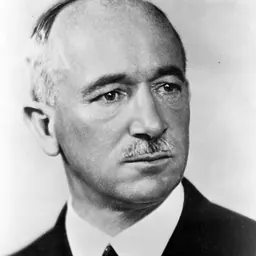


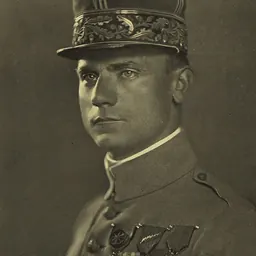

Related people
Same field, nearest in time

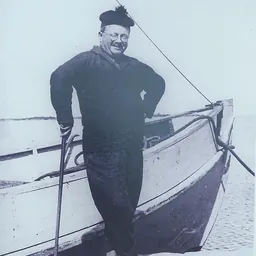
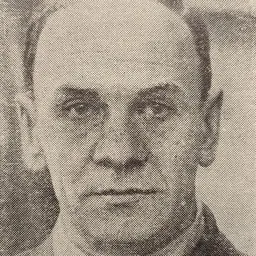
Contemporaries
People whose lives overlapped Oskar Brázda's




Frequently asked questions
Who was Oskar Brázda?
Czech painter and artist (1887-1977)
When was Oskar Brázda born?
Oskar Brázda was born on 30 September 1887 in Rosice nad Labem.
When did Oskar Brázda die?
Oskar Brázda died on 19 December 1977 in Líčkov.
What was Oskar Brázda's occupation?
Oskar Brázda was a painter and sculptor.
What nationality was Oskar Brázda?
Oskar Brázda was Czech.
Sources & further reading
Cite this page
APA: Biography.guide. (2026). Oskar Brázda. https://biography.guide/oskar-brazda/
MLA: "Oskar Brázda." Biography.guide, https://biography.guide/oskar-brazda/.
Chicago: "Oskar Brázda." Biography.guide. https://biography.guide/oskar-brazda/.
Data last updated: 2026-09-20 · Spot an error? Report a correction.
Page generated 2026-09-27 05:25 UTC