
About Ambrosius Stub
Lived 1705 – 1758 (aged 53). Ambrosius Stub was a Danish poet and writer.
Title page of Stub's collected arias and poems, edited by T. S. Heiberg, 1771 Ambrosius Christoffersen Stub (May 1705 – 15 July 1758) was a Danish poet.
Life Stub was born in Gummerup on the island of Funen, but his exact birth date is unknown. He was baptized at Verninge in Odense on 17 May 1705. The son of a tailor, he was able to attend the Latin school of Odense (Odense Katedralskole) due to the generosity of noblemen who employed his father. From 1725, he studied theology at the University of Copenhagen. In Copenhagen he developed an interest in opera and music, nurtured by visits of touring opera companies from Italy and Germany. For a living, he worked as a poet and secretary for several noble families. After studying for almost 10 years, he left the university without a degree in 1734, and returned home.
There he met Mette Cathrine Schousboe (1716–1747), a minister's daughter, whom he married in 1735. The couple lived at Mette's inherited farm which they were unable to manage well. As a result, its value soon declined, and the Stubs' living conditions became worse. Of the couple's four children only two survived childhood. In 1747, Stub's wife died aged 31.
Five years later, Ambrosius Stub moved to Ribe, where he kept close company with Bishop Hans Adolph Brorson. Suffering from gout and an alcohol problem, he spent his last years there working as a teacher. He died in Ribe.
Work
Stub wrote his first poems as a 23-year-old student, but during his lifetime, only six of his works were published (in 1752). Most of his work was properly written down, printed and published after his death. Because of this there is still some uncertainty about the correctness of the citations, and it is assumed that he has written more poems than those officially published. A first edition of his collected works was published posthumously in 1771. Later collections were assembled from songbooks, but the attribution of some anonymous poems and arias remains disputed.
Stub's literary works have a wide variety of topics, comprising philosophical and religious poetry as well as drinking songs, love poems and occasional poems.
His Du deylig Rosen-Knop (Thou beautiful rosebud) can be read as a commitment to virtuousness: the withering rose is a symbol for perishable beauty, and only virtue persists.
One of Stub's more famous poems Den kiedsom Winter gik sin Gang (The bleak winter went his way), is found in a truncated version in the anthology Højskolesangbogen. In this poem he describes the beginning of spring from the point of view of a sinister poet. Providence, however, holds more cheerful days for him to come, if he only keeps up his patience and fortitude.
Stub's late work, written in Ribe, is influenced by pietism. Fear of death, Hell and the moral decline of the world become his primary topics of interest.
He was also influenced by the German writer and musician, Johann Sigismund Scholze alias Sperontes. He wrote several religious hymns, like Jeg ser dit kunstværk, store Gud (I see your work of art, oh Lord) and Lyksalig endte da min frelser sine dage (In bliss my saviour ended his days).
Death Stub died in poverty on 15 July 1758. His body was buried in the cemetery of St. Catherine Priory in Ribe where a bronze monument designed by Per Kirkeby was erected in his memory on a grant by the New Carlsberg Foundation in 2003. It features a square frame in which a stump of a tree is surrounded by the remains of a capital with acanthus leaves, a fragment of a column, two rococo mirrors, and a number of wedges.
Thou beautiful rosebud (first verse, in translation by John Irons)
You rosebud sweet and fair! Close to, let me inspect you! Each man must needs respect you, In you all nature’s art And splendour dwell apart; Each petal’s coloured feather Leaves us uncertain whether Apparel neat and trim Says more than splendour’s whim: A maze where coloured petals – In paths where each unsettles – Add fragrance to the air; You rosebud sweet and fair!
Works Ambrosius Stub: Arier og andre poetiske Stykker. Udg. af T.S. Heiberg, København 1771 [2nd ed. 1780] Ambrosius Stub: Arier og Sange I-II, 1773 Ambrosius Stub: Anhang til Ambrosii Stubs Poetiske Tanker, 1782 Ambrosius Stub: Digte. Udg. med indledning og noter af Erik Kroman [2 vols.], København 1972
Don’t just read it —
keep it.
Full-length biographies made to live with: read them, listen on the way to work, watch them tonight.
- E-book
- Audio
- Video
Instant download · yours to keep · every purchase keeps this site free
Important facts
People in Ambrosius Stub's life
Named in this biography and alive at the same time


Related people
Same field, nearest in time
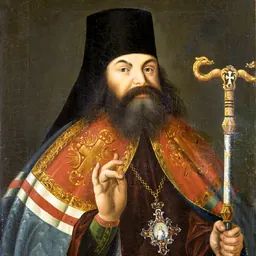


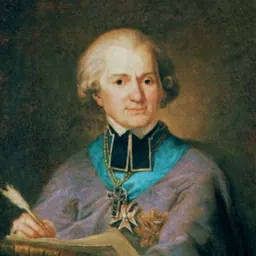
Contemporaries
People whose lives overlapped Ambrosius Stub's

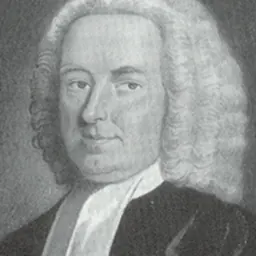



Frequently asked questions
Who was Ambrosius Stub?
Danish poet (1705-1758)
When was Ambrosius Stub born?
Ambrosius Stub was born on 1 May 1705 in Gummerup.
When did Ambrosius Stub die?
Ambrosius Stub died on 15 July 1758 in Ribe.
What was Ambrosius Stub's occupation?
Ambrosius Stub was a poet and writer.
What nationality was Ambrosius Stub?
Ambrosius Stub was Danish.
Sources & further reading
Cite this page
APA: Biography.guide. (2026). Ambrosius Stub. https://biography.guide/ambrosius-stub/
MLA: "Ambrosius Stub." Biography.guide, https://biography.guide/ambrosius-stub/.
Chicago: "Ambrosius Stub." Biography.guide. https://biography.guide/ambrosius-stub/.
Data last updated: 2026-09-20 · Spot an error? Report a correction.
Page generated 2026-09-27 04:57 UTC