
About Amalia Fleming
Lived 1912 – 1986 (aged 73). Amalia Fleming was a Greek politician, physician and bacteriologist.
Amalia, Lady Fleming, (née Koutsouri, formerly Vourekas; ; 28 June 1912 – 26 February 1986) was a Greek physician, bacteriologist, human rights activist and politician.
Early life and education Fleming was born in Constantinople, Ottoman Empire (now Istanbul, Turkey), in 1912. Her father was Harikios Koutsouris, a physician. In 1914, with the outbreak of the First World War and the rise of the "racially intolerant Pan-Turkish state", with the family home lost and her father's laboratory confiscated, she fled to Athens with her family.
Second World War In April 1941 Greece was occupied by the Axis German and Italian forces. Amalia and her husband joined the Greek Resistance. She helped many British, New Zealand and Greek soldiers escape occupied Greece, transcribed BBC broadcasts, and produced fake identity cards for Greek Jews and foreign officers.
London With the end of the war, Greece was in ruins and many thousands dead. In 1947 the Greek Civil War broke out between Communist-led fighters and Greek government army of conservative royalists. Amalia and her husband divorced.
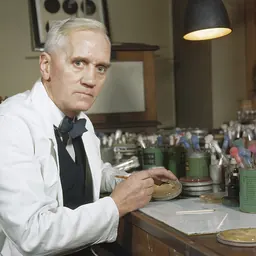
By good fortune in 1947 she was successful in her application for a British Council scholarship which enabled her to do postgraduate studies in bacteriology at St. Mary's Hospital, London. There she worked with Sir Alexander Fleming in his Wright-Fleming Institute of Microbiology. She authored nine research publications between May 1947 and August 1952 and she collaborated with Sir Alexander Fleming on several papers. Amalia organised Fleming's papers and ensured the publication of a scientific monograph of his life and work.
Regime of the Colonels As a person with dual nationality (Greek and British), Amalia Fleming began from 1962 to spend more time in Greece and moved there permanently in 1967. Her return coincided with a military coup and the subsequent rule of Greece by the Greek military junta of 1967–1974 (commonly known as the Regime of the Colonels).
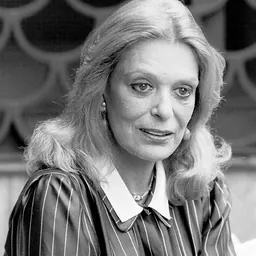
Over the following few years in London, she mounted, in conjunction with Melina Mercouri and Helen Vlachos, a "non-stop publicity campaign" against the Greek dictatorship until it finally collapsed in 1974. Fleming also made representations to the Human Rights Commission in Strasbourg regarding the torture of Greek political prisoners, continued to help imprisoned regime opponents and their families, and helped a number of the junta's opponents to escape from Greece.
Political activities after 1974 Fleming returned to Greece in 1974 after the fall of the junta. She joined the Panhellenic Socialist Movement (or PASOK) and was elected to the Greek Parliament in 1977, 1981 and 1985. She was an active campaigner for human rights and was a member of the European Commission of Human Rights and the first chair of the Greek committee of Amnesty International.
Legacy
Fleming saw herself as a Greek patriot and a defender of democracy and independence, stating: "I was born a Greek and this is an incurable disease that nothing and no one can treat or change". After her death, the Greek government lamented her loss and praised her as "a great humanitarian, a fine democrat and a fighter for the Socialist cause".
She established the Greek Foundation for Basic Biological Research "Alexander Fleming" and "created the conditions to set up" the Biomedical Sciences Research Centre "Alexander Fleming" (often referred to as BSRC "Alexander Fleming" and the Alexander Fleming Biomedical Sciences Research Center), in Vari, a suburb of Athens.
In 1986 a hospital was founded at Melissia, a suburb of Athens, and named after her (currently known as Sismanogleio-Amalia Fleming General Hospital).
WHO Collaborating Centre's Public Health Education & Training lecture series is named in Fleming's honour.
Awards Order of Beneficence (1965)
Don’t just read it —
keep it.
Full-length biographies made to live with: read them, listen on the way to work, watch them tonight.
- E-book
- Audio
- Video
Instant download · yours to keep · every purchase keeps this site free
Important facts
People in Amalia Fleming's life
Named in this biography and alive at the same time


Related people
Same field, nearest in time





Contemporaries
People whose lives overlapped Amalia Fleming's





Frequently asked questions
Who was Amalia Fleming?
Greek physician, bacteriologist (1912-1986)
When was Amalia Fleming born?
Amalia Fleming was born on 28 June 1912 in Constantinople.
When did Amalia Fleming die?
Amalia Fleming died on 26 February 1986 in Athens.
What was Amalia Fleming's occupation?
Amalia Fleming was a politician, physician and bacteriologist.
What nationality was Amalia Fleming?
Amalia Fleming was Greek.
Sources & further reading
Cite this page
APA: Biography.guide. (2026). Amalia Fleming. https://biography.guide/amalia-fleming/
MLA: "Amalia Fleming." Biography.guide, https://biography.guide/amalia-fleming/.
Chicago: "Amalia Fleming." Biography.guide. https://biography.guide/amalia-fleming/.
Data last updated: 2026-09-20 · Spot an error? Report a correction.
Page generated 2026-09-27 05:01 UTC