
Álvaro Alcalá-Galiano y Osma
Spanish artist, 1886-1936
About Álvaro Alcalá-Galiano y Osma
Lived 1886 – 1936 (aged 50). Álvaro Alcalá-Galiano y Osma was a Spanish opinion journalist, writer, historian, journalist and politician.
Álvaro Alcalá-Galiano y Osma (Madrid, 29 April 1886 – 28 July 1936) was a Spanish writer, literary critic, historian, and journalist, frequent contributor to newspaper ABC and magazine . As a monarchist, he was influenced by Charles Maurras. While he was pro-Allied during the First World War, his writings later extolled Italian fascism and spread anti-Semitic conspiracy theories and a strong anti-communism sentiment. He was a member of Spanish Renovation during the Second Republic and was executed at the beginning of the civil war in the Republican zone due to his support for the coup and his fascist ideology.
He held the title of .
Biography Family origins and early years His father Emilio was ambassador in London and minister of state in 1875. He was born in Madrid on 29 April 1886 as an heir to the . His father, Emilio Alcalá-Galiano had been minister of state and would later hold the post of Spanish ambassador to the United Kingdom. His mother was Ana de Osma y Zavala, a native of Lima, cousin of , and a noblewoman of the Order of Queen Maria Luisa. On his father's side, Álvaro was the great-grandson of , who served as general treasurer during the War of Independence (1807–1814). Meanwhile, on his mother's side, he was the grandson of , the Peruvian foreign minister.
Starting in 1915, he would develop a letter-writing relationship with his cousin, Peruvian nationalist José de la Riva-Agüero y Osma, , whom he would have met in 1913. He was a member of the Ateneo de Madrid and also a fan of wrestling in his youth. Around 1915, he was living in the , located at number 5 Paseo de la Castellana in Madrid.
Pro-Allied period
Alcalá-Galiano was a staunch defender of the Allied cause during the First World War —a rarity in Spanish aristocratic circles, where Germanophilia ran rampant. He authored four books on the conflict, published between 1915 and 1919. Around this time, he also wrote compilations of literary studies.
Apart from his inclination as a supporter of the Allies, the categorization of Alcalá-Galiano's ideologies during this period varies depending on the author. According to historian , he would have conceptualized the war at first in rigid terms as a conflict between the right and the left. Back then, according to historian , Alcalá-Galiano would have been un escritor cosmopolita, monárquico y liberal. Meanwhile, historian Javier Moreno Luzón identifies his brand of opinion journalism during the conflict as that of an uncategorizable proaliado a fuer de maurrasiano. Alternatively, his contemporary Emilia Pardo Bazán, who reviewed several of his works, described him in 1915 as intelectual de sangre azul y conservador abolengo. By royal decree of 23 May 1918, the nobility title of was reinstated for him and his descendants.
After the rise of Bolshevism in Russia, Alcalá-Galiano changed his geopolitical vision, replacing Mitteleuropa with Russia as the main focus of concern for Spain.
Maurrassisme and anti-Semitism As an admirer of the political doctrine of French intellectual Charles Maurras—leader the so-called "integral nationalism"—Alcalá-Galiano criticized the Vatican for having turned its back on him. During the 1920s and from the pages of newspaper ABC, Alcalá-Galiano spread his anti-Semitic ideas stemming from Maurrassisme, as well as his favorable opinions on Italian fascism and viscerally anti-parliamentary positions. He became an advocate of repression against the "red threat" in the press, and by the start of the decade he was already adhering to the conspiracy theories of the extreme right and recalcitrant anti-communism. Moreover, he was an unconditional admirer of Benito Mussolini and, after the coup by Miguel Primo de Rivera in September 1923, he referred to the differences between both dictatorships, as follows:
Alcalá-Galiano was a contributor to newspaper ABC and a sympathizer and collaborator of magazine during the Second Republic, as well as a member of political party Spanish Renovation. Furthermore, he stood out as an antisemita de pluma, since he published La caída de un trono in 1933—in which he blamed the fall of the Bourbon monarchy on a conspiración judeomasónica—and in the pages of ABC, he also praised the anti-Semitic measures taken by Adolf Hitler in Germany. He would also insist on the idea of a Masonic infiltration in Spain during the Second Republic. After the failed Sanjurjada military coup in August 1932 and the resulting closure of by the government, he was sent to the Cárcel Modelo prison for a while, along with other collaborators of the magazine.
In February 1934, disillusioned with the ups and downs in the evolution of the nascent fascist movement of Falange Española (FE) and unable to effectively exercise violence on the workers' movement, Alcalá-Galiano did not hesitate to refer to Spanish fascism—contrary to its European counterparts—as platónico. Also, while meddling with the FE and coinciding with the burial of Falangist , he reproached it for its inaction in the face of the attacks it was being subjected to. He suggested that the FE should carry out a plan of indiscriminate violence. Moreover, amid the controversy, he maintained that:
FE leader José Antonio Primo de Rivera would end up accusing Alcalá-Galiano of incitement to murder.
In July 1934, in reaction to Catalan nationalism and from the pages of ABC, Alcalá-Galiano would call on the creation of a patriotic league for the defense of unity in Spain. Later, in 1935, he took part in the strategy to discredit the CEDA, attempting to make it seem that this party had wasted time while in power, which had allowed the left to recover and get reorganized. In late 1935, he was appointed chairperson of the Spanish-English Committee, coinciding with the entry in the board of directors of Henry Chilton, the new British ambassador.
On the occasion of the elections of February 1936, Alcalá-Galiano stated that Spain was facing a dilemma: revolución o contrarrevolución, Patria o Antipatria. Thus, he advocated for:
According to Alcalá-Galiano, it had all started with the Pact of San Sebastián, which had led to reparto y despojo de España entre masones, marxistas y separatistas.(...) In turn, he said, this had led to four years of a Republic during which there had been:
Death At the beginning of the Civil War, Alcalá-Galiano was arrested at his home by members of checa number 1 of Radio Comunista and taken to Vallecas with his , the . They were both executed on 28 July 1936 after having been subjected to a summary trial, due to their fascist ideology.
Works —— (1908) Impresiones de arte (prologue by Emilia Pardo Bazán) —— (1912) Del Ideal y de la Vida —— (1914) El Príncipe Iván —— (1933) La caída de un Trono —— (1934) Renovación Española ante la sociedad.
Don’t just read it —
keep it.
Full-length biographies made to live with: read them, listen on the way to work, watch them tonight.
- E-book
- Audio
- Video
Instant download · yours to keep · every purchase keeps this site free
Important facts
People in Álvaro Alcalá-Galiano y Osma's life
Named in this biography and alive at the same time




Related people
Same field, nearest in time

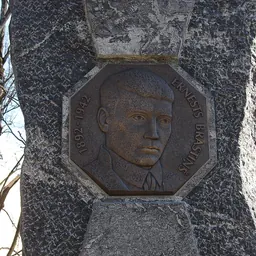

Contemporaries
People whose lives overlapped Álvaro Alcalá-Galiano y Osma's
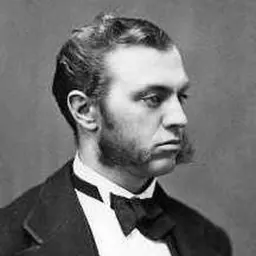



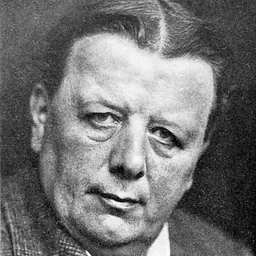
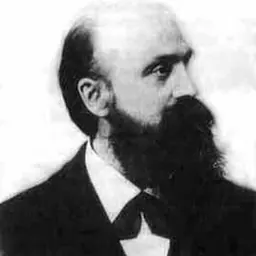
Frequently asked questions
Who was Álvaro Alcalá-Galiano y Osma?
Spanish artist, 1886-1936
When was Álvaro Alcalá-Galiano y Osma born?
Álvaro Alcalá-Galiano y Osma was born on 29 April 1886 in Madrid.
When did Álvaro Alcalá-Galiano y Osma die?
Álvaro Alcalá-Galiano y Osma died on 28 July 1936 in Vallecas.
What was Álvaro Alcalá-Galiano y Osma's occupation?
Álvaro Alcalá-Galiano y Osma was an opinion journalist, writer, historian, journalist and politician.
What nationality was Álvaro Alcalá-Galiano y Osma?
Álvaro Alcalá-Galiano y Osma was Spanish.
Sources & further reading
· Wikipedia: Álvaro Alcalá-Galiano y Osma
· DBpedia: Álvaro Alcalá-Galiano y Osma
Cite this page
APA: Biography.guide. (2026). Álvaro Alcalá-Galiano y Osma. https://biography.guide/alvaro-alcala-galiano-y-osma/
MLA: "Álvaro Alcalá-Galiano y Osma." Biography.guide, https://biography.guide/alvaro-alcala-galiano-y-osma/.
Chicago: "Álvaro Alcalá-Galiano y Osma." Biography.guide. https://biography.guide/alvaro-alcala-galiano-y-osma/.
Data last updated: 2026-09-20 · Spot an error? Report a correction.
Page generated 2026-09-27 05:28 UTC