
Octavian Codru Tăslăuanu
Romanian magazine editor and politician
About Octavian Codru Tăslăuanu
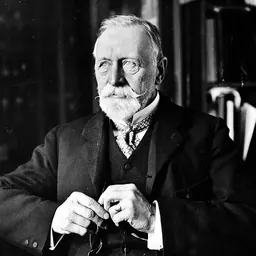
Lived 1876 – 1942 (aged 66). Octavian Codru Tăslăuanu was an Austrian opinion journalist, politician, editor, publisher and writer.
Octavian Codru Tăslăuanu (February 1, 1876 – October 22, 1942) was an Austro-Hungarian-born Romanian magazine publisher, non-fiction writer, and politician.
Biography Background and early life Born in Bélbor, Maros-Torda County, now Bilbor, Harghita County, his parents were Ion, a Greek-Catholic priest and member of a clerical family; and Anisia (née Stan), a local peasant woman. The family name refers to the valley of the Tazlău River, where it lived prior to arriving in the Toplița area. The second of eleven children, Octavian started primary school in his native village before the age of five. From 1884 to 1889, he went to primary school in Gheorgheni. In autumn 1889, he enrolled in the Romanian high school at Năsăud. In 1890, he started at Brașov's Romanian high school, leaving for the Blaj high school in 1892. While there, in 1894, he was an active participant at the protests in support of the Transylvanian Memorandum. From 1898 to 1902, he studied at the Literature and Philosophy faculties of the University of Bucharest, and his professors included Titu Maiorescu, Nicolae Iorga, Ovid Densusianu, and Simion Mehedinți. A good student, he obtained a prize from the Carol I Academic Foundation for a work on the origins of the Hunyadi family.
Luceafărul and war experience
In 1902, Tăslăuanu was named a secretary at the Romanian consulate in Budapest. While there, he edited and corrected articles for Luceafărul, as well as writing original work, and began a close friendship with Octavian Goga, for whom he managed to create an environment that fostered Goga's poetic creativity. The following year, he became head editor at the magazine, which due to his initiative emerged as a voice for younger writers, in particular Goga, then reaching the peak of his creativity. By 1904, he was owner as well as editor of Luceafărul. In 1905, he attended celebrations at Sibiu marking the opening of the ASTRA Museum. There, he met Adelina Olteanu, the sister of officer Marcel Olteanu. as well as signing a contract stipulating Goga would be director of Luceafărul and Tăslăuanu editor-in-chief.
By 1907, the magazine was thriving in Sibiu, and Tăslăuanu became among the first journalists to write about Constantin Brâncuși, realizing the value of the latter's artistic output and going on to print a number of images depicting his sculptures. In 1909, he took on the publication of Transilvania as well. The following year, he suffered a heavy blow when his wife died at the age of 33; she had been a close collaborator. In 1911, he reorganized the ASTRA library, publishing science and culture brochures under its name. He was also a dedicated director of the association's museum, bringing in numerous ethnographic exhibits. Between 1911 and 1912, he published a calendar for ASTRA, while he made up with Goga, so that the latter returned to Luceafărul as director. In 1914, with the outbreak of World War I, he was sent to the front and his cultural activities were put on hold. However, he did manage to publish two books about his war experiences, in 1915 and 1916. At first, he served in the Austro-Hungarian Army, as part of a Făgăraș-based Royal Hungarian Honvéd battalion. He subsequently deserted and, following Romania's entry into the war in 1916 on the side of the Allies, he enrolled in the Romanian Land Forces as a volunteer.
Politics and later writings In 1918, following the union of Transylvania with Romania, Tăslăuanu was elected a member of the Great Romanian National Council by the assembly at Alba Iulia that approved the union. He also remarried; his new wife was Fatma Sturdza, whom he met on the front as a nurse. In 1919, he was elected to the Chamber of Deputies for the Tulgheș seat. Also elected vice president of the Romanian Writers' Society, he moved Luceafărul to Bucharest and founded a publishing house in Cluj. In 1920, he held two ministerial posts: Commerce and Industry (March 13-November 16) and Public Works (November 16-December 31). He resigned due to vehement attacks from the National Liberal Party-dominated press. Initially a member of the Romanian National Party, in 1920, persuaded by Goga, he joined Alexandru Averescu's People's Party and served in the latter's cabinet.
While in government, Tăslăuanu used his expertise in economics and Transylvanian affairs to help craft a land reform law for the province. His interest in economics continued after leaving office and into the Great Depression; ideologically, his views fell into the classical liberal camp. He believed the state should remain uninvolved in commerce, production or industry, and that its efforts tended to kill off individual initiative. In 1926, he was elected to the Senate for Mureș County. Meanwhile, he published a series of books between 1924 and 1939: on politics, economics, the national movement in Transylvania, reflections on the Luceafărul era, and finally, in 1939, his last important work appeared, presenting his memories of the recently deceased Goga. In 1941, he founded the weekly magazine Dacia in Bucharest; this appeared from April 15 to May 1. The following year, he published an article on the occasion of the 40th anniversary of Luceafărul; it was to be the last work of his that appeared during his lifetime. He died of respiratory failure and was buried in Bellu Cemetery. There is a high school in Toplița that was named after him in 1990; a gymnasial school in Bilbor and a street in Toplița also bear his name.
Don’t just read it —
keep it.
Full-length biographies made to live with: read them, listen on the way to work, watch them tonight.
- E-book
- Audio
- Video
Instant download · yours to keep · every purchase keeps this site free
Important facts
People in Octavian Codru Tăslăuanu's life
Named in this biography and alive at the same time




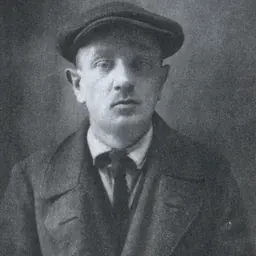
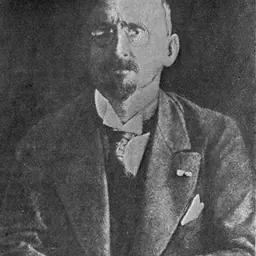
Related people
Same field, nearest in time

Contemporaries
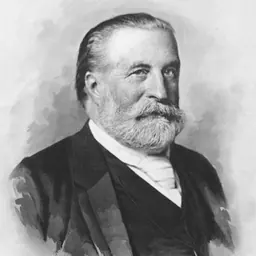
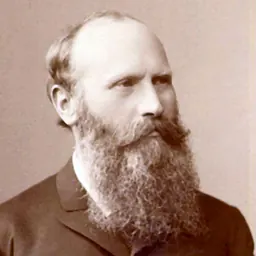
People whose lives overlapped Octavian Codru Tăslăuanu's
Frequently asked questions
Who was Octavian Codru Tăslăuanu?
Romanian magazine editor and politician (1876-1942)
When was Octavian Codru Tăslăuanu born?
Octavian Codru Tăslăuanu was born on 1 February 1876 in Bilbor.
When did Octavian Codru Tăslăuanu die?
Octavian Codru Tăslăuanu died on 23 October 1942 in Bucharest.
What was Octavian Codru Tăslăuanu's occupation?
Octavian Codru Tăslăuanu was an opinion journalist, politician, editor, publisher and writer.
What nationality was Octavian Codru Tăslăuanu?
Octavian Codru Tăslăuanu was Austrian.
Sources & further reading
· Wikipedia: Octavian Codru Tăslăuanu
· DBpedia: Octavian Codru Tăslăuanu
Cite this page
APA: Biography.guide. (2026). Octavian Codru Tăslăuanu. https://biography.guide/octavian-codru-taslauanu/
MLA: "Octavian Codru Tăslăuanu." Biography.guide, https://biography.guide/octavian-codru-taslauanu/.
Chicago: "Octavian Codru Tăslăuanu." Biography.guide. https://biography.guide/octavian-codru-taslauanu/.
Data last updated: 2026-09-22 · Spot an error? Report a correction.
Page generated 2026-09-27 05:28 UTC