
About Alma Rosé
Lived 1906 – 1944 (aged 37). Alma Rosé was an Austrian conductor, violinist, choir director and musician.
Alma Maria Rosé (3 November 1906 – 4/5 April 1944) was an Austrian violinist and conductor. In July 1943, Rosé was deported to Auschwitz-Birkenau. Rosé directed the Women's Orchestra of Auschwitz and was the Kapo of the music block.
Early years Alma Rosé was born on 3 November 1906 in Vienna, Austria-Hungary (present-day, Austria) to Arnold Rosé, a violinist, and Justine Rosé-Mahler. Rosé's older brother was the composer and conductor Alfred Rosé.
Persecution In 1938, following the annexation of Austria into Nazi Germany, Rosé and her father fled to London. She went on her own to the Netherlands where she believed she could resume her musical career.
When the Germans occupied the Netherlands, she was trapped. A fictitious marriage to a Dutch engineer named August van Leeuwen Boomkamp did not protect her; nor did her nominal status as a Christian convert. She fled to France, but in late 1942 when she tried to escape to neutral Switzerland, she was arrested by the Gestapo. After several months in the internment camp of Drancy, she was deported in July 1943 to the concentration camp at Auschwitz.
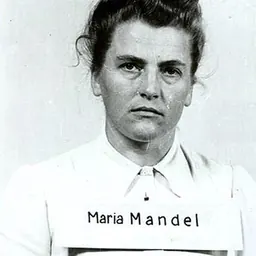
Auschwitz Upon arrival in Auschwitz, Rosé was quarantined and became very ill, but eventually recovered. She assumed leadership of the Mädchenorchester von Auschwitz (Girls Orchestra of Auschwitz). The orchestra had been in existence before Rosé's arrival, a pet project of SS-Oberaufseherin ("SS chief supervisor") Maria Mandl. Before Rosé, the orchestra was conducted by Zofia Czajkowska, a Polish teacher. The ensemble consisted mainly of amateur musicians, with a string section, but also accordions, percussion, guitars, flute, recorder and mandolins, but lacked a brass section. Singers and music-copyists rounded-out the membership of the Music Block. The orchestra's primary function was to play at the main gate each morning and evening as the prisoners left for and returned from their work assignments; the orchestra also gave weekend concerts for the prisoners and the SS and entertained at SS functions.
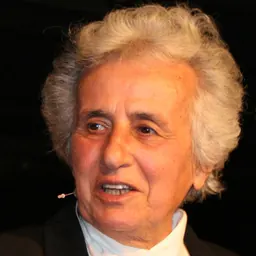
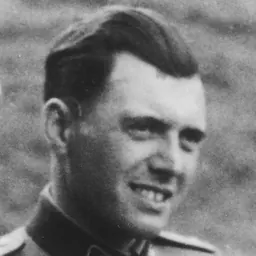
Rosé conducted, orchestrated and sometimes played violin solos during its concerts. Apart from the official activity, she had the band rehearse and play forbidden music by Polish and Jewish composers to boost the spirits of band members and fellow inmates they trusted. She herself orchestrated Fryderyk Chopin's Etude in E major, Op. 10, No. 3 and combined it with the lyrics she wrote. The conductor's strict and perfectionistic teaching style helped mold the orchestra into an excellent ensemble, all of whose members survived during her tenure, and after her death, all except two (Lola Kroner and Julie Stroumsa) would live to see the end of the war. Rosé instructed orchestra members that they would "survive together or die together. There was no halfway road". During this illness, Josef Mengele signed an order for spinal tap on Rosé. The orchestra included several professional musicians, cellist Anita Lasker-Wallfisch and vocalist/pianist Fania Fénelon, each of whom wrote memoirs of their time in the orchestra, but also Claire Monis and Hélène Rounder, who both survived as well. Fénelon's account, Playing for Time, was made into a television film of the same name, and was decried by orchestra survivors as being misleading, and containing preposterous distortions of the truth.
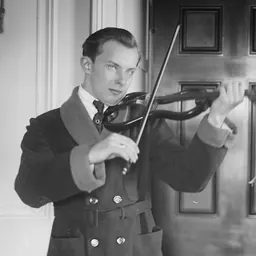
Personal life In 1930, Rosé married the Czech violinist Váša Příhoda, before later divorcing in 1935.
Legacy Her experiences in the camp were depicted in Playing for Time.
Exilarte, the center for recovery, preservation and reintegration of music suppressed by National Socialism, decdicated its first concert in 2006 to Alma Rosé. Another concert dedicated to the musician took place on January 27th, 2026 in the Palais Ehrbar in Vienna, performing compositions by Gideon Klein, Viktor Ullmann, Hans Gál and Erwin Schulhoff.
The Alma Rosé Quartett was founded in autumn of 2022.
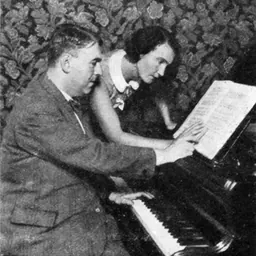
Recordings Arnold Rosé's performances together with Alma were eventually released on CD.
Don’t just read it —
keep it.
Full-length biographies made to live with: read them, listen on the way to work, watch them tonight.
- E-book
- Audio
- Video
Instant download · yours to keep · every purchase keeps this site free
Important facts
People in Alma Rosé's life
Named in this biography and alive at the same time



Related people
Same field, nearest in time


Contemporaries
People whose lives overlapped Alma Rosé's


Frequently asked questions
Who was Alma Rosé?
Austrian musician (1906–1944)
When was Alma Rosé born?
Alma Rosé was born on 3 November 1906 in Vienna.
When did Alma Rosé die?
Alma Rosé died on 4 April 1944 in Auschwitz II-Birkenau concentration camp, Auschwitz.
What was Alma Rosé's occupation?
Alma Rosé was a conductor, violinist, choir director and musician.
What nationality was Alma Rosé?
Alma Rosé was Austrian.
Sources & further reading
Cite this page
APA: Biography.guide. (2026). Alma Rosé. https://biography.guide/alma-rose/
MLA: "Alma Rosé." Biography.guide, https://biography.guide/alma-rose/.
Chicago: "Alma Rosé." Biography.guide. https://biography.guide/alma-rose/.
Data last updated: 2026-09-20 · Spot an error? Report a correction.
Page generated 2026-09-27 05:27 UTC