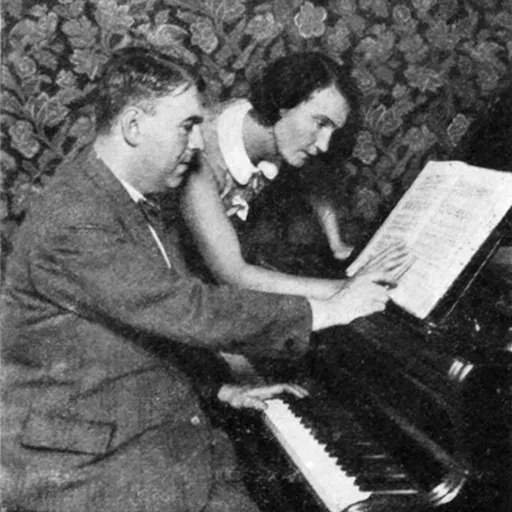
About Erwin Schulhoff
Lived 1894 – 1942 (aged 48). Erwin Schulhoff was a Czech and Austrian composer, pianist, choreographer, conductor and musician.
Erwin Schulhoff (; 8 June 189418 August 1942) was an Austro-Czech composer and pianist. He was one of the figures in the generation of European musicians whose successful careers were prematurely terminated by the rise of the Nazi regime in Germany and whose works have been rarely noted or performed beyond Czechoslovakia until the 1980s.
Life Schulhoff was born in Prague into a German family of Ashkenazi Jewish ancestry. His father Gustav Schulhoff was a wool merchant from Prague and his mother Louise Wolff from Frankfurt. The pianist and composer Julius Schulhoff was his great-uncle.
Antonín Dvořák encouraged Schulhoff's earliest musical studies, which began at the Prague Conservatory when he was ten years old. and Cologne; where his teachers included Claude Debussy, Max Reger, Fritz Steinbach, and Willi Thern. He won the Mendelssohn Prize twice, for piano in 1913 and for composition in 1918. He served on the Russian front in the Austro-Hungarian army during World War I. He was wounded and was in an Italian prisoner-of-war camp when the war ended. He lived in Germany after the war before returning in 1923 to Prague, where he joined the faculty of the conservatory in 1929. Schulhoff also embraced the avant-garde influence of Dadaism in his performances and compositions after World War I. When organizing concerts of avant-garde music in 1919, he included this manifesto: He also toured Germany, France and England performing his own works, contemporary classical compositions, and jazz. He wrote in a letter to his friend Alban Berg in 1921:
Olin Downes praised a performance of Schulhoff's Five Pieces for String Quartet at the 1924 Festival of the International Society for Contemporary Music in Salzburg:
Downes reported that following the performance Schulhoff played American ragtime numbers on piano at a local inn "till the walls tottered". A 1930 performance of Schulhoff's Partita by Walter Gieseking proved to be the audience's favorite work of the recital "to judge from the applause and laughter" wrote one reviewer, "which greeted the sections bearing such titles as 'All Art is Useless' and 'Alexander, Alexander, You Are a Salamander'."
He composed his Concerto for String Quartet and Wind Orchestra in 1930, which provides, in one critic's estimation, "a fascinating inversion of the traditional concerto grosso style, with winds providing the framework of the piece as a whole, within which the string quartet appears as contrast and solo."
In the 1930s, Schulhoff faced mounting personal and professional difficulties. Because of his Jewish descent and his radical politics, he and his works were labelled "degenerate" and blacklisted by the Nazi regime. He could no longer give recitals in Germany, nor could his works be performed publicly.
His communist sympathies, which became increasingly evident in his works, also brought him trouble in Czechoslovakia. In 1932 he composed a musical version of The Communist Manifesto (Op. 82). Taking refuge in Prague, Schulhoff found employment as a radio pianist, but earned barely enough to cover the cost of everyday essentials. When the Nazis invaded Czechoslovakia in 1939, he had to perform under a pseudonym. In 1941, the Soviet Union approved his petition for citizenship, but he was arrested and imprisoned before he could leave Czechoslovakia.
In June 1941, Schulhoff was deported to the Wülzburg prison near Weißenburg, Bavaria. He died there on 18 August 1942 from tuberculosis.
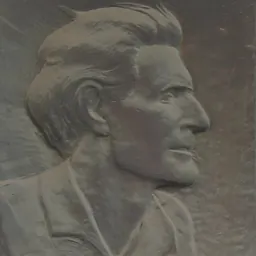
Musical style This bust of Erwin Schulhoff in the fortress Wülzburg near Weißenburg in Bayern was created by Reinhart Fuchs and inaugurated on 2 October 2004. Schulhoff went through a number of distinct stylistic periods, ranging, in Anne Midgette's words, "from the endearing self-consciousness of talented youth in the Suite for Chamber Orchestra to the fierce somber aggression of the Fifth Symphony." She found that even as his style changed there was a certain commonality, so that even the "angular, forceful, even raw style" of the late Fifth Symphony reflected "the late Romantic tradition of orchestral color". A 1923 report of a Bochum performance puts Schulhoff in the context of his contemporaries:
Schulhoff's third period dates from approximately 1923 to 1932. The pieces composed during these years, his most prolific years as a composer, are the most frequently performed of his works, including the String Quartet No. 1 and Five Pieces for String Quartet, which integrate modernist vocabulary, neoclassical elements, jazz, and dance rhythms from a variety of sources and cultures. He thought of jazz as a dance idiom and in a 1924 essay expressed the view that no one, including Stravinsky and Auric, had yet successfully blended jazz and art music. Performers of his Sonata for Violin and Piano No. 2 (1927) have described how it "draws liberally on the composers interests and abilities as a bona fide jazzman, acerbic wit and dance aficionado" and said its andante has "the kind of expressivity you find in the music of Berg". One critic has written that "Schulhoff's notion of what constitutes jazz is as surreal as some of the Dadaist texts he set...; some of the music is rather more indebted to de Falla and Russian Orientalism than ragtime or anything trans-Atlantic." while a performance in 2012 noted it was dedicated to Janáček, evokes Ravel's Sonata for Violin and Cello and "blends folk and contemporary elements" while employing "a range of sonorities and effects like dramatic pizzicatos" while "vivacious Hungarian fiddle playing enlivens the Zingaresca movement".
His jazz oratorio H.M.S. Royal Oak is based on the true story of the "Royal Oak affair", in which two Royal Navy officers were court-martialled for writing letters of complaint about the conduct of their Flag Admiral. Schulhoff casts his oratorio as the tale of a mutiny breaking out when a superior officer prohibits jazz on board.
The final period of his career was dedicated to socialist realism, with Communist ideology frequently in the foreground.
In general, Schulhoff's music remains connected to Western tonality, though—like Prokofiev, among others—the fundamentally triadic conception of his music is often embellished by passages of intense dissonance. Other features characteristic of Schulhoff's compositional style are use of modal and quartal harmonies, dance rhythms, and a comparatively free approach to form. The work of the Second Viennese School was also important to Schulhoff, though he never adopted serialism as a compositional tool.
The papers of conferences in Cologne (1992) and in Düsseldorf (1994) focused on Schulhoff's work have been published.
Personal life In August 1921 he married Alice Libochowitz. The following year he moved to Berlin in an effort to write musical parallels to the work of George Grosz.
5 Etudes de jazz for piano (c.1910–1920) Violin Sonata No. 1, Op.7 (1913) Piano Concerto No. 1, Op.11 (1913) Divertimento for String Quartet (1914) Cello Sonata (1914) String Quartet No. 0, Op.25 (1918) Sonata Erotica for female voice solo (1919), "in which a soprano spends several minutes faking a carefully notated orgasm" Suite for Chamber Orchestra (1921), originally called In the New Style, six dances, "this bouncy, even silly work features instruments never used in the classical repertoire before, like slide whistles and car horns" Suite dansante en jazz for piano (1931), in six dance movements: "a short fast Stomp, a languorous Strait, a parodistic Waltz, a sensuous Tango, a languid Slow, and...a fast and lascivious Fox Trot" Das kommunistische Manifest, oratorio (1932) Symphony No. 4 (1937) Symphony No. 5 (1938–39) Symphony No. 6 "Svobody" for chorus and orchestra (1940) Symphony No. 7, in piano score only (1941–42) Symphony No. 8, incomplete, in piano score only (1941–42) Suite for Violin and Piano Variations on an original Dorian theme and Fugato, op. 10, theme, 15 variations, and fugue (date?)
Don’t just read it —
keep it.
Full-length biographies made to live with: read them, listen on the way to work, watch them tonight.
- E-book
- Audio
- Video
Instant download · yours to keep · every purchase keeps this site free
Important facts
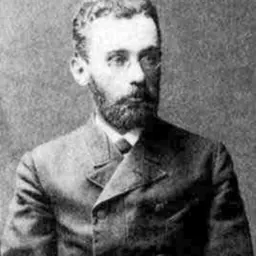
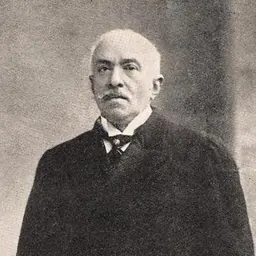
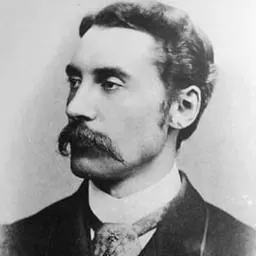
People in Erwin Schulhoff's life
Named in this biography and alive at the same time

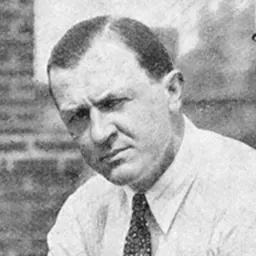
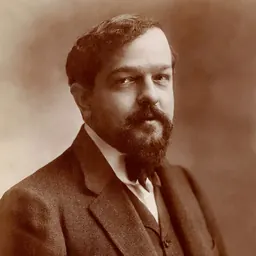


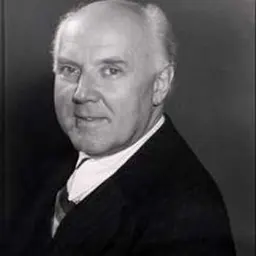
Related people
Same field, nearest in time



Contemporaries
People whose lives overlapped Erwin Schulhoff's

Frequently asked questions
Who was Erwin Schulhoff?
Czech composer and pianist (1894–1942)
When was Erwin Schulhoff born?
Erwin Schulhoff was born on 8 June 1894 in Prague.
When did Erwin Schulhoff die?
Erwin Schulhoff died on 18 August 1942 in Wülzburg.
What was Erwin Schulhoff's occupation?
Erwin Schulhoff was a composer, pianist, choreographer, conductor and musician.
What nationality was Erwin Schulhoff?
Erwin Schulhoff was Czech and Austrian.
Sources & further reading
Cite this page
APA: Biography.guide. (2026). Erwin Schulhoff. https://biography.guide/erwin-schulhoff/
MLA: "Erwin Schulhoff." Biography.guide, https://biography.guide/erwin-schulhoff/.
Chicago: "Erwin Schulhoff." Biography.guide. https://biography.guide/erwin-schulhoff/.
Data last updated: 2026-09-22 · Spot an error? Report a correction.
Page generated 2026-09-27 05:10 UTC