
Alma Mahler
Austrian composer, art collector, author, editor, and socialite
About Alma Mahler
Lived 1879 – 1964 (aged 85). Alma Mahler was an Austrian and American composer, painter, biographer, model, writer and art collector.
Alma Mahler-Werfel (born Alma Margaretha Maria Schindler; 31 August 1879 – 11 December 1964) was an Austrian composer, author, editor, and socialite. Musically active from her early years, she became a fixture of Vienna's fin de siècle cultural scene, and struck up friendships and relationships with a number of notable artists and composers.
Alma was trained in composition by Max Burckhard, but ceased her compositional activity in 1902, when she married composer Gustav Mahler, who died in 1911. Between 1911 and 1914 she had a passionate affair with Oskar Kokoschka. In 1915, Alma married Walter Gropius, and they had a daughter, Manon Gropius. Throughout her marriage to Gropius, Alma engaged in an affair with Franz Werfel. Following her separation from Gropius, Alma and Werfel eventually married.
In 1938, after Nazi Germany annexed Austria, Werfel and Alma fled to France, as it was unsafe for the Jewish Werfel in Austria. In 1940, they escaped via Spain and Portugal to the US. Eventually, the couple settled in Los Angeles. In later years, her salon became part of the artistic scene (as before in Vienna), first in Los Angeles, then in New York.
Early years Alma Maria Schindler was born on 31 August 1879 in Vienna, Austria, (then Austria-Hungary) to the famous landscape painter Emil Jakob Schindler and his wife Anna Sofie. She was tutored at home and brought up in the Catholic Church. In 1886, Crown Prince Rudolf found interest in Emil Jakob Schindler's paintings and commissioned Schindler to take a trip with his family to the Adriatic coast to produce landscape paintings. In 1892, the family also traveled to the North Sea island of Sylt, where Emil Schindler died. In 1899 they had a daughter together named Maria.
Alma teased Zemlinsky about what she thought were his ugly features, saying she could easily have "ten others" to replace him. She also noted that to marry Zemlinsky would mean she would "bring short, degenerate Jew-children into the world". These songs have been performed and recorded regularly since the 1980s. Orchestral versions of the accompaniments have been produced. Seven songs were orchestrated by David and Colin Matthews (published by Universal Edition), and all 17 songs were orchestrated by Julian Reynolds, and by Jorma Panula. In recent decades, Mahler's compositions have received renewed scholarly attention, particularly through feminist musicology.
Works Compositions cited from Mahler, A Complete Songs unless otherwise noted. (i) Hymne (Hymn; Novalis) (ii) Ekstase (Ecstasy; Bierbaum) (iii) Der Erkennende (The Recognizer; Werfel) (iv) Lobgesang (Song of Praise; Dehmel) (v) Hymne an die Nacht (Hymn to the Night; Novalis) Posthumously published Leise weht ein erstes Blühn (Softly Drifts a First Blossom; Rilke), for voice and piano (published 2000 by Susan M. Filler) Kennst du meine Nächte? (Do You Know My Nights?; Leo Greiner), for voice and piano (published 2000 by Susan M. Filler) Einsamer Gang (Lonely Walk, Leo Greiner), for voice and piano (published London 2018 by Barry Millington)
Marriage to Gustav Mahler
On 9 March 1902, she married Gustav Mahler, who was 19 years her senior and the director of the Vienna Court Opera. With him she had two daughters, Maria Anna (1902–1907), who died of scarlet fever or diphtheria, and Anna (1904–1988), who later became a sculptor.
In June 1910, after becoming severely depressed in the wake of Maria's death, Alma began an affair with the young architect Walter Gropius (later head of the Bauhaus), whom she met during a rest at a spa.
Following the emotional crisis in their marriage after Gustav's discovery of Alma's affair with Gropius, Gustav began to take a serious interest in Alma's musical compositions, regretting his earlier dismissive attitude and taking promotional actions. Gustav edited some of her songs (Die stille Stadt, In meines Vaters Garten, Laue Sommernacht, Bei dir ist es traut, Ich wandle unter Blumen). Between 1912 and 1914 she had a tumultuous affair with the artist Oskar Kokoschka, who created works inspired by their relationship, including his painting The Bride of the Wind.
As exit visas could not be obtained, Fry and Unitarian Waitstill Sharp arranged for the Werfels to journey on foot across the Pyrenees into Spain to evade the Vichy French border officials. From Spain, Alma and Franz traveled to Portugal. They stayed in Monte Estoril, at the Grande Hotel D'Itália, between 8 September and 4 October 1940. On the same day, they boarded the S.S. Nea Hellas headed for New York City, arriving on 13 October.
Eventually they settled in Los Angeles, where Alma continued her role as a hostess, bringing together Arnold Schoenberg, Igor Stravinsky, Thomas Mann, and many other artists. Werfel, who had enjoyed moderate renown in the US as an author, achieved popular success with his novel The Song of Bernadette, and the science fiction novel Star of the Unborn, published after his death. Werfel, who had experienced serious heart problems throughout his exile, died of a heart attack in California in 1945. Benjamin Britten, considering her to be a "living" link to both Mahler and Alban Berg, dedicated his Nocturne for Tenor and Small Orchestra to her.
Death
Alma Mahler-Werfel died 11 December 1964 in New York City. She was survived by her only surviving child, her daughter Anna, and two granddaughters. She was buried on 8 February 1965 in the Grinzing Cemetery of Vienna in the same grave as her daughter Manon Gropius and a few steps away from Gustav Mahler. The paintings were A Summer's Night on the Beach (1902) by Edvard Munch and three landscapes by her great-grandfather Emil Jakob Schindler. Alma Werfel had loaned the paintings to the Oesterreichische Galerie before fleeing the Nazis; Carl Moll, a militant Nazi, gained control of them, selling the Munch to the Oesterreichische Galerie in 1940 and keeping the others until, fearing retribution from the Red Army, he committed suicide. Mahler-Werfel filed claims after the war but was only able to recover the Kokoschka portrait. When Austria modified its restrictive restitution laws, the granddaughter revived the claims. Austria initially rejected the claim. After a restitution battle that lasted six decades, Austria finally agreed to restitute the stolen Munch in 2006.
The Alma Problem
Mahler-Werfel's two books on Gustav Mahler influenced studies of the latter. As an articulate, well-connected, and influential woman who outlived her first husband by more than 50 years, Mahler-Werfel was for decades treated as the main authority on the mature Gustav Mahler's values, character, and day-to-day behavior, and her various publications quickly became the central source material for Mahler scholars and music-lovers alike. As scholars investigated her depiction of Mahler and her relationship with him, her accounts have increasingly been revealed as unreliable, false, and misleading. Nevertheless, the deliberate distortions have had a significant influence on several generations of scholars, interpreters, and music-lovers. Countering this stance is that of musicologist Nancy Newman, as the "juiciest, spiciest, raciest" obituary he had ever read. It prompted him to write the ballad, "Alma", portraying her as "the loveliest girl in Vienna ... the smartest as well". Lehrer writes, "All modern women are jealous" of her "for bagging Gustav and Walter and Franz", each of whom came under her "spell".
In the 1974 film Mahler, by director Ken Russell, Gustav Mahler, while on his last train journey, remembers the important events of his life, such as his relationship with his wife, the deaths of his brother and young daughter, and his trouble with the muses. In the film, Alma was portrayed by Georgina Hale and Gustav by Robert Powell.
In 1996, Israeli writer Joshua Sobol and Austrian director Paulus Manker created the polydrama Alma. It played in Vienna for six successive seasons and toured with over 400 performances to Venice, Lisbon, Los Angeles, Petronell, Berlin, Semmering, Jerusalem, and Prague—all places where Mahler-Werfel had lived. The show was made into a three-part TV miniseries in 1997.
Mohammed Fairouz set the words of Alma Mahler in his song cycle Jeder Mensch. It premiered in a coupling with songs of Alma Mahler by mezzo-soprano Kate Lindsey in 2011.
A treatment of Mahler-Werfel's life was presented in the 2001 Bruce Beresford film Bride of the Wind, in which Alma was played by Australian actress Sarah Wynter. Gustav Mahler was portrayed by British actor Jonathan Pryce. Swiss actor Vincent Pérez portrayed Oskar Kokoschka.
In 1998, extracts from Alma's diaries were published, covering the years from 1898 to 1902, until the time she married Mahler. In the 2001 novel The Artist's Wife by Max Phillips, she tells her story from the afterlife, focusing on her complicated relationships.
In 2010, the German filmmaker Percy Adlon and his son released their film Mahler auf der Couch (Mahler on the Couch), which relates Gustav Mahler's tormented relationship with his wife, Alma, and his meeting with Sigmund Freud in 1910. In the film's introduction, the directors state, "That it happened is fact. How it happened is fiction."
Alma appears in chapter 6, "Montredon" of the 2019 novel, The Flight Portfolio, by Julie Orringer. She and Werfel are depicted meeting with Varian Fry to discuss the arrangements Fry is trying to make in order to effect their escape from France.
Roz Chast, drew a comic serial entitled "The Inescapable Thingness" in The New Yorker online magazine regarding the doll that Oskar Kokoschka commissioned Hermine Moos to make of Alma after their affair had ended.
Don’t just read it —
keep it.
Full-length biographies made to live with: read them, listen on the way to work, watch them tonight.
- E-book
- Audio
- Video
Instant download · yours to keep · every purchase keeps this site free
Important facts
more
Alma Schindler-Mahler, Alma Maria Mahler-Werfel, Alma Gropius, Alma Schindler Mahler Werfel, Alma Mahlerová, Anna Maria Schindler, Alma Mahler Werfel, Alma Mahler Welfer, Anna Mahlerová-WerfelováFamily & relationships
People in Alma Mahler's life
Named in this biography and alive at the same time
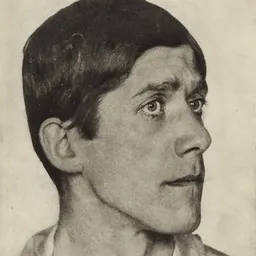


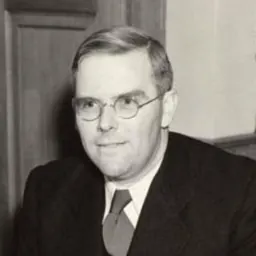
Related people
Same field, nearest in time
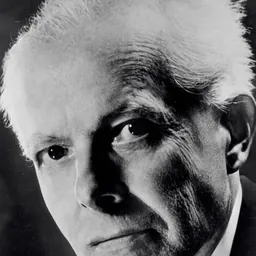



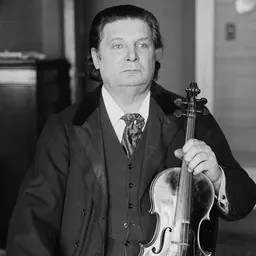
Contemporaries
People whose lives overlapped Alma Mahler's


Frequently asked questions
Who was Alma Mahler?
Austrian composer, art collector, author, editor, and socialite (1879-1964)
When was Alma Mahler born?
Alma Mahler was born on 31 August 1879 in Vienna.
When did Alma Mahler die?
Alma Mahler died on 11 December 1964 in New York City.
What was Alma Mahler's occupation?
Alma Mahler was a composer, painter, biographer, model, writer and art collector.
What nationality was Alma Mahler?
Alma Mahler was Austrian and American.
Sources & further reading
Cite this page
APA: Biography.guide. (2026). Alma Mahler. https://biography.guide/alma-mahler/
MLA: "Alma Mahler." Biography.guide, https://biography.guide/alma-mahler/.
Chicago: "Alma Mahler." Biography.guide. https://biography.guide/alma-mahler/.
Data last updated: 2026-09-26 · Spot an error? Report a correction.
Page generated 2026-09-27 05:16 UTC