
About Allan Randall Freelon
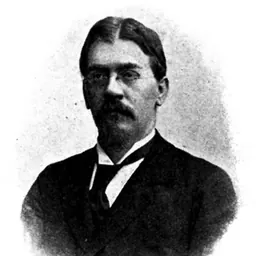
Lived 1895 – 1960 (aged 64). Allan Randall Freelon was an American painter, artist, teacher and graphic artist, known for Arts in education.
Allan Randall Freelon Sr. (September 2, 1895 – August 6, 1960), a native of Philadelphia, US, was an African American artist, educator and civil rights activist. He is best known as an African American Impressionist-style painter during the time of the Harlem Renaissance and as the first African American to be appointed art supervisor of the Philadelphia School District.
Personal life Born in Philadelphia on September 2, 1895, to Douglas Freelon and Laura E. (Goodwin) Freelon, Freelon was the oldest of three children. On September 4, 1918, he married Marie J. Cuyjet, and they had one child, Allan Randall Freelon Jr. At some point Freelon and Cuyjet divorced; Freelon was married to Mary Kouzmanoff at the time of his death, August 6, 1960. He died while at his art studio in Telford, Pennsylvania. Architect Philip Freelon is his grandson. now the University of the Arts (Philadelphia), from which he graduated in 1916 with a diploma in normal art instruction (what would be called art education today). From there he attended the Philadelphia School of Pedagogy, an upper division of Central High School created to prepare men for teaching careers. Following a stint in the Army from 1917 to 1919, where he served as a second lieutenant, followed by private studies with Emile Gruppe, modernist Earl Horter (1881–1940), neo-Impressionist Hugh Breckenridge (1870–1937), and printmaker Dox Thrash (1892–1965), and the earning of an MFA in 1943 from Tyler School of Art of Temple University.
Artistic career
One of Freelon's earliest documented exhibitions also happened to be the first exhibition of African-American art in Harlem, at the 135th Street Branch of the New York Public Library, now part of the Schomburg Center for Research in Black Culture. He later exhibited from 1928 to 1932 and in 1934 with the William E. Harmon Foundation, and Lehigh Art Alliance (Lehigh, PA). He wrote:
Quote|text=I have not attempted to portray any particular lynching, but merely to record the horror of what has come to be a major sports event... He served as an editor of and contributor to the literary and art magazine, Black Opals.
Formed in 1937, the Pyramid Club provided prominent African Americans, who were excluded from most clubs, with opportunities to meet and network. From March 2–16, 1941, the Pyramid Club sponsored the first of its annual invitational art exhibits, 20th Century Negro Contemporary Artists and Memorial Paintings of Henry O. Tanner. Freelon was asked to speak at the inaugural event, and discussed the role of the Black artist and his influence in current events.
Coming of artistic age during the time of the "New Negro", Freelon found himself in aesthetic disagreement with fellow Philadelphian Alain LeRoy Locke, who urged African American artists to take up African themes as the source for their art in The New Negro (NY: Boni, 1925). Freelon "vigorously defended the artist's right to freedom of expression", of James A. Porter's book, Modern Negro Art:
Freelon's work was featured in the 2015 exhibition We Speak: Black Artists in Philadelphia, 1920s-1970s at the Woodmere Art Museum.
Teaching career Following his 1919 graduation from the Philadelphia School of Pedagogy, He placed first in that examination and held that position until his death. Deeply interested in printmaking, Freelon taught etching and lithography at the Philadelphia Museum of Art from 1940 to 1946.
In addition to his public school teaching career, Freelon taught classes at the Telford, Pennsylvania, studio he called Windy Crest. He lost.
Don’t just read it —
keep it.
Full-length biographies made to live with: read them, listen on the way to work, watch them tonight.
- E-book
- Audio
- Video
Instant download · yours to keep · every purchase keeps this site free
Important facts
People in Allan Randall Freelon's life
Named in this biography and alive at the same time


Related people
Same field, nearest in time


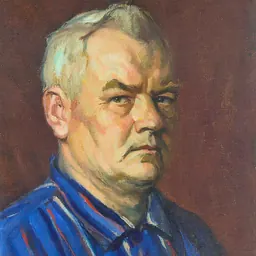
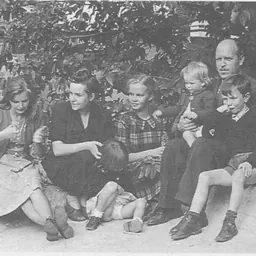
Contemporaries
People whose lives overlapped Allan Randall Freelon's
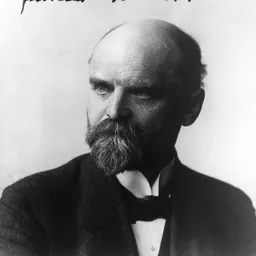
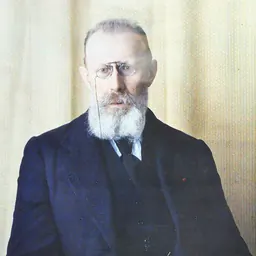
Frequently asked questions
Who was Allan Randall Freelon?
African American artist (1895–1960)
When was Allan Randall Freelon born?
Allan Randall Freelon was born on 2 September 1895 in Philadelphia.
When did Allan Randall Freelon die?
Allan Randall Freelon died on 6 August 1960 in Telford.
What was Allan Randall Freelon's occupation?
Allan Randall Freelon was a painter, artist, teacher and graphic artist.
What was Allan Randall Freelon known for?
Allan Randall Freelon was known for Arts in education.
What nationality was Allan Randall Freelon?
Allan Randall Freelon was American.
Sources & further reading
· Wikipedia: Allan Randall Freelon
· DBpedia: Allan Randall Freelon
Cite this page
APA: Biography.guide. (2026). Allan Randall Freelon. https://biography.guide/allan-randall-freelon/
MLA: "Allan Randall Freelon." Biography.guide, https://biography.guide/allan-randall-freelon/.
Chicago: "Allan Randall Freelon." Biography.guide. https://biography.guide/allan-randall-freelon/.
Data last updated: 2026-09-20 · Spot an error? Report a correction.
Page generated 2026-09-27 05:09 UTC