
About Alistair Cameron Crombie
Lived 1915 – 1996 (aged 80). Alistair Cameron Crombie was an Australian historian of science, zoologist, historian, researcher and university teacher.
Alistair Cameron Crombie (4 November 1915 – 9 February 1996) was an Australian historian of science who began his career as a zoologist. He was noted for his contributions to research on competition between species before turning to history.
Early life and education
Born in Brisbane, Australia, Crombie was educated at the Church of England Grammar School and Geelong Grammar School. He then undertook tertiary study in Science at the University of Melbourne, where he was a resident from 1935 at Trinity College. During his studies in Melbourne, he won the First Brunning Prize in Botany Part I (1935) and the Exhibition in Zoology Part III (1937).
Crombie undertook postgraduate study at Jesus College, Cambridge, receiving his doctorate in 1942 in the area of population dynamics. He married Nancy Hey in 1943 and had five children. He undertook research at the Cambridge Zoological Laboratory for the British Ministry of Agriculture and Fisheries from 1941 until he was appointed as lecturer at University College London in 1946. Involved in the establishment of the British Society for the History of Science in 1947 (and later its President from 1964 to 1968), he was an early editor of the British Journal for the Philosophy of Science. During Crombie's tenure at Oxford, the history of science was added to the graduate level offerings of Oxford's history faculty.
Career
Crombie was one of the founders of the review journal History of Science in 1962, and was awarded the Galileo Prize by the Domus Galileana in Pisa in 1964. Crombie served as President of the Académie Internationale d’Histoire des Sciences from 1968 to 1971. He became a fellow at Trinity College, Oxford, in 1970, but was passed over for the Chair in history of science when it was created at Oxford in 1971. He retired in 1983 and took up a half-time appointment as Kennedy Professor in the Renaissance at Smith College, Massachusetts, and was Professor of History of Science and Medicine there from 1983 to 1985. He also held many visiting professorships in France, Germany and Japan. He was made a Senior Fellow of the British Academy in 1990 and was also made a member of the Pontifical Academy of Sciences (1994) and the Academia Leopoldina in Halle, Germany. He received the Forschungspreis (Research Award) of the Alexander von Humboldt Foundation, honorary doctorates from Durham (1978), Paris, X-Nanterre and Sassari, and the European Premio Dondi (1995).
During his career as a historian of science, Crombie identified thematic threads or "styles" in the development of European approaches to science. He published his ideas in 1994 in a definitive 3-volume work, entitled, Styles of Scientific Thinking in the European Tradition: The History of Argument and Explanation especially in the Mathematical and Biomedical Sciences and Arts. The main argument about six distinct styles of scientific thinking in the history of Western science was also published in the brief 1995 article Commitments and Styles of European Scientific Thinking. Crombie's analysis of the six styles was taken up by philosopher of science Ian Hacking, who further developed this perspective. During Crombie's tenure he supervised several students, including Robert Fox (Professor of the History of Science, Oxford University), David M Knight (Professor of the History and Philosophy of Science, Durham University); German E Berrios (Professor of the Epistemology of Psychiatry, University of Cambridge) and Trevor Levere (Professor of the History of Science, University of Toronto).
Don’t just read it —
keep it.
Full-length biographies made to live with: read them, listen on the way to work, watch them tonight.
- E-book
- Audio
- Video
Instant download · yours to keep · every purchase keeps this site free
Important facts
People in Alistair Cameron Crombie's life
Named in this biography and alive at the same time



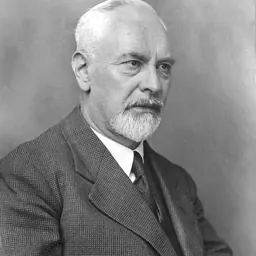
Related people
Same field, nearest in time


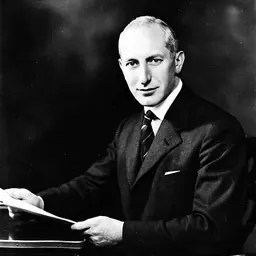


Contemporaries
People whose lives overlapped Alistair Cameron Crombie's




Frequently asked questions
Who was Alistair Cameron Crombie?
Australian zoologist, historian of science (1915-1996)
When was Alistair Cameron Crombie born?
Alistair Cameron Crombie was born on 4 November 1915 in Brisbane, Australia.
When did Alistair Cameron Crombie die?
Alistair Cameron Crombie died on 9 February 1996 in Oxford.
What was Alistair Cameron Crombie's occupation?
Alistair Cameron Crombie was a historian of science, zoologist, historian, researcher and university teacher.
What nationality was Alistair Cameron Crombie?
Alistair Cameron Crombie was Australian.
Sources & further reading
· Wikipedia: Alistair Cameron Crombie
· DBpedia: Alistair Cameron Crombie
Cite this page
APA: Biography.guide. (2026). Alistair Cameron Crombie. https://biography.guide/alistair-cameron-crombie/
MLA: "Alistair Cameron Crombie." Biography.guide, https://biography.guide/alistair-cameron-crombie/.
Chicago: "Alistair Cameron Crombie." Biography.guide. https://biography.guide/alistair-cameron-crombie/.
Data last updated: 2026-09-22 · Spot an error? Report a correction.
Page generated 2026-09-27 05:02 UTC