
About Alice Lee
Lived 1858 – 1939 (aged 81). Alice Lee was a British statistician, mathematician, research fellow and eugenicist.
Alice Lee (1858–1939) was a British statistician and mathematician, one of the first women to graduate from London University. She was awarded a PhD in 1901. She worked with Karl Pearson from 1892. She was notable for demonstrating that the correlation between cranial capacity and gender was not a sign of greater intelligence in men compared to women.
Early life and education Lee was born on 28 June 1858 in Dedham, Essex to William Lee (1821/2-1887), a master coach builder, and Matilda Wren(n) Baker (1822/3-1903). In 1876, she enrolled at Bedford College, the first college to provide education for girls in the United Kingdom. In 1879–80 she attended the college's first class in higher mathematics, and she was one of the first women to graduate from the University of London (Bedford College was then a women's college of the University), getting a BSc in 1884 and a BA in 1885. She then stayed at Bedford until 1916, initially as a lecturer in mathematics and physics. From 1892 to 1894, she also worked as 'resident helper' at the college, receiving free board and lodging in return. Later she also helped out in Greek and Latin classes.
Scientific practice Lee's 1901 paper A study of the correlation of the human skull includes this table with estimated skull capacity of 35 anatomists, the lowest being that of Julius Kollmann who she calls "one of the ablest living anthropologists". From about 1895, Lee attended Karl Pearson's statistics lectures at University College London and became interested in his application of statistical methods to evolutionary biology. Under his direction, she studied for an advanced degree. Her research topic was an investigation of variation in cranial capacity in humans and its correlation with intellectual ability. Lee courted controversy with her first published paper on the subject in 1901 A study of the correlation of the human skull.
From 1892, Lee worked in Pearson's biometric laboratory. Lee eventually received a salary of £90 a year and worked three days a week. Her duties included reducing data, computing correlation coefficients, creating histogram bar charts, and calculating new kind of chi-squared distribution statistics. In addition she did "all the hundred and one things that need doing" and acted as a laboratory secretary. Pearson funded her salary though a grant and showed embarrassment that compared to the salary of a female typist or stenographer Lee was not well paid. On the same grant Pearson also hired the sisters Beatrice Mabel Cave-Browne-Cave and Frances Cave-Browne-Cave as part-time computers. Flaws in craniology had been pointed out in the 19th century, but in the 1900s, craniology was discredited by empirical data. The final blow came in 1909 when Franklin P. Mall applied statistical measures to the study of the frontal lobe and fissures of the human brain, which had been associated with racial and sex differences, in his paper On several anatomical characters of the human brain, said to vary according to race and sex, with especial reference to the weight of the frontal lobe. He found no differences between male and female brains.
Publications Lee, A. (1901) Data for the problem of evolution in man: A first study of the correlation of the human skull. Philosophical Transactions of the Royal Society. London, 255-264 (read online). Pearson, K., & Lee, A. (5 July 1897). Mathematical contributions to the theory of evolution: On the relative variation and correlation in civilized and uncivilized races. Proceedings of the Royal Society, 61, 343-57 (read online). Pearson, K., & Lee, A. (1901). Mathematical contributions to the theory of evolution—VIII. On the Inheritance of characters not capable of exact quantitative measurement. Philosophical Transactions, 195A, 79-150 (read online). Pearson, K., & Lee, A. (February 1903). On the laws of inheritance in man. Biometrika, 2, 357-462 (read online). Pearson, K., Lee, A., & Bramley-Moore, L. (1899). Mathematical contributions to the theory of evolution: VI Genetic (reproductive) selection: Inheritance of fertility in man, and of fecundity in Thoroughbred race-horses, Philosophical Transactions, 192A, 257-330 (read online).
Don’t just read it —
keep it.
Full-length biographies made to live with: read them, listen on the way to work, watch them tonight.
- E-book
- Audio
- Video
Instant download · yours to keep · every purchase keeps this site free
Important facts
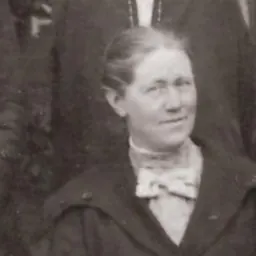
People in Alice Lee's life
Named in this biography and alive at the same time




Related people
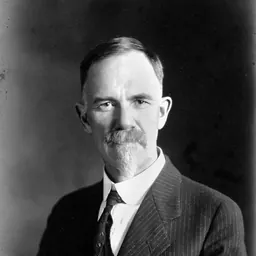
Same field, nearest in time



Contemporaries
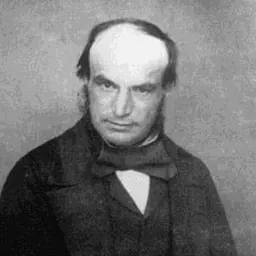
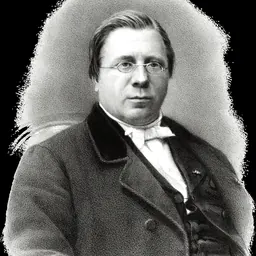
People whose lives overlapped Alice Lee's


Frequently asked questions
Who was Alice Lee?
British mathematician
When was Alice Lee born?
Alice Lee was born on 28 June 1858 in Dedham.
When did Alice Lee die?
Alice Lee died on 5 October 1939 in Rustington.
What was Alice Lee's occupation?
Alice Lee was a statistician, mathematician, research fellow and eugenicist.
What nationality was Alice Lee?
Alice Lee was British.
Sources & further reading
· DBpedia: Alice Lee (mathematician)
Cite this page
APA: Biography.guide. (2026). Alice Lee. https://biography.guide/alice-lee/
MLA: "Alice Lee." Biography.guide, https://biography.guide/alice-lee/.
Chicago: "Alice Lee." Biography.guide. https://biography.guide/alice-lee/.
Data last updated: 2026-09-25 · Spot an error? Report a correction.
Page generated 2026-09-27 05:12 UTC