
About Charles P. Neill
Lived 1865 – 1942 (aged 76). Charles P. Neill was an American statistician.
Charles Patrick Neill (December 12, 1865 – October 3, 1942) was an American civil servant who was raised in Austin, Texas, after his family emigrated from Ireland in 1850. Neill graduated from Johns Hopkins University in 1897 with a doctorate in economics and politics. He was appointed the United States Commissioner of Labor in 1906 by President Theodore Roosevelt. As Commissioner of Labor he helped inspect the Meat Packing industries, and reported women and child labor injustices. He also mediated labor disputes between workers and employers in the coal, railroad, and steel corporations.
Early years
Charles P. Neill was born on December 12, 1865, at Rock Island, Illinois. His parents, James and Julia Neill had emigrated from Ireland in 1850. The family moved to Austin, Texas, in 1871, where Charles' father, James, practiced law. Charles was employed as a bank messenger from 1876 to 1885. He attended the University of Notre Dame from 1885 to 1888 where he enjoyed his youth playing with snowballs. He then attended the University of Texas at Austin from 1888 to 1889 and finally graduated from Georgetown University in Washington, D.C., in 1891. He later taught at Notre Dame from 1891 to 1894. He studied at Johns Hopkins University from 1894 to 1897 and earned a doctorate in economics and politics. He then decided to continue teaching at the Catholic University of America, where he taught as an economics professor from 1896 to 1905 along with his peer Carroll D. Wright. He married Esther Waggaman of Washington, D.C., in 1901.
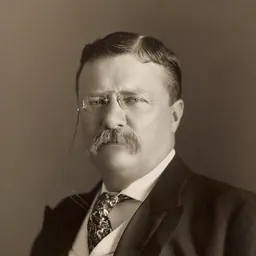
In 1902, Charles was appointed by President Roosevelt to serve as assistant recorder of the Anthracite Coal Strike Commission and his work received recognition. In 1904, the board of arbitration was appointed to defuse a threatened coal strike in Alabama, and one of the members, Judge George Gray of Delaware, made his participation dependent upon Charles serving as the recorder, which allowed for Charles to become better known in his field. Shortly after, in 1905, Roosevelt selected Neill to succeed Carroll D. Wright, who had also taught economics at Catholic University, as United States Commissioner of Labor from 1905 to 1913.
Work
President William Howard Taft reappointed Charles in 1909. Woodrow Wilson appointed him Commissioner of Labor Statistics in 1913 when the Department of Commerce and Labor was divided and the Bureau of Labor Statistics was established in the new Department of Labor. Neill provided federal mediation services in railroad labor disputes and he drafted the Newlands Labor Act in 1913. When Upton Sinclair wrote his book The Jungle, Roosevelt sent Neill to Chicago investigate the meat packing industry, when Neill returned he described the packing industries as being "revolting". This caused much controversy in society as the terrible unsanitary conditions were of meat products were being publicized. The Neill-Reynolds Report (which is what the investigation report was named) led to the Meat Inspection Act of 1906. The Pure Food and Drug Act, enacted on the same day in 1906, also gave the government broad jurisdiction over food in interstate commerce.
Many employers believed that getting women and children out of the farm and working in mills was actually better for them. However, this was proved untrue, as reports were publicized about the bad ventilation in these factories and the unsanitary conditions in which they were put to work. Also, it was noted that they did not receive the same benefits as men and were often used as cheap labor. As a result, Charles helped pass an 8-hour maximum work day. Charles P. Neill also exposed the shocking working hours and conditions in the Bethlehem Steel Works company, as well as writing a report on the strike of textile workers in Lawrence, Massachusetts, in 1912.
Later years
After his departure from the Department of Labor later in 1913, the skilled arbitrator was employed by Southeastern Railways from 1915 to 1939 to handle labor issues. He also served on the United States Railroad Board of Adjustments from 1919 to 1921.
He was honored by Notre Dame with the Laetare Medal in 1922. Charles Patrick Neill died in Washington, D.C., on October 3, 1942.
Papers
The Charles Patrick Neill Papers consist of seven manuscript boxes and one reel of microfilm from the years 1893 to 1956. His personal papers include correspondence, tax information (1940–1946), clippings and a scrapbook (1893–1903). Neill's professional papers contain correspondence (1904–1942) written while performing one of his various positions as professor, arbitrator, labor commissioner and so on.
Included with these papers are: Class notes and publications from his teaching career at the University of Notre Dame and the Catholic University of America Legal papers regarding various grievances brought by workmen against their bosses and the charges brought against Neill when he became Commissioner of Labor Statistics News clippings and other printed material dealing with his work for the Department of Labor Scrapbooks on microfilm concerning his Labor Department activities and his membership on the Railway Commission
However, Richard G. Balfe, notes that Neill destroyed most of his personal papers during the last year of his life; little remains apart from some press clippings and letters of congratulations from friends.
Books The beginnings of child labor legislation in certain states: a comparative study (1910) Some ethical aspects of the labor movement (1908)
Don’t just read it —
keep it.
Full-length biographies made to live with: read them, listen on the way to work, watch them tonight.
- E-book
- Audio
- Video
Instant download · yours to keep · every purchase keeps this site free
Important facts
People in Charles P. Neill's life
Named in this biography and alive at the same time




Related people
Same field, nearest in time

Contemporaries
People whose lives overlapped Charles P. Neill's




Frequently asked questions
Who was Charles P. Neill?
American statistician (1865–1942)
When was Charles P. Neill born?
Charles P. Neill was born on 12 December 1865 in Rock Island.
When did Charles P. Neill die?
Charles P. Neill died on 3 October 1942 in Washington, D.C..
What was Charles P. Neill's occupation?
Charles P. Neill was a statistician.
What nationality was Charles P. Neill?
Charles P. Neill was American.
Sources & further reading
Cite this page
APA: Biography.guide. (2026). Charles P. Neill. https://biography.guide/charles-p-neill/
MLA: "Charles P. Neill." Biography.guide, https://biography.guide/charles-p-neill/.
Chicago: "Charles P. Neill." Biography.guide. https://biography.guide/charles-p-neill/.
Data last updated: 2026-09-25 · Spot an error? Report a correction.
Page generated 2026-09-27 05:13 UTC