
About Alice Cunningham Fletcher
Lived 1838 – 1923 (aged 85). Alice Cunningham Fletcher was an American ethnologist, anthropologist, archaeologist, suffragist and writer.
Alice Cunningham Fletcher (March 15, 1838 – April 6, 1923) was an American ethnologist, anthropologist, and social scientist who studied and documented Native American culture. Fletcher was a proponent of Native American cultural assimilation, the Indian boarding school system, and private landownership among indigenous peoples.
Early life and education Not much is known about Fletcher's parents; her father was a New York lawyer and her mother was from a prominent Boston family. Her parents moved to Havana, Cuba in vain hopes of easing her father's illness with a better climate. Fletcher was born there in 1838. After her father died in 1839, the family moved to Brooklyn Heights, New York City. Fletcher was enrolled in the Brooklyn Female Academy, an exclusive school for the elite.
Career Fletcher taught school and later became a public lecturer to support herself, arguing that anthropologists and archaeologists were best at uncovering ancient history of humans. She also advocated for the education of Native Americans "so that they could gain accoutrements of civilization."
Fletcher credited Frederic Ward Putnam for stimulating her interest in American Indian culture and began working with him at the Peabody Museum of Archaeology and Ethnology, Harvard University. She studied the remnants of the Indian civilization in the Ohio and Mississippi valleys, and became a member of the Archaeological Institute of America in 1879.
From 1881, Fletcher was involved with the Carlisle Indian School in Pennsylvania, where native children learned English, arithmetic, and skills designed to allow them to be integrated American citizens.
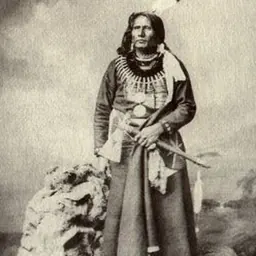
In 1881, Fletcher made an unprecedented trip to live with and study the Sioux on their reservation as a representative of the Peabody Museum. She was accompanied by Susette "Bright Eyes" La Flesche, an Omaha spokeswoman who had served as interpreter for Standing Bear in 1879 in his landmark civil rights trial.
In addition to her research and writing, Fletcher worked in several special appointed positions during the late nineteenth century. In 1883 she was appointed special agent by the US to allot lands to the Miwok tribes, in 1884 she prepared and sent to the World Cotton Centennial an exhibit showing the progress of civilization among the Indians of North America in the quarter-century previous, and in 1886 visited the natives of Alaska and the Aleutian Islands on a mission from the commissioner of education.
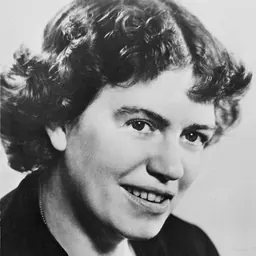
In 1930, Margaret Mead started work with the Omaha, and decided to concentrate on the modern aspects of the tribe, because of the extensive work already done by Alice Fletcher.
Dawes Act Alice Fletcher helped write and pass the Dawes Act of 1887. This act imposed a system of private land ownership on Indigenous tribes. This was a major change because traditionally these tribes had communal land ownership. Individual Indigenous peoples would be allotted up to 160 acres of land. This land was tax-free and was to be held in trust by the government for a period of 25 years. At the time, she thought it would enable American Indians to assimilate to European-American ways, as their best means of survival. The government also wanted to gain "surplus" land for sale to other Americans. The Dawes Act was accountable for the inevitable breakup of all Indigenous reservations. By 1932 the amount of land acquired was approximately 92,000,000 of the 138,000,000 acres Indigenous groups had owned in 1887.
Fieldwork among the Sioux Fletcher wrote about the experiences of her 1881 field trip in two journals. These journals included drawings of the plains, reservations, and many of her different campsites throughout eastern Nebraska and South Dakota. Even though many of her writings regarding the Sioux would seem rather insensible by contemporary anthropological standards, "Her writings reflect the attitudes regarding the movement of history and social evolution prevalent in her day".
Author In 1911, with Francis La Flesche, she published The Omaha Tribe. It is still considered to be the definitive work on the subject. Altogether she wrote 46 monographs on ethnology. From 1899 until 1916 Fletcher was on the editorial board of the American Anthropologist, and she also made major contributions to many issues.
Some of her recordings can be found in the Smithsonian Institution Bureau of American Ethnology.
Arthur Farwell's String Quartet in A major, Op. 65 The Hako, composed in 1923, was inspired by Fletcher's work.
Joan Mark's book about Fletcher, A Stranger in Her Native Land: Alice Fletcher and the American Indians (Lincoln: University of Nebraska Press, 1988) received the 1989 Margaret W. Rossiter History of Women in Science Prize.
Fletcher Nunatak in Antarctica is named after her.
Awards and honors Alice Fletcher received numerous honors for the work she accomplished throughout her career. In 1890 she was awarded the Margaret Copley Thaw Fellowship at Harvard, which granted her funding for ethnographic and reform work.
Selected works Sun Dance of the Ogallala Sioux. American Association for the Advancement of Science, 1883 Observations on the Laws and Privileges of the Gens in Indian Society. (abstract) AAAS, 1884 Symbolic Earth Formations of the Winnebagoes. (abstract) AAAS, 1884 The White Buffalo Festival of the Uncpapas. 16th Annual Report Peabody Museum, 1884 The Elk Mystery or Festival of the Ogallala Sioux. 16th Ann. Rep. Peabody Museum, 1884 The Religious Ceremony of the Four Winds as Observed by a Santee Sioux. 16th Ann. Rep. Peabody Museum, 1884 The Shadow or Ghost Lodge: A Ceremony of the Ogallala Sioux. 16th Ann. Rep. Peabody Museum, 1884 The Wa-Wan, or Pipe Dance of the Omahas. 16th Ann. Rep. Peabody Museum, 1884 Historical Sketch of the Omaha Tribe of Indians in Nebraska. Washington, 1885 Observations upon the Usage, Symbolism and Influence of the Sacred Pipes Of Friendship among the Omahas. AAAS, 1885 Lands in Severalty to Indians; Illustrated by Experience with the Omaha Tribe. AAAS, 1885 Indian Education and Civilization. Special Report, U.S. Bureau of Education. 1888 On the Preservation of Archaeologic Monuments. AAAS, 1888 Report of the Committee on the Preservation of Archaeologic Remains on Public Lands. AAAS, 1889 Phonetic Alphabet of the Winnebago Indians. AAAS, 1890 Indian Messiah. Journal. American Folk-Lore, 1892 Nez Perce Country. (abstract) AAAS, 1892 Hal-thu-ska Society of the Omaha Tribe. Jour. Am. Folk-Lore, 1892 A Study of Omaha Indian Music. Arch. and Eth. Papers Peabody Museum, 1893 Love Songs among the Omaha Indians. International Congress of Anthropologists, 1894 Indian Songs: Personal Studies of Indian Life. Century Magazine, 1894 Hunting Customs of the Omahas. Century Magazine, 1895 Sacred Pole of the Omaha Tribe. AAAS, 1896 Indian Songs and Music. AAAS, 1896 Tribal Life among the Omahas. Century Magazine, 1896 Emblematic Use of the Tree in the Dakotan Group. AAAS, 1897 Indian Songs and Music. Jour. Amer. Folk-Lore, 1898 A Pawnee Ritual Used When Changing a Man's Name. American Anthropologist, 1899 Indian Story and Song from North America. Boston, 1900 Giving Thanks: A Pawnee Ceremony. Jour. Am. Folk-Lore, 1900 The "Lazy Man" in Indian Lore. Jour. Am. Folk-Lore, 1901 Star Cult among the Pawnee. Am. Anthrop., 1902 Pawnee Star Lore. Jour. Am. Folk-Lore, 1903 The Hako: A Pawnee Ceremony. 22nd Ann. Rep. Bu. Am. Eth., 1904 Tribal Structure: A Study of the Omaha and Cognate Tribes. Putnam Anniversary Volume, 1909 The Omaha Tribe. (With Francis La Flesche). 27th Ann. Rep. Bu. Am. Eth., 1911 The Problems of the Unity or Plurality and the Probable Place of Origin of The American Aborigines. (A Symposium) Some Ethnological Aspects of the Problem. Am. Anthrop., 1912 Wakondagi. Am. Anthrop., 1912 Brief History of the International Congress of Americanists. Am. Anthrop., 1913 Indian Games and Dances with Native Songs Arranged from American Indian Ceremonials and Sports. Boston, 1915 The Study of Indian Music. National Academy of Science, 1915 The Indian and Nature: The Basis of His Tribal Organization and Rites. The Red Man, 1916 A Birthday Wish from Native America. Washington, 1916 Nature and the Indian Tribe. Art and Archaeology, 1916 Concepts of Nature among the American Natives. (abstract) 19th Internat. Cong. Amer., 1917 Prayers Voiced in Ancient America. Art and Arch., 1920
Don’t just read it —
keep it.
Full-length biographies made to live with: read them, listen on the way to work, watch them tonight.
- E-book
- Audio
- Video
Instant download · yours to keep · every purchase keeps this site free
Important facts
People in Alice Cunningham Fletcher's life
Named in this biography and alive at the same time


Related people
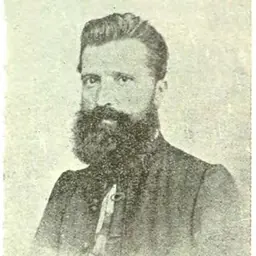
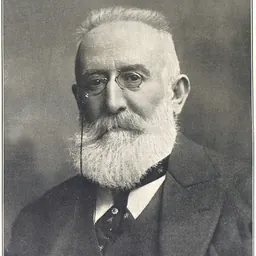
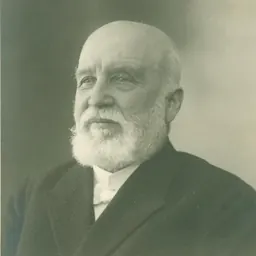
Same field, nearest in time



Contemporaries
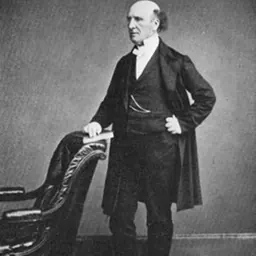
People whose lives overlapped Alice Cunningham Fletcher's



Frequently asked questions
Who was Alice Cunningham Fletcher?
American ethnologist
When was Alice Cunningham Fletcher born?
Alice Cunningham Fletcher was born on 15 March 1838 in Havana.
When did Alice Cunningham Fletcher die?
Alice Cunningham Fletcher died on 6 April 1923 in Washington, D.C..
What was Alice Cunningham Fletcher's occupation?
Alice Cunningham Fletcher was an ethnologist, anthropologist, archaeologist, suffragist and writer.
What nationality was Alice Cunningham Fletcher?
Alice Cunningham Fletcher was American.
Sources & further reading
· Wikipedia: Alice Cunningham Fletcher
· DBpedia: Alice Cunningham Fletcher
Cite this page
APA: Biography.guide. (2026). Alice Cunningham Fletcher. https://biography.guide/alice-cunningham-fletcher/
MLA: "Alice Cunningham Fletcher." Biography.guide, https://biography.guide/alice-cunningham-fletcher/.
Chicago: "Alice Cunningham Fletcher." Biography.guide. https://biography.guide/alice-cunningham-fletcher/.
Data last updated: 2026-09-20 · Spot an error? Report a correction.
Page generated 2026-09-27 05:19 UTC