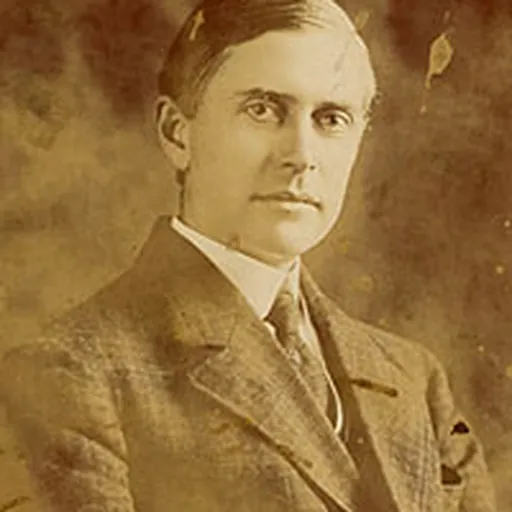
About Arthur Farwell
Lived 1872 – 1952 (aged 79). Arthur Farwell was an American composer and conductor.
Arthur Farwell (April 23, 1872 – January 20, 1952) was an American composer, conductor, educationalist, lithographer, esoteric savant, and music publisher. Interested in American Indian music, he became associated with the Indianist movement and founded the Wa-Wan Press to publish music in this genre. He combined teaching, composing and conducting in his career, working on both coasts and in Michigan.
The American composer and critic A. Walter Kramer identified Farwell as “probably the most neglected composer in our history - at the turn of the century no one wrote music with greater seriousness of purpose or fought harder for American music”.
Biography Farwell was born in St Paul, Minnesota. He trained as an engineer at Massachusetts Institute of Technology, graduating in 1893. But he turned toward a musical career following contact with Rudolf Gott, an eccentric Boston-based composer. After studying in Boston, Farwell traveled to Europe for additional work, becoming a student of Engelbert Humperdinck in Berlin and Alexandre Guilmant in Paris.
In 1918 Farwell moved to California, assuming the role of Acting Head of the music department at the University of California, Berkeley. In 1918–19, he founded the Santa Barbara Community Chorus, and was first holder of the composer's fellowship of the Music & Art Association of Pasadena (1921–25). He moved to Michigan, where he taught theory at Michigan State College (1927–39) (now Michigan State University in East Lansing). Nicolas Slonimsky noted in Baker's Biographical Dictionary that "Disillusioned about commercial opportunities for American music, including his own, he established in East Lansing, in April 1936, his own lithographic handpress, with which he printed his own music, handling the entire process of reproduction, including the cover designs, by himself."
Farwell eventually returned to New York City, where he settled.
His notable students include Roy Harris, Dika Newlin, and Bernard Rogers.
Music and writings Farwell wrote a copious amount of instrumental, chamber, choral and orchestral music as well as theatre scores, masques and music for community performance. Some of his works reflect his interest in a personal, esoteric form of spirituality. This is also expressed in his lectures and writings on the theme of Intuition. Among his principal compositions are a number of Symbolistic Studies for orchestra, a Symphony developed from a fragmentary opening left by his mentor Rudolph Gott, the large-scale "symphonic song ceremony" Mountain Song for orchestra and chorus (after the play by Lord Dunsany), a piano quintet, and many works both vocal and instrumental drawing from the music of Native American peoples.
Farwell's String Quartet in A major, Op. 65 The Hako, composed in 1923, only received its world premiere recording in 2021, performed by the Dakota String Quartet. The work was inspired by a ceremony documented in the early 1900s by ethnographer Alice C. Fletcher.
A gradual but ceaseless developer as a composer, in his last couple of decades Farwell produced some of his most individual works - including a series of polytonal studies for piano, several concise instrumental sonatas, numerous effective and penetrating settings of the poetry of Emily Dickinson, and a satirical opera, Cartoon, which contains extended parodies of Stravinsky and Schoenberg. The American critic and author Joseph Horowitz argues that, in the case of The Hako, Farwell "claims no authenticity. Rather, [the quartet] documents the composer’s enthralled subjective response to a gripping Native American ritual".
Selected works The Death of Virginia, symphonic poem, Op. 4 (1894) American Indian Melodies, Op. 11 (1901) A Ruined Garden, song, Op.14 (1902) Dawn, Fantasy on Two Indian Themes for piano, Op. 12 (1904) The Domain of Hurikan for piano, Op. 15 Navajo War Dance for piano, Op. 29 (1904) Impressions of the Wa-Wan Ceremony of the Omahas, Op. 21 (1905) From Mesa and Plain for a cappella chorus, Op. 20 (1905) Impressions of the Wa-Wan Ceremony of the Omahas for piano, Op. 21 (1905) Symbolistic Study No 3, after Walt Whitman (1905, rev. 1922) Three Indian Songs, Op. 32 (1908) The Farewell, song, Op.33 (1910) Pageant Scene (1913) The Gods of the Mountains – suite for orchestra, Op. 52 (1916) String Quartet, Op. 65, The Hako (1922) Violin Sonata (1928) Sourwood Mountain for piano, Op.78 (1930) The Vale of Enitharmon for piano, Op. 91 (1930) Land of Luthany for piano and cello (1931) Symphony Rudolf Gott, Op. 95 (1934) Four Indian Songs, Op. 102 (1937) Piano Quintet in E Minor, Op. 103 (1937) Polytonal Studies, Op. 109 (1940–1952) Cartoon, or, Once Upon a Time Recently, opera (1948). Emily Dickinson songs, Op. 105, Op. 108, Op. 112 Piano Sonata, Op.113 (1949)
Don’t just read it —
keep it.
Full-length biographies made to live with: read them, listen on the way to work, watch them tonight.
- E-book
- Audio
- Video
Instant download · yours to keep · every purchase keeps this site free
Important facts
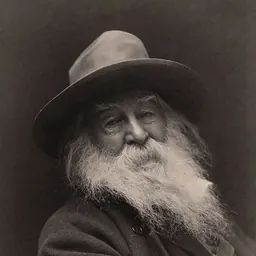
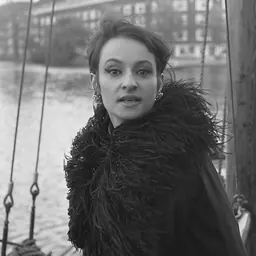
People in Arthur Farwell's life
Named in this biography and alive at the same time



Related people
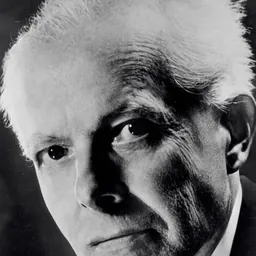
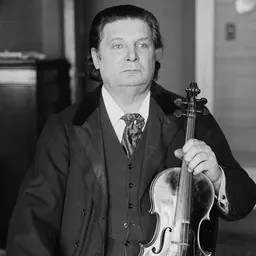
Same field, nearest in time



Contemporaries
People whose lives overlapped Arthur Farwell's


Frequently asked questions
Who was Arthur Farwell?
American composer (1872–1952)
When was Arthur Farwell born?
Arthur Farwell was born on 23 March 1872 in Saint Paul.
When did Arthur Farwell die?
Arthur Farwell died on 20 January 1952 in New York City.
What was Arthur Farwell's occupation?
Arthur Farwell was a composer and conductor.
What nationality was Arthur Farwell?
Arthur Farwell was American.
Sources & further reading
Cite this page
APA: Biography.guide. (2026). Arthur Farwell. https://biography.guide/arthur-farwell/
MLA: "Arthur Farwell." Biography.guide, https://biography.guide/arthur-farwell/.
Chicago: "Arthur Farwell." Biography.guide. https://biography.guide/arthur-farwell/.
Data last updated: 2026-09-20 · Spot an error? Report a correction.
Portrait: Wikimedia Commons · author & licence
Page generated 2026-09-27 04:58 UTC