
Francis La Flesche
Native American writer and anthropologist
About Francis La Flesche
Lived 1857 – 1932 (aged 74). Francis La Flesche was an American anthropologist, ethnologist and musicologist, known for Omaha, Osage Nation and Smithsonian Institution.
Francis La Flesche (Omaha, 1857–1932) was the first professional Native American ethnologist; he worked with the Smithsonian Institution. He specialized in Omaha and Osage cultures. Working closely as a translator and researcher with the anthropologist Alice C. Fletcher, La Flesche wrote several articles and a book on the Omaha, plus more numerous works on the Osage. He made valuable original recordings of their traditional songs and chants. Beginning in 1908, he collaborated with American composer Charles Wakefield Cadman to develop an opera, Da O Ma, based on his stories of Omaha life, but it was never produced. A collection of La Flesche's stories was published posthumously in 1998.
Of Omaha, Ponca, and French descent, La Flesche was the son of Omaha chief Joseph LaFlesche (also known as Iron Eye) and his second wife Ta-in-ne (Omaha). He grew up on the Omaha Reservation at a time of major transition for the tribe. Before the establishment of anthropology programs, La Flesche earned undergraduate and master's degrees at the George Washington University Law School in Washington, D.C. He made his professional life among European Americans.
Early life and education Francis La Flesche was born in 1857 on the Omaha Reservation, he was the first child of his father Joseph LaFlesche's second wife Ta-in-ne, an Omaha woman. He was half-brother to his father's first five children. Their mother was Mary Gale, mixed-race daughter of an American surgeon and his Iowa wife. After Mary's death, the widower Joseph (also known as Iron Eye) had remarried. Francis attended the Presbyterian Mission School at Bellevue, Nebraska. Later he attended college and law school in Washington, D.C.
By 1853, Iron Eye was a chief of the Omaha; he helped negotiate the 1854 treaty by which the tribe sold most of their land in Nebraska. He led the tribe as a head chief soon after their removal to a reservation and in the major transition to more sedentary lives. Joseph La Flesche (Iron Eye) was Métis, of Ponca and French descent, and grew up mostly with the Omaha people. Working first as a fur trader, as an adult he was adopted as a son by the chief Big Elk. He taught him the culture and designated Iron Eye as his successor.
Joseph emphasized education for all his children; several went to schools and colleges in the East. They were encouraged to contribute to the Omaha. Francis' half-siblings became accomplished adults: Susette LaFlesche was an activist and nationally known speaker on issues of Indian rights and reform; Rosalie LaFlesche Farley was an activist and managed Omaha tribal financial affairs; and Susan La Flesche was the first Native American woman trained as a European-American style doctor; she treated the Omaha for years.
Career In 1879, Judge Elmer Dundy of the US District Court made a landmark civil rights decision affirming the rights of American Indians as citizens under the Constitution. In Standing Bear v. Crook, Dundy had ruled that "an Indian is a person" under the Fourteenth Amendment. Susette "Bright Eyes" La Flesche had been involved as an interpreter for the chief Standing Bear and an expert witness on Indian issues. She invited Francis to accompany her with Standing Bear on a lecture tour of the eastern United States during 1879-1880. They took turns acting as interpreter for the chief.
In 1881 Susette and the journalist Thomas Tibbles accompanied Alice C. Fletcher, an anthropologist, on her unprecedented trip to live with and study Sioux women on the Rosebud Indian Reservation. Susette acted as her interpreter. Francis La Flesche also met and assisted Fletcher at this time, and they started a lifelong professional partnership.
Nearly 20 years older than he, Fletcher encouraged his education to become a professional anthropologist. He started working with her in Washington, D.C., about 1881, where he also worked as an interpreter for the US Senate Committee on Indian Affairs. LaFlesche contributed also to Cadman's ''The Robin Woman (Shanewis) (1918), but the composer completed the project with Tsianina Redfeather Blackstone, a Creek singer who contributed to the libretto.
Wax cylinder recordings La Flesche recorded on wax cylinders. His recordings are held by the Library of Congress, and digitized versions of more than 60 are available online. Contemporary Osage tribal members have compared the effect of hearing the recordings of their traditional rituals to that of Western scholars reading the newly discovered Dead Sea Scrolls.
Marriage and family La Flesche married Alice Mitchell in June 1877, but she died the next year. In 1879 he married Rosa Bourassa, a young Omaha woman, about the time of his tour in 1879-1880 with his sister and Standing Bear. They separated shortly before he began working in Washington, D.C., in 1881 and divorced in 1884.
Works 1900, The Middle Five: Indian Boys at School (memoir) 1911, The Omaha Tribe, with Alice Cunningham Fletcher 1912, Da O Ma (unpublished) 1914/-1915/1921, The Osage Tribe: Rite of Chiefs 1998 Ke-ma-ha: The Omaha Stories of Francis La Flesche, edited by Daniel Littlefield and James Parins, University of Nebraska Press, previously unpublished work
Don’t just read it —
keep it.
Full-length biographies made to live with: read them, listen on the way to work, watch them tonight.
- E-book
- Audio
- Video
Instant download · yours to keep · every purchase keeps this site free
Important facts
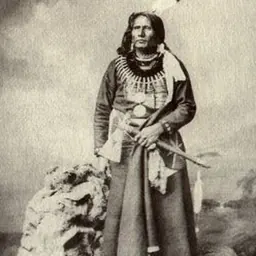
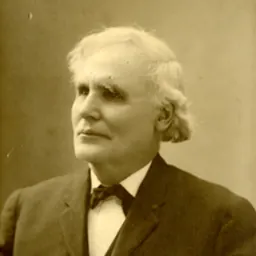
People in Francis La Flesche's life
Named in this biography and alive at the same time




Related people
Same field, nearest in time




Contemporaries
People whose lives overlapped Francis La Flesche's




Frequently asked questions
Who was Francis La Flesche?
Native American writer and anthropologist (1857-1932)
When was Francis La Flesche born?
Francis La Flesche was born on 25 December 1857 in Nebraska.
When did Francis La Flesche die?
Francis La Flesche died on 5 September 1932 in Thurston County.
What was Francis La Flesche's occupation?
Francis La Flesche was an anthropologist, ethnologist and musicologist.
What was Francis La Flesche known for?
Francis La Flesche was known for Omaha, Osage Nation and Smithsonian Institution.
What nationality was Francis La Flesche?
Francis La Flesche was American.
Sources & further reading
· Wikipedia: Francis La Flesche
Cite this page
APA: Biography.guide. (2026). Francis La Flesche. https://biography.guide/francis-la-flesche/
MLA: "Francis La Flesche." Biography.guide, https://biography.guide/francis-la-flesche/.
Chicago: "Francis La Flesche." Biography.guide. https://biography.guide/francis-la-flesche/.
Data last updated: 2026-09-22 · Spot an error? Report a correction.
Page generated 2026-09-27 05:26 UTC