
About Alice Bradley Sheldon
Lived 1915 – 1987 (aged 71). Alice Bradley Sheldon was an American novelist, writer, psychologist, artist, science fiction writer and intelligence analyst.
Art career Bradley began illustrating when she was nine years old, contributing to her mother's book, Alice in Elephantland, a children's book about the family's second trip to Africa, appearing in it as herself. She later had an exhibit of her drawings of Africa at the Chicago Gallery, arranged by her parents. Although she illustrated several of her mother's books, she only sold one illustration during her lifetime, in 1931, to The New Yorker, with help from Harold Ober, a New York agent who worked with her mother. The illustration, of a horse rearing and throwing off its rider, sold for ten dollars.
In 1936, Bradley participated in a group show at the Art Institute of Chicago, to which she had connections through her family, featuring new American work. This was an important step forward for her painting career. During this time she also took private art lessons from John Sloan. Bradley disliked prudery in painting. While examining an anatomy book for an art class, she noticed that the genitals were blurred, so she restored the genitals of the figures with a pencil.
In 1939, her nude self-portrait titled Portrait in the Country was accepted for the "All-American" biennial show at the Corcoran Gallery in Washington, D.C., where it was displayed for six weeks. While these two shows were considered big breaks, she disparaged these accomplishments, saying that "only second rate painters sold" and she preferred to keep her works at home.
By 1940, Bradley felt she had mastered all the techniques she needed and was ready to choose her subject matter. However, she began to doubt whether she should paint. She kept working at her painting techniques, fascinated with the questions of form, and read books on aesthetics in order to know what scientifically made a painting "good". She stopped painting in 1941. As she was in need of a way to support herself, her parents helped her find a job as an art critic for the Chicago Sun.
Science fiction career: 1967–1987 Bradley discovered science fiction in 1924, when she read her first issue of Weird Tales, but she did not write any herself until years later. Unsure what to do with her new degrees and her careers, she began to write science fiction. She adopted the pseudonym of James Tiptree Jr. in 1967. The name "Tiptree" came from a variety of marmalade produced by Wilkin & Sons, and the "Jr." was her husband's idea. In an interview, she said: "A male name seemed like good camouflage. I had the feeling that a man would slip by less observed. I've had too many experiences in my life of being the first woman in some damned occupation." She also made the choice to start writing the type of science fiction she was interested in and "was surprised to find that her stories were immediately accepted for publication and quickly became popular."
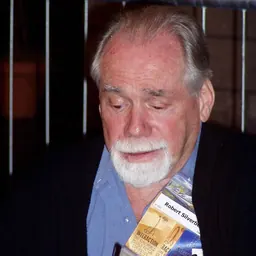
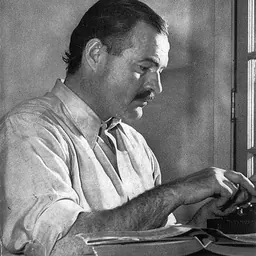
Her first published short story was "Birth of a Salesman" in the March 1968 issue of Analog Science Fact & Fiction, edited by John W. Campbell. Three more followed that year in If and Fantastic. There was speculation Tiptree was a woman, however, based partially on the themes in her stories. In 1975, in the introduction to Warm Worlds and Otherwise, a collection of Tiptree's short stories, Robert Silverberg wrote: "t has been suggested that Tiptree is female, a theory that I find absurd, for there is to me something ineluctably masculine about Tiptree's writing." Silverberg also likened Tiptree's writing to Ernest Hemingway's, arguing there was a "prevailing masculinity about both of them—that preoccupation with questions of courage, with absolute values, with the mysteries and passions of life and death as revealed by extreme physical tests, by pain and suffering and loss." Khatru Tiptree never made any public appearances, but she did correspond regularly with fans and other science fiction authors through the mail. When asked for biographical details, Tiptree/Sheldon was forthcoming in everything but her sex. According to her biographer, Julie Phillips, "No one had ever seen or spoken to the owner of this voice. He wrote letters, warm, frank, funny letters, to other writers, editors, and science fiction fans". In her letters to fellow writers such as Ursula K. Le Guin and Joanna Russ, she would present herself as a feminist man; however, Sheldon did not present herself as male in person. Writing was a way to escape what she felt was a male-dominated society, themes Tiptree explored in the short stories later collected in Her Smoke Rose Up Forever. One story in particular offers an excellent illustration of these themes. "Houston, Houston, Do You Read?" follows a group of astronauts who discover a future Earth whose male population has been wiped out; the remaining females have learned to get along just fine in their absence.
In 1976, Tiptree mentioned in a letter that "his" mother, also a writer, had died in Chicago. This detail led inquiring fans to find the obituary, with its reference to Alice Sheldon; soon all was revealed. Once the initial shock was over, Sheldon wrote to Le Guin, one of her closest friends, confessing her identity. She wrote, "I never wrote you anything but the exact truth, there was no calculation or intent to deceive, other than the signature which over 8 years became just another nickname; everything else is just plain me. The thing is, I am a 61-year-old woman named Alice Sheldon—nickname Alli—solitary by nature but married for 37 years to a very nice man considerably older [Huntington was 12 years her senior], who doesn't read my stuff but is glad I like writing".
After Sheldon's identity was revealed, several prominent science fiction writers suffered some embarrassment. Robert Silverberg, who had argued Tiptree could not be a woman from the evidence of her stories, added a postscript to his introduction to the second edition of Tiptree's Warm Worlds and Otherwise, published in 1979.
Only after her identity was exposed did she complete her first full-length novel, Up the Walls of the World, which was a Doubleday Science Fiction Book Club selection.
Death and legacy Sheldon continued writing under the Tiptree pen name for another decade. In the last years of her life, she suffered from depression and heart trouble, while her husband began to lose his eyesight, becoming almost completely blind in 1986. In 1976, then 61-year-old Sheldon wrote to Silverberg expressing her desire to end her own life while she was still able-bodied and active; she said that she was reluctant to act upon this intention, as she did not want to leave her husband behind and could not bring herself to kill him. Later, she suggested to her husband that they make a suicide pact when their health began to fail. On July 21, 1977, she wrote in her diary: "Ting agreed to consider suicide in 4–5 years".
Ten years later, on May 19, 1987, Sheldon shot her husband and then herself; she telephoned her attorney after the first shooting to announce her actions. They were found dead, hand-in-hand in bed, in their Virginia home. According to biographer Julie Phillips, the suicide note Sheldon left was written in September 1979 and saved until needed. Although the circumstances surrounding the Sheldons' deaths are not clear enough to rule out caregiver murder–suicide (in that perhaps her husband was not ready to die), testimony of those closest to them suggests a suicide pact.
Sexual orientation Sheldon was attracted to women throughout her life and described herself as a lesbian in the years before her death. In 1980 she wrote to Joanna Russ and stated "I am a Lesbian [...] I some men a lot, but from the start, before I knew anything it was always girls and women who lit me up". Sheldon had affairs with men and "passionate crushes" on women during her first marriage, and later remarked "the 2 or 3 great loves of my life were girls".
James Tiptree Jr. Award The James Tiptree Jr. Award, honoring works of science fiction and fantasy that expand or explore the understanding of gender, was created by authors Karen Joy Fowler and Pat Murphy in February 1991. Works of fiction such as Half Life by Shelley Jackson and Light by M. John Harrison have received the award. Due to controversy over the circumstances of her and her husband's deaths, the name of the award was changed to the Otherwise Award in 2019.
Works Short story collections Ten Thousand Light-Years from Home (1973) Warm Worlds and Otherwise (1975) Star Songs of an Old Primate (1978) Out of the Everywhere and Other Extraordinary Visions (1981) Byte Beautiful: Eight Science Fiction Stories (1985) The Starry Rift (1986) (linked stories) Tales of the Quintana Roo (1986) (linked stories) Crown of Stars (1988) Her Smoke Rose Up Forever (omnibus collection) (1990) The Voice That Murmurs in the Darkness (omnibus collection) (2023)
The abbreviation(s) after each title indicate its appearance in one or more of the following collections: Collection title Year of publication Abbreviation Ten Thousand Light-Years from Home 1973 LYFH Warm Worlds and Otherwise 1975 WWO Star Songs of an Old Primate 1978 SSOP Out of the Everywhere and Other Extraordinary Visions 1981 OE Byte Beautiful: Eight Science Fiction Stories 1985 BB Tales of the Quintana Roo (linked stories) 1986 QR The Starry Rift (linked stories) 1986 SR Crown of Stars 1988 CS Her Smoke Rose Up Forever (omnibus collection) 1990 SRU Meet Me at Infinity (fiction, essays & other non-fiction) 2000 MM The Voice That Murmurs in the Darkness (omnibus collection) (2023) VNM 1968 "The Mother Ship" (later retitled "Mamma Come Home") (novelette): LYFH "Pupa Knows Best" (later retitled "Help"; novelette): LYFH "Birth of a Salesman" (short story): LYFH "Fault" (short story): WWO, VNM "Happiness Is a Warm Spaceship" (short story): MM "Please Don't Play With the Time Machine" (very short story): MM "A Day Like Any Other' (very short story): MM 1969 "Beam Us Home" (short story): LYFH, BB, VNM "The Last Flight of Doctor Ain" (short story): WWO, SRU "Your Haploid Heart" (novelette): SSOP "The Snows Are Melted, The Snows Are Gone" (novelette): LYFH, VNM "Parimutuel Planet" (later retitled "Faithful to Thee, Terra, in Our Fashion") (novelette): LYFH 1970 "The Man Doors Said Hello To" (short story): LYFH, VNM "I'm Too Big But I Love to Play" (novelette): LYFH "The Nightblooming Saurian" (short story): WWO "Last Night and Every Night" (short story): CS 1971 "The Peacefulness of Vivyan" (short story): LYFH, BB "I'll Be Waiting for You When the Swimming Pool Is Empty" (short story): LYFH, BB "And So On, and So On" (short story): SSOP, SRU "Mother in the Sky with Diamonds" (novelette): LYFH 1972 "The Man Who Walked Home" (short story): LYFH, BB, SRU "And I Have Come Upon This Place by Lost Ways" (novelette): WWO, SRU "And I Awoke and Found Me Here on the Cold Hill's Side" (short story): LYFH, SRU On the Last Afternoon (novella): WWO, SRU "Painwise" (novelette): LYFH "Forever to a Hudson Bay Blanket" (short story): LYFH "Filomena & Greg & Rikki-Tikki & Barlow & the Alien" (later retitled "All the Kinds of Yes") (novelette): WWO, VNM "The Milk of Paradise" (short story): WWO "Amberjack" (short story): WWO "Through a Lass Darkly" (short story): WWO "The Trouble Is Not in Your Set" (short story): MM (previously unpublished) "Press Until the Bleeding Stops" (short story): MM 1973 "Love Is the Plan the Plan Is Death" (short story): WWO, BB, SRU "The Women Men Don't See" (novelette): WWO, SRU "The Girl Who Was Plugged In" (novelette): WWO, SRU 1974 "Her Smoke Rose Up Forever" (novelette): SSOP, SRU "Angel Fix" (novelette, under the name "Raccoona Sheldon"): OE 1975 A Momentary Taste of Being (novella): SSOP, SRU 1976 "Your Faces, O My Sisters! Your Faces Filled of Light!" (short story, under the name Raccoona Sheldon): OE, BB, SRU "Beaver Tears" (short story, under the name Raccoona Sheldon): OE "She Waits for All Men Born" (short story): SSOP, SRU Houston, Houston, Do You Read? (novella): SSOP, SRU (Hugo award winner; Nebula award winner) "The Psychologist Who Wouldn't Do Awful Things to Rats" (novelette): SSOP, VNM 1977 "The Screwfly Solution" (novelette, under the name Raccoona Sheldon): OE, SRU "Time-Sharing Angel" (short story): OE, VNM 1978 "We Who Stole the Dream" (novelette): OE, SRU 1980 Slow Music (novella): OE, SRU "A Source of Innocent Merriment" (short story): OE 1981 "Excursion Fare" (novelette): BB, VNM "Lirios: A Tale of the Quintana Roo" (later retitled "What Came Ashore at Lirios") (novelette): QR, VNM "Out of the Everywhere" (novelette): OE, VNM With Delicate Mad Hands (novella): OE, BB, SRU 1982 "The Boy Who Waterskied to Forever" (short story): QR 1983 "Beyond the Dead Reef" (novelette): QR 1985 "Morality Meat" (novelette, under the name Racoona Sheldon): CS The Only Neat Thing to Do (novella): SR, VNM "All This and Heaven Too" (novelette): CS "Trey of Hearts" (short story): MM (previously unpublished) 1986 "Our Resident Djinn" (short story): CS "In the Great Central Library of Deneb University" (short story): SR Good Night, Sweethearts (novella): SR Collision (novella): SR The Color of Neanderthal Eyes (novella): MM 1987 "Second Going" (novelette): CS "Yanqui Doodle" (novelette): CS, VNM "In Midst of Life" (novelette): CS, VNM 1988 "Come Live with Me" (novelette): CS Backward, Turn Backward (novella): CS "The Earth Doth Like a Snake Renew" (novellette): CS [written in 1973]
Novels Up the Walls of the World (1978) Brightness Falls from the Air (1985)
Other collections Neat Sheets: The Poetry of James Tiptree Jr. (Tachyon Publications, 1996) Meet Me at Infinity (a collection of previously uncollected and unpublished fiction, essays and other non-fiction, with much biographical information, edited by Tiptree's friend Jeffrey D. Smith) (2000)
Adaptations "The Man Who Walked Home" (1977): comic book adaptation in Canadian underground comic Andromeda Vol. 2, No. 1; September; Silver Snail Comics, Ltd.; Toronto; pp. 6–28. Pencils by John Allison, inks by Tony Meers. "Houston, Houston, Do You Read?" (1990): radio drama for the National Public Radio series Sci-Fi Radio. Originally aired as two half-hour shows, February 4 and 11. "Yanqui Doodle" (1990): half-hour radio drama for the National Public Radio series Sci-Fi Radio. Aired March 18. Weird Romance (1992): Off-Broadway musical by Alan Menken. Act 1 is based on "The Girl Who Was Plugged In". "The Girl Who Was Plugged In" (1998): television film: episode 5 of the series Welcome to Paradox The Screwfly Solution (2006): television film: season 2, episode 7 of the series Masters of Horror Xenophilia (2011): based on the lives and works of Tiptree and Connie Converse; arranged and choreographed by Maia Ramnath; produced by the aerial dance and theater troupe Constellation Moving Company, performed at the Theater for the New City, presented November 10–13, 2011. Reviewer Jen Gunnels writes, "The performance juxtaposed some of Tiptree's short stories with Converse's songs, mixing in biographical elements of both women while kinesthetically exploring both through dance and aerial work on trapeze, lyra (an aerial ring), and silks (two lengths of fabric which the artist manipulates to perform aerial acrobatics). The result was elegant, eerie, and deeply moving."
Awards and honors The Science Fiction Hall of Fame inducted Tiptree in 2012.
Don’t just read it —
keep it.
Full-length biographies made to live with: read them, listen on the way to work, watch them tonight.
- E-book
- Audio
- Video
Instant download · yours to keep · every purchase keeps this site free
Important facts
Family & relationships
People in Alice Bradley Sheldon's life
Named in this biography and alive at the same time



Related people
Same field, nearest in time

Contemporaries
People whose lives overlapped Alice Bradley Sheldon's





Frequently asked questions
Who was Alice Bradley Sheldon?
American science fiction writer (1915–1987)
When was Alice Bradley Sheldon born?
Alice Bradley Sheldon was born on 24 August 1915 in Chicago.
When did Alice Bradley Sheldon die?
Alice Bradley Sheldon died on 19 May 1987 in McLean.
What was Alice Bradley Sheldon's occupation?
Alice Bradley Sheldon was a novelist, writer, psychologist, artist, science fiction writer and intelligence analyst.
What nationality was Alice Bradley Sheldon?
Alice Bradley Sheldon was American.
Sources & further reading
· Wikipedia: Alice Bradley Sheldon
Cite this page
APA: Biography.guide. (2026). Alice Bradley Sheldon. https://biography.guide/alice-bradley-sheldon/
MLA: "Alice Bradley Sheldon." Biography.guide, https://biography.guide/alice-bradley-sheldon/.
Chicago: "Alice Bradley Sheldon." Biography.guide. https://biography.guide/alice-bradley-sheldon/.
Data last updated: 2026-09-27 · Spot an error? Report a correction.
Page generated 2026-09-27 05:16 UTC