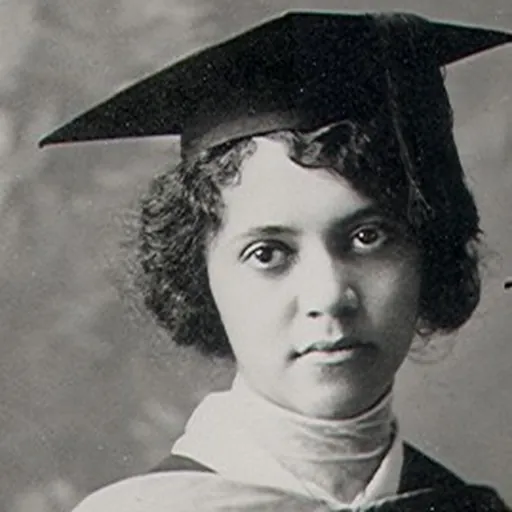
About Alice Augusta Ball
Lived 1892 – 1916 (aged 24). Alice Augusta Ball was an American chemist and pharmacist.
Alice Augusta Ball (July 24, 1892 – December 31, 1916) was a Black American chemist whose groundbreaking work produced the first effective treatment for Hansen's disease, better known as leprosy. She was born in Seattle, Washington, to James Presley Ball Jr. and Laura Louise Ball. Her father was a photographer, journalist, and lawyer, while her mother left a photography career to raise the family. and a bachelor's degree in pharmacy in 1914. Ball earned a scholarship to the College of Hawaiʻi (now University of Hawaiʻi), where she completed a master's degree in chemistry in 1915, becoming the first woman and first Black American to achieve the degree, and was subsequently appointed as the college's first female chemistry instructor.
While working in Hawaiʻi, Ball was approached by Harry T. Hollmann of the Leprosy Investigation Station, who sought help improving the therapeutic use of chaulmoogra oil, a traditional but highly ineffective treatment for leprosy. After her death, others took credit for her work, but later scholarship and institutional recognition restored her legacy. The Ball Method itself became medically obsolete after the 1946 development of a monotherapy using dapsone. The technique is historically significant, marking a turning point between early botanical medicine and modern pharmaceutical chemistry. Ball's innovation improved medical outcomes for thousands of patients worldwide.
Early life and education Alice Augusta Ball was born on July 24, 1892, in Seattle, Washington, to James Presley Ball and Laura Louise (Howard) Ball. She was the third of four children, with two older brothers, William and Robert, and a younger sister, Addie. Her family was middle-class and well-off, as Ball's father was a newspaper editor of The Colored Citizen, photographer, and lawyer. the process of printing photographs onto metal plates. Some researchers have suggested that her parents and grandfather's love for photography may have played a role in her love for chemistry, as they worked with mercury vapors and iodine-sensitized silver plates to develop photos. Her family moved to Hawaii with the hopes that the warmer weather would ease her grandfather's arthritis, though he died shortly after the move. In 1905 they relocated back to Seattle after only three years in Hawaii. After returning to Seattle, Ball attended Seattle High School, where she was an active participant in her school's drama club and was known for her quick wit and ambitious personality. She graduated from this school in 1910, receiving top grades in the sciences. earning a degree in pharmaceutical chemistry in 1912, Publishing an article in a respected scientific journal was an uncommon accomplishment for a woman, especially for a Black woman at this time. At the College of Hawaii, her master's thesis, titled "The Chemical Constituents of Piper methysticum; or The Chemical Constituents of the Active Principle of the Ava Root" involved studying the chemical properties of the Kava plant species (Piper methysticum). to study chaulmoogra oil and its chemical properties. Chaulmoogra oil had been the best treatment available for leprosy for hundreds of years, and Ball developed a much more effective injectable form. She was also the first African-American "research chemist and instructor" in the College of Hawaii's chemistry department.
Treatment for leprosy At the University of Hawaiʻi, Ball investigated the chemical makeup and active principle of Piper methysticum (kava) for her master's thesis. Most of these people were Native Hawaiians, while the Haole people were allowed to leave the islands and pursue more extensive treatment on the mainland. Ingesting the oil was not effective either because it had an acrid taste that often induced vomiting. Her technique involved saponifying fatty acids to form chaulmoogric acid, transforming the acid into its ethyl ester, producing a substance that retains the oil's therapeutic properties while being more stable in an aqueous suspension. Ball was unable to publish her findings before her death in 1916. Arthur L. Dean, a chemist and Ball's graduate study advisor, dean of the college, and later president of the university, was privy to details of the process she developed. After Ball's death, Dean undertook further trials and by 1919, a college chemistry laboratory was producing large quantities of the injectable chaulmoogra extract. Ball nevertheless remained largely forgotten in the scientific record. In the 1970s, Kathryn Takara and Stanley Ali, professors at the University of Hawaiʻi, found records of Ball's research and made efforts to ensure her achievement was recognized. In the 1990s, Ali came across The Samaritans of Molokai, a 1932 book that specifically mentioned and recognized the contributions of a young chemist, later identified as Ball. Chlorine poisoning was stated on her death certificate as speculation, without a definite cause of death. After the work of many historians at the University of Hawaiʻi including Kathryn Takara and Stanley Ali, Paul Wermager established a scholarship, in 2017, called the "Alice Augusta Ball endowed scholarship" for students pursuing degrees in chemistry, biology, biochemistry, or microbiology. In 2018, a new park in Seattle's Greenwood neighborhood was named after Ball. In 2019, the London School of Hygiene and Tropical Medicine added her name to the frieze atop its main building, along with Florence Nightingale and Marie Curie, in recognition of their contributions to science and global health research. premiered at the Pan African Film Festival. In 2000, a University of Hawaiʻi student association leader, Pi'ilani Smith, called for Dean Hall to be renamed with Ball's name, and researcher into Ball's career Stan Ali called for a university laboratory to be named after Ball. As of 2022, the student government at the university continued to call for Dean Hall (the earth sciences building) to be renamed "Alice Ball Hall".
On February 28, 2022, Hawaii Governor David Ige signed a proclamation declaring February 28 "Alice Augusta Ball Day" in Hawaii at a special recognition ceremony on the University of Hawaiʻi at Mānoa campus. In December 2024, after a resolution by the UH Mānoa Faculty Senate, a bust sculpture of Ball was placed in the Hamilton Library.
Don’t just read it —
keep it.
Full-length biographies made to live with: read them, listen on the way to work, watch them tonight.
- E-book
- Audio
- Video
Instant download · yours to keep · every purchase keeps this site free
Important facts
People in Alice Augusta Ball's life
Named in this biography and alive at the same time

Related people
Same field, nearest in time




Contemporaries
People whose lives overlapped Alice Augusta Ball's
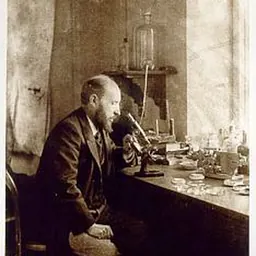

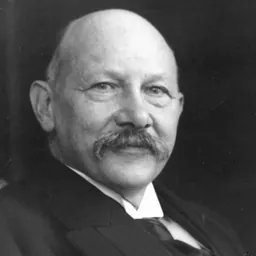
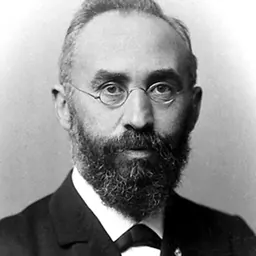
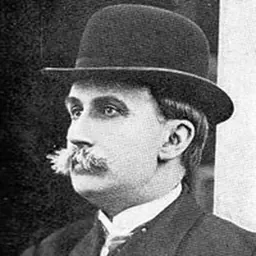
Frequently asked questions
Who was Alice Augusta Ball?
African American chemist (1892–1916)
When was Alice Augusta Ball born?
Alice Augusta Ball was born on 24 July 1892 in Seattle.
When did Alice Augusta Ball die?
Alice Augusta Ball died on 31 December 1916 in Seattle.
What was Alice Augusta Ball's occupation?
Alice Augusta Ball was a chemist and pharmacist.
What nationality was Alice Augusta Ball?
Alice Augusta Ball was American.
Sources & further reading
· Wikipedia: Alice Augusta Ball
Cite this page
APA: Biography.guide. (2026). Alice Augusta Ball. https://biography.guide/alice-augusta-ball/
MLA: "Alice Augusta Ball." Biography.guide, https://biography.guide/alice-augusta-ball/.
Chicago: "Alice Augusta Ball." Biography.guide. https://biography.guide/alice-augusta-ball/.
Data last updated: 2026-09-23 · Spot an error? Report a correction.
Portrait: Wikimedia Commons · author & licence
Page generated 2026-09-27 05:08 UTC