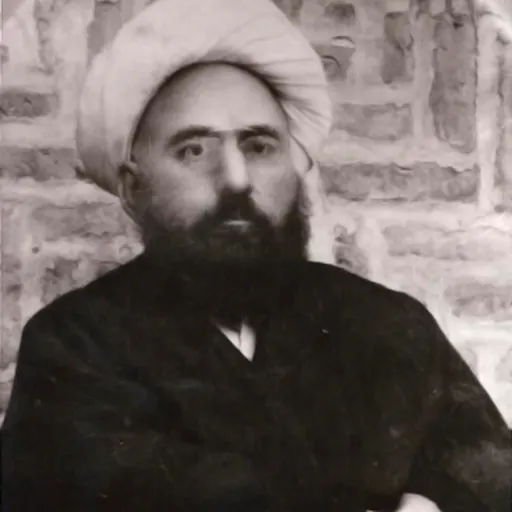
Ali Thiqat al-Islam Tabrizi
Iranian reformist Shia cleric and nationalist
About Ali Thiqat al-Islam Tabrizi
Lived 1861 – 1911 (aged 50). Ali Thiqat al-Islam Tabrizi was an Iranian politician and cleric.
Mirza Ali-Aqa Tabrizi, known as Thiqat-ul-Islam Tabrizi (; January 19, 1861–December 31, 1911) was an Iranian nationalist who lived in Tabriz, Iran during the Iranian Constitutional Revolution, and a reformist Shia cleric. He was hanged by Russian troops with 12 other Iranians in Bagh-e Shomal at the age of 50 during the Russian Invasion of Tabriz, 1911. He is buried in Mausoleum of Poets, Tabriz.
Early life and education He was born in Tabriz in 1861. His father Haj Mirza Sahfie Sadr, Thiqat ul-Islam of Tabriz, was a dominant figure in the Tobacco Protest. Ali Aqa studied in Tabriz, Najaf, and Karbala. After the death of his father he was given the title of Thiqat ul-Islam by the king Mozaffar ad-Din Shah Qajar.
Ideas Public awareness He was one of the influential intellectuals among the people of Tabriz. During the first democratic revolution of Asia, the Constitutional Revolution of Iran, one major concern of Akhund Khurasani and other pro-democracy maraji' was to familiarize the public with the idea of a democratic nation-state and modern constitution. The enlightened Thiqa tul-islam from Tabriz, wrote a treatise “Lalan” . In his essays, Thiqat al-Islam Tabrizi mentions the sermons he delivered in Tabriz to explain the core concepts of democracy, that helped the junior clerics increase their knowledge about modern statehood and plan their speeches.
Views about modern knowledge Thiqat-ul-Islam showed unwavering support for modern knowledge and technology, and saw it necessary means to avoid colonial takeover of Iran. He said:
Human liberty Thiqa tul-Islam saw democratic freedom and liberty as God's special gift. He said:
He saw freedom of press and of personal expression as the instruments for obeying the Quranic command of enjoining the good and forbidding the evil.
Confronting bigotry When Fazlullah Nouri tried to get a veto power for his Tehran based mullah-comrades under the banner of Jurist Council, Mirza Ali Aqa opposed the idea saying that only the opinion of the sources of emulation is worthy of consideration in the matters of faith. He wrote:
The three Ayatullahs: (left to right) Akhund Khurasani, Mirza Husayn Tehrani and Abdallah Mazandarani. And quote|Let us consider the idea that the constitution is against Sharia law: all oppositions of this kind are in vain because the hujjaj al-islam of the atabat, who are today the models (marja''') and the refuge (malija) of all Shiites, have issued clear fatwas that uphold the necessity of the Constitution. Aside from their words, they have also shown this by their actions. They see in Constitution the support for splendour of Islam. He firmly opposed the idea of a supervisory committee of Tehran's clerics censoring the conduct of the parliament, and said that:
During the period of “Lesser Despotism”, he played a key role in bringing the people of Tabriz together in support of democracy and tried to minimize bloodshed. Akhund Khurasani wrote a personal letter of support to him, praising his efforts to preserve religious values, educating the public about core national interests, bringing the people and the leadership closer and opposing foreign exploitation.
The term Ayatullah He was the first one to use the term Ayatullah for the sources of emulation in Najaf.
Assassination Thiqat ul-Islam is number five from right in first series of execution by Russian forces, 1911. After the conclusion of the Tabriz Siege by Russian forces a conflict between the Russian forces and the revolutionaries broke out on December 21, 1911. The Russians insisted that he should sign a letter confirming the responsibility of revolutionaries in starting the conflict. He refused, and Russians hanged him with twelve others on the day of Ashura, December 31, 1911. The Russians continued to kill the constitutional revolutionaries of Tabriz and their relatives en masse and many civilians of Tabriz as well. The total number of executions is estimated to have been about 1,200. Thiqat ul-Islam's tomb, outside the Mausoleum of Poets building, Tabriz. The original photography of his hanging is currently shown in Azerbaijan Museum. Legacy His life was depicted in the TV-series Seghatolislam'' by Hojjat Ghasem-Zadeh-Asl, produced by Sahar TV (also see the :fr:Sahar TV French page).
Don’t just read it —
keep it.
Full-length biographies made to live with: read them, listen on the way to work, watch them tonight.
- E-book
- Audio
- Video
Instant download · yours to keep · every purchase keeps this site free
Important facts
Related people
Same field, nearest in time





Contemporaries
People whose lives overlapped Ali Thiqat al-Islam Tabrizi's



Frequently asked questions
Who was Ali Thiqat al-Islam Tabrizi?
Iranian reformist Shia cleric and nationalist (1861–1911)
When was Ali Thiqat al-Islam Tabrizi born?
Ali Thiqat al-Islam Tabrizi was born on 19 January 1861 in Tabriz.
When did Ali Thiqat al-Islam Tabrizi die?
Ali Thiqat al-Islam Tabrizi died on 30 December 1911 in Tabriz.
What was Ali Thiqat al-Islam Tabrizi's occupation?
Ali Thiqat al-Islam Tabrizi was a politician and cleric.
What nationality was Ali Thiqat al-Islam Tabrizi?
Ali Thiqat al-Islam Tabrizi was Iranian.
Sources & further reading
· Wikipedia: Ali Thiqat al-Islam Tabrizi
· DBpedia: Mirza Ali Aqa Tabrizi
Cite this page
APA: Biography.guide. (2026). Ali Thiqat al-Islam Tabrizi. https://biography.guide/ali-thiqat-al-islam-tabrizi/
MLA: "Ali Thiqat al-Islam Tabrizi." Biography.guide, https://biography.guide/ali-thiqat-al-islam-tabrizi/.
Chicago: "Ali Thiqat al-Islam Tabrizi." Biography.guide. https://biography.guide/ali-thiqat-al-islam-tabrizi/.
Data last updated: 2026-09-20 · Spot an error? Report a correction.
Portrait: Wikimedia Commons · author & licence
Page generated 2026-09-27 04:58 UTC