
About Ali Haydar
Lived 1932 – 2022 (aged 89–90). Ali Haydar was a Syrian military officer.
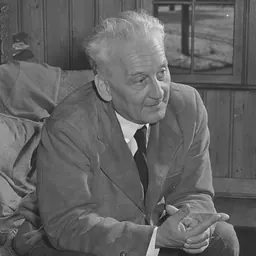
Ali Haydar (; 1932 – 5 August 2022), known as the "Father of the Syrian Special Forces", was a Syrian military officer who was the commander of the Syrian Special Forces for 26 years. He was a close confidant to President Hafez al-Assad and one of the members of Assad's inner circle. Born in the village of Hallet Ara, Haydar was a member of the Ba'ath Party from his youth. He was commissioned into the Syrian Army in 1952 after a stint studying at the Homs Military Academy. After the Ba'ath Party seized power in a 1963 coup d'état, Haydar was put in charge of Syria's special forces and supported al-Assad in his rise to the presidency. During this time he was deployed to Lebanon during their civil war. Haydar opposed the 1984 coup d'état attempt led by Rifaat al-Assad, instead remaining loyal to Hafez al-Assad. After suffering an aneurysm and leaving his post in 1988, he returned to lead the special forces again in the early 1990s. At the time a Major General, he was formally removed from his position and then imprisoned in August 1994, though he was treated well during his brief prison stay and was released without a trial or public humiliation. Haydar died in Latakia at the age of 90.
Early life and family Haydar was born in 1932 in the village of Hallet Ara, Jableh District, which was then part of the Alawite State set up by the French administration in Syria. which is traditionally allied with the Kalbiyya tribe; to which the Assad family belongs. or possibly to the Haddadin tribe, to which Salah Jadid and Hafez al-Assad's wife Anisa Makhlouf belonged. His father was a religious sheikh. His uncle, Ahmad Mohammad Haydar, was also a well-known sheikh who advocated for Alawites to abandon superstitions and blend with mainstream Islam.
Career Haydar joined the Ba'ath Party of Michel Aflaq as a schoolboy and was commissioned as an infantry officer in the Syrian Army in 1952, after studying at the Homs Military Academy.
The Ba'ath Party came to power in Syria following the 1963 Syrian coup d'état. Haydar went on to become the Commander of Syria's Special Forces in 1968 after training at the Soviet airborne forces' academy. Haydar remained close to his childhood friend Hafez al-Assad, and supported him in the 1970 Syrian Corrective Revolution, which brought Hafez to power. Haydar provided military support for Hafez during the coup, helping to oust Salah Jadid and President Nureddin al-Atassi. Haydar's Special Forces expanded in size to 25,000 men, and formed a key part of the Syrian government's security apparatus. The Special Forces were trained in airborne operations, and were rivaled on power only by the Defense Companies controlled by Hafez's brother, Rifaat. As such, the 14th Division became a strong counter-weight to the Defense Companies, as both these formations were largely airborne divisions. However, the Special Forces lacked the heavy armour and artillery capabilities which Rifaat's forces had. Instead, its specialization was in anti-Tank operations and sniper warfare. Haydar pioneered very aggressive tactics and training, and the Syrian special forces' snipers and their sniper doctrine and tactics acquired a fearsome reputation which persists to this day.
Haydar left his command in 1988 following an aneurysm, although later returned to his post in the early 1990s. He totally rejected any form of peace with Israel at the Madrid Conference of 1991. was formally removed from his position as Commander of Syria's Special Forces and then imprisoned on 3 August 1994. Syrian sources talking to the al-Hayat newspaper claimed that Haydar had been imprisoned for failing to follow military orders, It was also suggested his removal was tied to his previous strong opposition to the peace talks then taking place between Syrian and Israeli envoys in Washington DC. It was also suggested that Haydar's arrest was accompanied by the arrest of a number of top ranking Alawite officials who either supported Haydar or shared his criticism of Hafez' plans for the Presidency.
Don’t just read it —
keep it.
Full-length biographies made to live with: read them, listen on the way to work, watch them tonight.
- E-book
- Audio
- Video
Instant download · yours to keep · every purchase keeps this site free
Important facts
People in Ali Haydar's life
Named in this biography and alive at the same time

Related people
Same field, nearest in time

Contemporaries
People whose lives overlapped Ali Haydar's


Frequently asked questions
Who was Ali Haydar?
former commander of Syrian Special Forces
When was Ali Haydar born?
Ali Haydar was born in 1932 in Hallet Ara.
When did Ali Haydar die?
Ali Haydar died on 5 August 2022 in Beit Yashout.
What was Ali Haydar's occupation?
Ali Haydar was a military officer.
What nationality was Ali Haydar?
Ali Haydar was Syrian.
Sources & further reading
· DBpedia: Ali Haydar (Syrian army officer)
Cite this page
APA: Biography.guide. (2026). Ali Haydar. https://biography.guide/ali-haydar/
MLA: "Ali Haydar." Biography.guide, https://biography.guide/ali-haydar/.
Chicago: "Ali Haydar." Biography.guide. https://biography.guide/ali-haydar/.
Data last updated: 2026-09-20 · Spot an error? Report a correction.
Page generated 2026-09-27 05:01 UTC