
About Alfred Schild
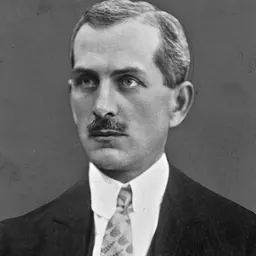
Lived 1921 – 1977 (aged 55). Alfred Schild was a German and American physicist and university teacher, known for Kerr–Schild perturbations.
Alfred Schild (September 7, 1921 – May 24, 1977) was a leading Austrian-American physicist, who contributed to the golden age of general relativity (1960–1975).
Biography Schild was born in Istanbul on September 7, 1921. His parents were German-speaking Viennese Jews, but his early education was in England. Upon the outbreak of World War II Schild was interned as an enemy alien, but later allowed to travel to Canada. In 1944 he earned his B.A. at the University of Toronto, and in 1946 completed his doctorate under the direction of Leopold Infeld. Schild spent the next eleven years at the Carnegie Institute of Technology, where he helped to develop the first atomic clocks.
As tensors are the language of general relativity, Schild wrote Tensor Calculus with John L. Synge as a textbook. According to a reviewer, "The ideas and concepts are given very concisely and thus a wide range of subjects is considered."
In 1957 Schild moved to the University of Texas at Austin. In 1962 he became Ashbel Smith Professor and founded the Center for Relativity at University of Texas, Austin. Engelbert Schücking described the recruitment of professors for the Center: In 1962 Alfred got me an associate professorship in the Austin mathematics department, and in the summer of 1962, while attending Andrzej Trautman’s Relativity conference in Warsaw, Poland, … we persuaded Roger Penrose, Roy Kerr, Ray Sachs, Jürgen Ehlers, Luis Bel and others to flock to the newly created center of gravity in Austin.
In 1965, Schild found the Kerr–Schild form of the spacetime metric.
A dramatization of the calculation of the Kerr metric by Roy Kerr was written in 2009 by Fulvio Melia. Kerr had invited Schild to his office to calculate angular momentum in a solution to Einstein's field equations. "Alfred was a kind and cheerful man, with a flock of silvery hair."
Schild died on May 24, 1977, in Downer's Grove, Illinois, of a heart attack.
Legacy Schild's private papers are archived by the University of Texas.
In popular culture The science fiction novel Schild's Ladder by Greg Egan drew heavily on concepts introduced or refined by Schild.
Don’t just read it —
keep it.
Full-length biographies made to live with: read them, listen on the way to work, watch them tonight.
- E-book
- Audio
- Video
Instant download · yours to keep · every purchase keeps this site free
Important facts
People in Alfred Schild's life
Named in this biography and alive at the same time

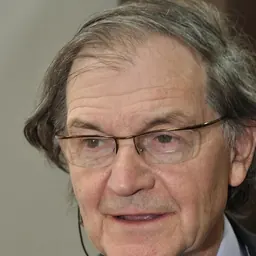






Related people
Same field, nearest in time


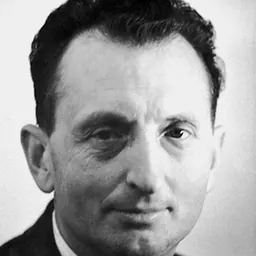


Contemporaries
People whose lives overlapped Alfred Schild's
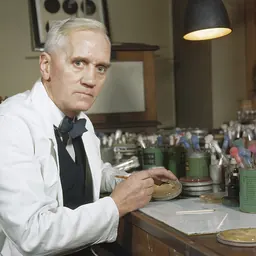
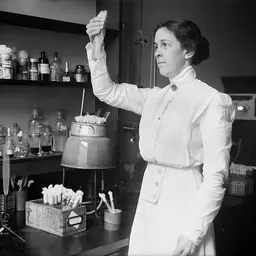

Frequently asked questions
Who was Alfred Schild?
American physicist (1921–1977)
When was Alfred Schild born?
Alfred Schild was born on 7 September 1921 in Istanbul.
When did Alfred Schild die?
Alfred Schild died on 24 May 1977 in Downers Grove.
What was Alfred Schild's occupation?
Alfred Schild was a physicist and university teacher.
What was Alfred Schild known for?
Alfred Schild was known for Kerr–Schild perturbations.
What nationality was Alfred Schild?
Alfred Schild was German and American.
Sources & further reading
Cite this page
APA: Biography.guide. (2026). Alfred Schild. https://biography.guide/alfred-schild/
MLA: "Alfred Schild." Biography.guide, https://biography.guide/alfred-schild/.
Chicago: "Alfred Schild." Biography.guide. https://biography.guide/alfred-schild/.
Data last updated: 2026-09-20 · Spot an error? Report a correction.
Page generated 2026-09-27 05:01 UTC