
About Leopold Infeld
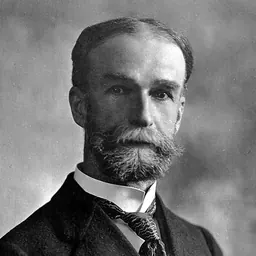
Lived 1898 – 1968 (aged 69). Leopold Infeld was a Polish physicist, non-fiction writer, university teacher, writer and journalist, known for Born–Infeld theory, Einstein–Infeld–Hoffmann equations and Infeld–Hull factorization method.
Leopold Infeld (20 August 1898 – 15 January 1968) was a Polish physicist who worked mainly in Poland and Canada (1938–1950). He was a Rockefeller fellow at Cambridge University (1933–1934) and a member of the Polish Academy of Sciences.
Early life Leopold Infeld was born into a family of Polish Jews in Kraków, then part of the Austro-Hungarian Empire (it rejoined an independent Poland in 1918). He studied physics at Kraków's Jagiellonian University and from 1920 in Berlin, where he had engaged Albert Einstein's help to gain admission to the University of Berlin. He obtained a doctorate in 1921. In 1933 he left for England, then for the United States and Canada after the death of his second wife, Halina.
Work
Italian-language copy of Einstein's and Leopold's 'The Evolution of Physics' Infeld was interested in the theory of relativity. He was awarded a doctorate at the Jagiellonian University (1921), worked as an assistant and a docent at the University of Lwów (1930–1933) and then as a professor at the University of Toronto between 1939 and 1950. He collaborated with Albert Einstein at Princeton University (1936–1938). The two scientists jointly formulated the equation describing star movements as well as concurrently writing the book The Evolution of Physics.
After the first use of nuclear weapons in 1945, Infeld, like Einstein, became a peace activist. Because of his activities, he was unjustly accused of having communist sympathies. In 1950, he and his family left Canada and returned to communist Poland. He also could not return to the US at that time. In the US, despite having worked previously directly with Einstein, who formally invented nuclear weapons with his famous formula, Infeld risked receiving the death penalty like the Rosenbergs if accused of spying for the Soviet Union.
He felt he had an obligation to help science in Poland recover from the ravages of the Second World War. He served as president of the Polish Physical Society between 1955 and 1957. In the staunchly anti-communist climate of the time, many in the Canadian government and media feared that working in a communist country he would betray nuclear weapons secrets. He was stripped of his Canadian citizenship and was widely denounced as a traitor. In actuality, Infeld's field was the theory of relativity—not directly linked to nuclear weapons research. After Infeld's return to Poland, he requested a leave of absence from the University of Toronto. His request was denied, and Infeld resigned his post. In 1995 the University of Toronto made amends and granted Infeld the posthumous title of professor emeritus. Upon his return to Poland, Infeld became a professor at the University of Warsaw, a post he held until his death.
The Born–Infeld model was named after Max Born and Leopold Infeld, who first proposed it. The Infeld-Hull Factorization Method describing general sets of solutions to the Schrödinger equation.
Infeld was one of the 11 signatories to the Russell–Einstein Manifesto in 1955 and is the only signatory never to receive a Nobel Prize.
In 1964 he was one of the signatories of the so-called Letter of 34 to Prime Minister Józef Cyrankiewicz regarding freedom of culture.
Infeld is the author of Quest: An Autobiography and the biography Whom the Gods Love: The Story of Évariste Galois.
Personal life In New Jersey, on April 12, 1939, he married a mathematician who took the name Helen Infeld and they had two children, both born in Toronto, Joan M. and Eric (sometimes spelled Eryk).
Publications
Don’t just read it —
keep it.
Full-length biographies made to live with: read them, listen on the way to work, watch them tonight.
- E-book
- Audio
- Video
Instant download · yours to keep · every purchase keeps this site free
Important facts
People in Leopold Infeld's life
Named in this biography and alive at the same time
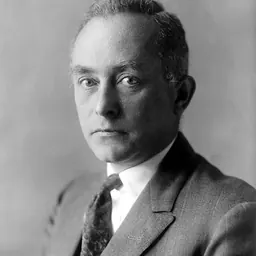




Related people
Same field, nearest in time
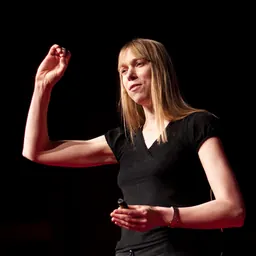

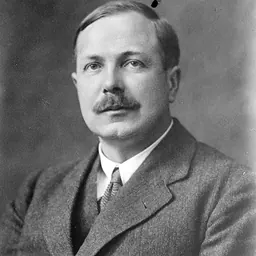
Contemporaries
People whose lives overlapped Leopold Infeld's



Frequently asked questions
Who was Leopold Infeld?
Polish physicist (1898–1968)
When was Leopold Infeld born?
Leopold Infeld was born on 20 August 1898 in Kraków.
When did Leopold Infeld die?
Leopold Infeld died on 15 January 1968 in Warsaw.
What was Leopold Infeld's occupation?
Leopold Infeld was a physicist, non-fiction writer, university teacher, writer and journalist.
What was Leopold Infeld known for?
Leopold Infeld was known for Born–Infeld theory, Einstein–Infeld–Hoffmann equations, Infeld–Hull factorization method and Infeld–Van der Waerden symbols.
What nationality was Leopold Infeld?
Leopold Infeld was Polish.
Sources & further reading
Cite this page
APA: Biography.guide. (2026). Leopold Infeld. https://biography.guide/leopold-infeld/
MLA: "Leopold Infeld." Biography.guide, https://biography.guide/leopold-infeld/.
Chicago: "Leopold Infeld." Biography.guide. https://biography.guide/leopold-infeld/.
Data last updated: 2026-09-20 · Spot an error? Report a correction.
Page generated 2026-09-27 05:27 UTC