
About Alfred Martin Duggan-Cronin
Lived 1874 – 1954 (aged 80). Alfred Martin Duggan-Cronin was a South African and Irish photographer.
Alfred Martin Duggan-Cronin was an Irish-born South African photographer who undertook several photographic and collecting expeditions in South Africa and adjacent territories between 1919 and 1939, in the course of which he documented people and rural life throughout the subcontinent. Based in Kimberley, it was while working in the mine compounds that he initially encountered African migrant workers, stimulating an interest in ethnographic subjects. Duggan-Cronin was born on 17 May 1874 in Innishannon, County Cork, Ireland, and died on 25 August 1954 in Kimberley, South Africa..
Background and career Born in Ireland, Duggan-Cronin was educated at Mount St Mary's College in Derbyshire, England. Giving up an original goal of becoming a Jesuit priest, he went to South Africa in 1897, taking a job with De Beers Consolidated Mines in Kimberley, where he served as a security officer in one of the mine 'native compounds'. His daily interaction with the men who worked in the mines was undoubtedly influential when he later developed an interest in photographic portraiture and documentation. He worked for De Beers until his retirement in 1932.
In 1904 Duggan-Cronin bought himself a simple box camera, while on a return visit to Britain, and his first photograph was of a swan house on Madeira. He honed his photographic skill taking still-life pictures of flowers, and animal studies including images of poultry and horses. He documented holidays to the Cape, Johannesburg and Bulawayo in the period 1906 to 1914, also compiling albums from trips in Europe. Important series include portraits of Kimberley personalities and, later, of visitors to the Duggan-Cronin Gallery. Geological photographs by Duggan-Cronin were commissioned for De Beers, while a significant contribution was his documentation of rock engravings, published as plates in Maria Wilman's 1933 book on the rock art of Griqualand West. During World War I, Duggan-Cronin took part in campaigns in German South West Africa and in East Africa, generating a photographic record of these events.
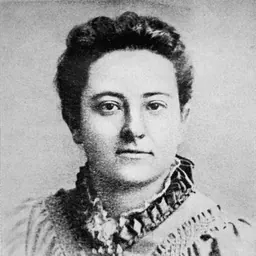
At his Gallery, Duggan-Cronin hosted many eminent visitors including Olive Schreiner, the Free State President Reitz, Alfred Lord Milner, General Jan Smuts, Abbé Breuil, Noël Coward and the British royal family.
Gallery
Don’t just read it —
keep it.
Full-length biographies made to live with: read them, listen on the way to work, watch them tonight.
- E-book
- Audio
- Video
Instant download · yours to keep · every purchase keeps this site free
Important facts
People in Alfred Martin Duggan-Cronin's life
Named in this biography and alive at the same time



Related people
Same field, nearest in time




Contemporaries
People whose lives overlapped Alfred Martin Duggan-Cronin's

Frequently asked questions
Who was Alfred Martin Duggan-Cronin?
South African photographer (1874–1954)
When was Alfred Martin Duggan-Cronin born?
Alfred Martin Duggan-Cronin was born on 17 May 1874 in County Cork.
When did Alfred Martin Duggan-Cronin die?
Alfred Martin Duggan-Cronin died on 25 August 1954 in Kimberley.
What was Alfred Martin Duggan-Cronin's occupation?
Alfred Martin Duggan-Cronin was a photographer.
What nationality was Alfred Martin Duggan-Cronin?
Alfred Martin Duggan-Cronin was South African and Irish.
Sources & further reading
· Wikipedia: Alfred Martin Duggan-Cronin
· DBpedia: Alfred Martin Duggan-Cronin
Cite this page
APA: Biography.guide. (2026). Alfred Martin Duggan-Cronin. https://biography.guide/alfred-martin-duggan-cronin/
MLA: "Alfred Martin Duggan-Cronin." Biography.guide, https://biography.guide/alfred-martin-duggan-cronin/.
Chicago: "Alfred Martin Duggan-Cronin." Biography.guide. https://biography.guide/alfred-martin-duggan-cronin/.
Data last updated: 2026-09-20 · Spot an error? Report a correction.
Page generated 2026-09-27 05:02 UTC