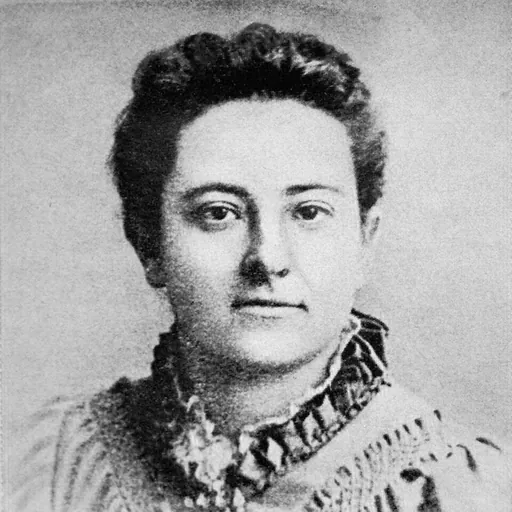
About Olive Schreiner
Lived 1855 – 1920 (aged 65). Olive Schreiner was a South African writer, sociologist and feminist.
Olive Schreiner (24 March 1855 – 11 December 1920) was a South African author, anti-war campaigner and intellectual. She is best remembered today for her novel The Story of an African Farm, which has been highly acclaimed. It deals boldly with such contemporary issues as agnosticism, existential independence, individualism, the professional aspirations of women, and the elemental nature of life on the colonial frontier.
Since the late 20th century, scholars have also credited Schreiner as an advocate for the Afrikaners, and other South African groups who were excluded from political power for decades, such as indigenous blacks, Jews, and Indians. Although she showed interest in socialism, pacifism, vegetarianism, and feminism amongst other topics, her views escaped restrictive categorisations. Her published works and other surviving writings promote implicit values such as moderation, friendship, and understanding amongst all peoples, and avoid the pitfalls of political radicalism, which she consciously eschewed. Called a lifelong freethinker, she also continued to adhere to the spirit of the Christian Bible and developed a secular version of the worldview of her missionary parents, with mystical elements.
Schreiner is also known for her later novel, From Man To Man Or Perhaps Only (1926), published posthumously. She had not completed its revisions before her death. The first edition was produced by her husband, Samuel Cronwright-Schreiner. It was re-edited and published by the University of Cape Town Press (edited and introduced by Dorothy Driver). This edition corrects previous errors and provides another ending to the novel, in Schreiner's own words, in addition to her husband's summary. From Man to Man or Perhaps Only was said by Schreiner to be her favourite among her novels. From exploring white women's confinement to domestic life in colonial-era South Africa, the novel eventually expands its gaze to include black women and girls, whose presence gradually informs the central character's struggle to re-create herself and educate her children against the racism and sexism of the period.
Biography Karel Schoeman, a historian, and authority on Schreiner in South Africa, wrote that she was an outstanding figure in a South African context. He summarises the basic pattern of her life as follows, noting her periods of living out of the country:
Early life
Olive Emily Albertina Schreiner was the ninth of twelve children born to a missionary couple at the Wesleyan Missionary Society station at Wittebergen in the Eastern Cape, near Herschel in South Africa. Her parents, Gottlob Schreiner and Rebecca (née Lyndall), married in England in 1837. She was named after her three older brothers, Oliver (1848–1854), Albert (1843–1843) and Emile (1852–1852), each of whom died before she was born. Her childhood was a harsh one: her father was loving and gentle, though impractical, which led to difficulties for the family; but her mother Rebecca was intent on teaching her children the same restraint and self-discipline that had been a part of her upbringing. Olive received virtually all of her initial education from her mother, who was well-read and gifted.
Her eldest brother, Frederick Samuel (1841–1901), obtained a BA at London University and founded New College in Eastbourne in 1877. He remained as headmaster until late 1897, but continued to run the junior school until 1901. He died in 1901 at the Grand Hotel in Eastbourne and was interred in the town.
When Olive was six, her father Gottlob transferred to Healdtown in the Eastern Cape to run the Wesleyan training institute there. As with so many of his other projects, he could not manage the responsibility and was expelled in disgrace for trading against missionary regulations. He was forced to make his own living for the first time in his life and tried a business venture. Again, he failed and was insolvent within a year. The family lived in abject poverty as a result.
When Schreiner was nine, her sister Helen ("Ellie") died, and this had a profound effect on the survivor's outlook. Ellie was the twelfth and last child. She died at seventeen months (1864-1865). Schreiner dedicated the 'Prelude' of From Man to Man to Ellie, as well as to her own daughter, who died shortly after her birth.
In a number of letters, Schreiner discusses Ellie's death as a key turning point in her life. In a letter to John T. Lloyd of 1892, for instance, Schreiner commented:
When her older brother, Theophilus (1844–1920), was appointed as headmaster in Cradock in 1867, Schreiner and two of their siblings went to live with him. She also attended his school, where she received formal education for the first time. But she was no happier in Cradock than she had been in Wittebergen or Healdtown. Her siblings were very religious, but, like many learned Victorians, Olive had already questioned the Christianity of her parents, and it was the cause of many arguments that she had with her family.
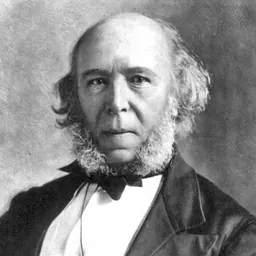
Consequently, when Theo and another brother left Cradock for the diamond fields of Griqualand West, Olive chose to become a governess. On the way to her first post at Barkly East, she met Willie Bertram, who shared her views of religion and who lent her a copy of Herbert Spencer's First Principles. This text was to have a profound impact on her. While rejecting religious creeds and doctrine, Spencer also argued for a belief in an Absolute that lay beyond the scope of human knowledge and conception. This belief was founded in the unity of nature and a teleological universe, both of which Olive was to appropriate for herself in her attempts to create a morality free of organised religion.
After this meeting, Schreiner travelled from place to place, accepting posts as a governess with various families, later leaving them because of personal conflict with her employers. One issue which always surfaced was her unusual view of religion. Her apostasy did not sit well with the traditional farm folk among whom she worked.
Another factor was that she was somewhat unconventional in her relationships, for she was uncertain as to how to relate sexually to her male employers in many cases, and men in general. In his study of Schreiner's character, Karel Schoeman writes:
And this person, who Schoeman identifies strongly with Schreiner in agreement with other researchers, is described by Ellis as ...
[Someone who]... from girlhood experienced erotic day-dreams, imagining love-stories of which she herself was the heroine; the climax of these stories has developed with her own knowledge of sexual matters ... She regards herself as very passionate ... but her sexual emotions appear to have developed very slowly and have been somewhat intellectualised. In addition to the Progressive Organisation, she also attended meetings of the Fellowship of the New Life and Karl Pearson's Men and Women's Club, where she was insistent on the critical importance of woman's equality and the need to consider men as well as women when looking at gender relationships.
However, her own relationships with men were anything but happy. She had refused a proposal from her doctor, Bryan Donkin, but he was irritatingly persistent in his suit of her. To make matters worse, despite her reservations about Karl Pearson and her intentions just to remain his friend, she soon conceived an attraction for him. He did not reciprocate her feelings, preferring Elizabeth Cobb. In London, Schreiner often found herself at odds with society's expectations of "respectable behaviour". Edward Carpenter described her as "a pretty woman of apparently lady-like origin who did not wear a veil and seldom wore gloves, and who talked and laughed even in the streets quite naturally". She clashed with a succession of landlords over her frequent male visitors, and once, outside her lodgings at 16 Portsea Place near Marble Arch, she was nearly arrested as a prostitute.
In 1886, she left England for Continental Europe under something of a cloud, travelling between Switzerland, France, and Italy before returning to England. During this time, she was tremendously productive, working on From Man to Man and publishing numerous allegories. She also worked on an introduction to Mary Wollstonecraft's A Vindication of the Rights of Women.
Return to South Africa
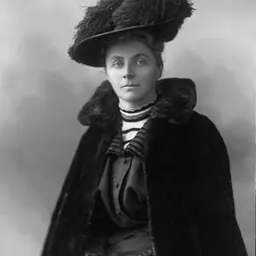
Given the situation in England, it is perhaps not surprising that Schreiner chose to return to South Africa, sailing back to Cape Town in 1889. The return home was unsettling for her – she felt extremely alienated from the people around her, but at the same time experienced a great affinity for the land itself. In an attempt to reconnect with her surroundings, she became increasingly involved in local politics and produced a series of articles on the land and people around her, published posthumously as Thoughts on South Africa. Through her work with local politics she became intimate friends with Emily Hobhouse, Jessie Rose-Innes and Elizabeth Maria Molteno, influential women activists with similar opinions on civil and women's rights.
Her involvement with Cape politics led her into an association with Cecil John Rhodes, with whom she would soon become disillusioned and about whom she would write her bitterly satirical allegory Trooper Peter Halket of Mashonaland. This disillusionment began with his support of the "strop bill" that would allow black and coloured servants to be flogged for relatively small offences.
Her opposition to the "strop bill" also brought her into contact with , a politically active farmer. They were of the same mind on the "Native Question" and on Rhodes, and Schreiner soon fell in love with him. During a brief visit to England in 1893, she discussed with her friends the possibility of marrying him, although she was concerned that she would find marriage restrictive. She put aside these doubts, however, and they were married in 1894, after which they settled at Cronwright's farm.
The next few years were difficult and unsettled ones for them. Schreiner's worsening health forced the couple to move constantly, while her first and only child, a daughter, died within a day. This loss was worsened by the fact that all her other pregnancies would end in miscarriages. However, she found solace in work, publishing a pamphlet with her husband on the political situation in 1896 and Trooper Peter Halket of Mashonaland the next year. Both of these isolated her from her family and the people around her, and she experienced long spells of loneliness during this period of her life.
In 1898, the couple moved to Johannesburg for health reasons. In the aftermath of the Jameson Raid, they were seen as the champions of the Republican cause in the face of the inevitable war between Boer and British. Schreiner tried to persuade South African officials to turn away from the path of war, and, when that failed, wrote The South African Question by an English South African in an attempt to open the English public's eyes to the reality of the situation. That was equally unsuccessful, but Schreiner was undaunted. Throughout the war, she continued to defend Boer interests and argue for peace, as did her brother William Philip Schreiner, even though she was suffering physically and psychologically and all her efforts only met with ridicule. As a means of distraction, she began reworking the "sex book" she had started in England into Woman and Labour, which is the best expression of her characteristic concerns with socialism and gender equality. Driven by her prophetic vision of a non-racist, non-sexist South Africa, during the Boer War Schreiner lived in the tiny hamlet of Hanover, virtually a British army camp.
The last few years of Schreiner's life were marked by ill-health and an increasing sense of isolation. Despite this, she still engaged in politics and was determined to make her mark on a new constitution, especially through works like Closer Union. In this polemic, she argued for more rights not only for blacks but also for women. She also joined the newly founded Cape Branch of the Women's Enfranchisement League in 1907, becoming its vice-president. However, she refused to lend her support to it any longer when other branches wished to exclude black women from the vote.
Final days
When Woman and Labour was finally published in 1911, Schreiner was severely ill, her asthma worsened by attacks of angina. Two years later, she sailed alone to England for treatment but was trapped there by the outbreak of World War I. During this time, her primary interest was in pacifism – she was in contact with Gandhi and other prominent activists like Emily Hobhouse and Elizabeth Maria Molteno – and she started a book on war, which was abbreviated and published as The Dawn of Civilisation. This was the last book she was to write. After the war, she returned home to the Cape, where she died in her sleep in a boarding house in 1920. She was buried later in Kimberley. After the death of her husband, Samuel Cronwright, her body was exhumed, and along with her baby, dog and husband, she was reburied atop Buffelskop mountain, on the farm known as Buffelshoek, near Cradock, in the Eastern Cape.
Selected works
The Story of an African Farm, 1883 (as "Ralph Iron") Dreams, 1890 Dream Life and Real Life, 1893 The Political Situation in Cape Colony, 1895 (with S. C. Cronwright-Schreiner) Three Dreams in a Desert. Under a Mimosa-Tree, 1897 Trooper Peter Halket of Mashonaland, 1897 The South African Question. By an English South African, 1899 An English South African Woman's View of the Situation, a critique on the Transvaal difficulty from the pro-Boer position, 1899 So Here Then are Dreams, 1901 A Letter on the Jew, 1906 Closer Union: a Letter on South African Union and the Principles of Government, 1909 Woman and Labour, 1911 Woman and War, 1914 Who Knocks at the Door?, 1918 The Dawn of Civilisation, 1921 Thoughts on South Africa, 1923. Posthumously Stories, Dreams and Allegories, 1923. Posthumously From Man to Man or Perhaps Only, 1926. Posthumously Undine, 1929. Posthumously
Correspondence The Olive Schreiner Letters Online database is a collection of over 5,000 extant letters written to or from Schreiner. The letters cover a diverse range of topics from South African political history, 'New Women' writers, international social movements, to feminist social theory. The OSLO edition provides; full diplomatic transcriptions, including omissions, insertions, and 'mistakes'; extensive full-text search facilities; topic collections of Schreiner letters; a 'dramatis personae' providing bibliographical information on Schreiner's correspondents and many other people mentioned in her letters; new collections of letters as they become available; detailed information on all Schreiner's publications, including in journals and newspapers, as well as books; and downloadable publications from the OSLO research team.
Audio book
Story of an African Farm
Recent scholarship
Carolyn Burdett's Olive Schreiner (Oxford University Press, 2013) , 9780746310939 Liz Stanley, Andrea Salter & Helen Dampier (2013), 'Olive Schreiner, Epistolary Practices and Microhistories, Cultural and Social History, 10:4, 577–597. Stanley, L., Salter, A., & Dampier, H. (2013), 'The Work of Making and the Work it Does: Cultural Sociology and 'Bringing- Into-Being' the Cultural Assemblage of the Olive Schreiner Letters' in Cultural Sociology 7(3), 287–302. 'I Just Express My Views & Leave Them to Work': Olive Schreiner as a Feminist Protagonist in a Masculine Political Landscape with Figures' by Liz Stanley and Helen Dampier. Published in Gender and History, Vol. 24, Issue 3 (November 2012). Helen Dampier's article, 'Re-Readings of Olive Schreiner's Letters to Karl Pearson: Against Closure', OSLP Working Papers on Letters, Letterness & Epistolary Networks No 3, University of Edinburgh, pp. 46–71 'Olive Schreiner Globalising Social Inquiry: A Feminist Analytics of Globalization' by Stanley, L., Dampier, H., & Salter, A. in The Sociological Review (2010) 58(4), 656–679. '"Her letters cut are generally nothing of interest": the Heterotopic Persona of Olive Schreiner and the Alterity-Persona of Cronwright-Schreiner', an article by Liz Stanley and Andrea Salter in English in Africa, Volume 36, Number 2, 1 October 2009, pp. 7–30(24). Ann Heilmans' New Woman Strategies: Sarah Grand, Olive Schreiner, and Mona Caird (Manchester University Press, 2004) , 9780719057595 Article by John Kucich: 'Olive Schreiner, Masochism, and Omnipotence: Strategies of a Preoedipal Politics' in Novel: A Forum on Fiction (2002) 36 (1): 79. Liz Stanley's article, 'Shadows lying across her pages: epistolary aspects of reading 'the eventful I' in Olive Schreiner's letters' in Journal of European Studies (2002). Olive Schreiner and the Progress of Feminism: Evolution, Gender and Empire by Carolyn Burdett (Springer, 2001) , 9780230598973 Paula M. Krebs' article, 'Olive Schreiner's Racialization of South Africa' in Victorian Studies Vol. 40, No. 3 (Spring, 1997), pp. 427–444 (18 pages). Fictions of the Female Self: Charlotte Bronte, Olive Schreiner, Katherine Mansfield by Ruth Parkin-Gounelas (Springer 1991) , 9780230378254 Mark James Perry's thesis The life of Olive Schreiner: a psychobiography. University of the Free State (31 July 2012).
Don’t just read it —
keep it.
Full-length biographies made to live with: read them, listen on the way to work, watch them tonight.
- E-book
- Audio
- Video
Instant download · yours to keep · every purchase keeps this site free
Important facts
People in Olive Schreiner's life
Named in this biography and alive at the same time




Related people
Same field, nearest in time

Contemporaries
People whose lives overlapped Olive Schreiner's




Frequently asked questions
Who was Olive Schreiner?
South African author and pacifist (1855-1920)
When was Olive Schreiner born?
Olive Schreiner was born on 24 March 1855 in Cape Colony.
When did Olive Schreiner die?
Olive Schreiner died on 11 December 1920 in Cape Town.
What was Olive Schreiner's occupation?
Olive Schreiner was a writer, sociologist and feminist.
What nationality was Olive Schreiner?
Olive Schreiner was South African.
Sources & further reading
Cite this page
APA: Biography.guide. (2026). Olive Schreiner. https://biography.guide/olive-schreiner/
MLA: "Olive Schreiner." Biography.guide, https://biography.guide/olive-schreiner/.
Chicago: "Olive Schreiner." Biography.guide. https://biography.guide/olive-schreiner/.
Data last updated: 2026-09-23 · Spot an error? Report a correction.
Portrait: Wikimedia Commons · author & licence
Page generated 2026-09-27 05:06 UTC