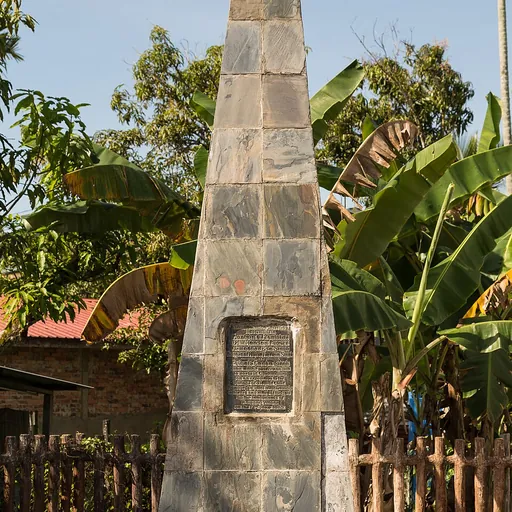
About Alexander Mortier de Fontaine
Lived 1838 – 1885 (aged 46–47). Alexander Mortier de Fontaine was a French soldier.
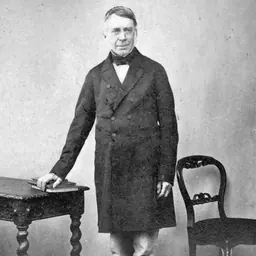
Alexander Mortier de Fontaine, sometimes known as Alexander Fountain, was a French sailor who served as the Commander of the Native Auxiliary Force of the Straits Settlements Police Force, which gained a reputation for fearlessness and ferocity during the Klang War. After Klang was recaptured, he took a contingent of 85 of the Auxiliary with him to Sungei Ujong, known as De Fontaine's Arabs. Because he had served for several militaries by the time of his first major command, he was often called a mercenary, an adventurer, a drifter, and an aimless wanderer. After these major campaigns, he became an inspector in Singapore for nearly a decade, before becoming the 2nd-serving Commandant of the British North Borneo Constabulary, where in 1885 he was killed during the Kawang Amok.
Early life and military career De Fontaine was born in Paris in 1838.
In 1854, when the Second French Empire officially entered into the Crimean War, he ran away from home to enlist in the French Navy. His service in Crimea earned him the Crimea Medal, where for roughly a year, he fought in the Siege of Sevastopol. He had a decent career in the French Navy, reaching the rank of Midshipman before the end of his contract.
In 1861, with the American Civil War looming, De Fontaine enlisted in the United States Army to fight for the Union against the cause of slavery, but he did so under an assumed identity. In a letter home to his mother, he told her: "Mother, you ask whether you might write me under my own name: don't do it, as they would become doubtful as to my real identity..." Around this time, De Fontaine had moved to the city, becoming one of their first recruits. He served as a warder for the Straits Settlements Police Force, being placed into their subsidiary outfit, the Singapore Police Force (SPF). They would be able to respond to any emergency in the colonies at a moment's notice. This was to operate apart from the Singapore Volunteer Rifles Corps, which was an exclusively European unit.
The men that De Fontaine found as officers to lead this unit were "drifters who failed to get work in Singapore..." A Dutch man, a former British Army sergeant, and a failed Italian businessman. The first place he searched for men, naturally, was the jail where he was assigned as warder. He found "...Indian and Malay ruffians, and criminals recruited from Pinang, Malacca, and Singapore."
De Fontaine was a more non-traditional leader than most of the Colonial mindset in Southeast Asia. He especially did not enforce the expected methods of supposed "discipline" on his men (a euphemism to mean that he didn't flog them) and trusted their independence. For this, The Straits Times wrote: "This mob... is totally without discipline with the exception of a certain dim idea that where their commander leads they must follow... famed like their commander for deeds of valour... regarded by the Malay population as demons of the most unparalleled ferocity." They were also described as slovenly, but this meant that De Fontaine didn't spend his time on drills and ceremony or making sure that their uniforms were bristling and shiny. De Fontaine's men got results on the battlefield, and struck fear into the hearts of whoever they fought. De Fotaine is not recorded in the roll of officers at this battle, and there is no evidence that he fought here.
Eighty years after the fact, in 1955, the Straits Times published an article stating that De Fontaine had "fled" from his command by March 1875, when Henry Charles Syers arrived at Klang to take over command of the Auxiliary Force, transforming its surviving 100 members into the newly established Selangor Police Force. However, this is incorrect. He did not "flee," rather, he had simply gone on paternity leave for the birth of his second son, Percival Mortier de Fontaine, , who was born in 1875. The command of those Auxiliary forces stationed in Klang during 1875 was left with a man named Ali Mamat, a Mauritian, of whom many newspapers writing decades afterward would confuse with De Fontaine because they were working with the oral accounts of men who couldn't tell the difference between two Frenchmen.
Involvement in the Sungei Ujong War
Battle of Paroi In December 1875, at the same time as the Perak War was raging along the Perak River, the Malacca Column of the 10th Regiment of Foot was marching into Sungei Ujong under the command of Lieutenant Colonel E. Bertie Clay of the Gurkhas to reinforce the British Resident Patrick James Murray in his fight against Tuanku Antah, the Yamtuan of Seri Menanti. For naval support they were assisted by Francis Stirling and the HMS Thistle.
De Fontaine was on a quick march from Singapore to join the Malacca Column with a contingent of 85 of the Native Auxiliary Force. These 85 men – even though they were a cosmopolitan mixture of diverse men from around the world; Seedies and Kroomen, Egyptian, Somali, Sikh, Punjabis, Malay, and others – within the Malacca Column, they had gained the name of the Arab Contingent, but mainly known as The Arabs or De Fontaine's Arabs.
On 6 December 1875, when De Fontaine's Arabs arrived at Rassa, their presence gave Resident Murray enough confidence to march against Paroi. The next day, on 7 December 1875, De Fontaine's Arabs set out with the 10th Regiment and Lieutenant Henry Charles Hinxman to assault the fortifications and stockades lining the Paroi River. The oppositional force of Malays gave heavy resistance and outnumbered the British assault.
One detachment of The Arabs broke off of the main assault to flank the Malays, but they were forced to retreat. For an hour, gunfire was exchanged across a swamp, with casualties on both sides. British artillery finally arrived, and began firing on the Malay army. Hinxman gave the order to fix bayonets and run for a final charge – at which point Paroi fell into British possession.
With the Malays now on the retreat, the army moved northward to Terrache. De Fontaine's Arabs were the last to leave Bukut Putus. Colonel Clay passed down the order to De Fontaine: to burn everything as they marched to the north. They did so. De Fontaine's Arabs burned the stockades, they burned houses, fields, groves, and villages as they marched north. However, many people, upon reading the stories in London automatically assumed it was De Fontaine's Arabs doing the looting. The Straits Times wrote:"...Heaven knows what the London journals will say about it... they may view the matter as they did Commodore Sir William Hewett's raid upon pirates in Congo river, where there seems to have been still more looting and burning, respecting which, however, the London press for the most part preserved a discreet silence. There is nothing to be said for the order to the Arabs to burn and destroy, and the permission to the regulars to loot..." When news reached London of the events that had transpired, Lord Stanley of Alderley in the House of Lords objected to the burning. Later that year, he introduced a resolution to the Chamber that the House of Lords should lay the blame on the Colonial Department for their poor performance. The Earl of Carnarvon hotly debated the language of the resolution. The Straits Times, upon hearing that the Secretary of State had admonished De Fontaine and his second-in-command Robinson directly by name, stated that they could provide a much longer list of names who were more suitable for the vitriol of the government in London. When the Perak War and the Sungei Ujong War had largely ceased, the Government offered De Fontaine's Arabs to return to Klang for the protection of James Guthrie Davidson, who was now the Resident there. Davidson refused, turning the men away.
Return to Singapore On 28 May 1877, De Fontaine returned to active duty as an inspector for the Singapore Police Force. By 1878, De Fontaine was specifically recognized by the Chief Police Officer of the Straits Settlement Police Force for his "...zealous application to work and uniform good conduct..." He assisted in routine investigations, such as in 1881, following the case of a theft of bank notes, and later an authorized search of a dwelling. He also investigated missing persons, such as in 1881, the case of a missing man in Campong Battak – a man that when De Fontaine went enquiring after, found blood on the walls and the man's body buried in a shallow grave. On 5 April 1883, De Fontaine led a group of 12 men to raid a non-authorized opium farm shop called the "Spirit Farm Shop," in a seaside fishing town called Campong Pukat, and uncovered approximately $660 worth of processed opium.
British North Borneo Constabulary The British North Borneo Constabulary was the military and police force of North Borneo. In 1881, the North Borneo Chartered Company was established as the governing authority over their newly established country of North Borneo, a country roughly the size of Northern Ireland at the Northeast tip of Borneo. The country's only police and military force was the British North Borneo Constabulary, whose first-serving Commandant was Arthur Montgomery Harington. "The Company," as it was known, did not have enough financial resources to pay for the total number of men that Harington desired for a professional police force.
When Harington resigned out of frustration with Company authorities over this in 1883, Governor Treacher arranged with Sir Hugh Low, the British Resident of Perak, to find someone qualified within the Straits Settlements that might be suitable enough to command the nascent Constabulary. When De Fontaine arrived at Kudat, which was very briefly the capitol city of North Borneo, the Constabulary had six different types of uniforms and no standardized weaponry; the European officers had standard loadouts, but the native members of the constabulary had been told to make due.
De Fontaine, despite his reputation in earlier years, created here a professionalized military and police force.
Puroh Expedition On 14 October 1883, De Fontaine led an expedition known as the Puroh Expedition, which was the first major inland expedition of the Constabulary against a local uprising force. Initially, they were engaged as a punitive mission to prosecute the murder of a Brunei trader in the village of Puroh. The expeditionary force was around 50 strong, accompanied by the Residents of Gaya and Papar and Sandakan, G. L. Davies and R. M. Little. They marched out from Kimanis on 14 October 1883, and took 4 days to march over the mountains, along the Kimanis River, and across the Limbawan Plain to reach Puroh.
The force was then joined by locals from the surrounding areas as they camped for two days. They arrived at the village of Puroh on 20 October and took twelve prisoners. The British commanders authorized the local Limbawan tribes to burn the village to the ground. The fugitives, however, had already fled the village by the time that the expedition arrived, and no major battle occurred.
Legacy He is remembered today by the De Fontaine Memorial.
Don’t just read it —
keep it.
Full-length biographies made to live with: read them, listen on the way to work, watch them tonight.
- E-book
- Audio
- Video
Instant download · yours to keep · every purchase keeps this site free
Important facts
People in Alexander Mortier de Fontaine's life
Named in this biography and alive at the same time



Related people
Same field, nearest in time


Contemporaries
People whose lives overlapped Alexander Mortier de Fontaine's

Frequently asked questions
Who was Alexander Mortier de Fontaine?
French adventurer, soldier, and policeman (1838–1885)
When was Alexander Mortier de Fontaine born?
Alexander Mortier de Fontaine was born in 1838 in Paris.
When did Alexander Mortier de Fontaine die?
Alexander Mortier de Fontaine died on 17 May 1885.
What was Alexander Mortier de Fontaine's occupation?
Alexander Mortier de Fontaine was a soldier.
What nationality was Alexander Mortier de Fontaine?
Alexander Mortier de Fontaine was French.
Sources & further reading
· Wikipedia: Alexander Mortier de Fontaine
· DBpedia: Alexander Mortier de Fontaine
Cite this page
APA: Biography.guide. (2026). Alexander Mortier de Fontaine. https://biography.guide/alexander-mortier-de-fontaine/
MLA: "Alexander Mortier de Fontaine." Biography.guide, https://biography.guide/alexander-mortier-de-fontaine/.
Chicago: "Alexander Mortier de Fontaine." Biography.guide. https://biography.guide/alexander-mortier-de-fontaine/.
Data last updated: 2026-09-23 · Spot an error? Report a correction.
Portrait: Wikimedia Commons · author & licence
Page generated 2026-09-27 05:07 UTC