
William Hewett
About William Hewett
Lived 1795 – 1891 (aged 96).
Lieutenant-Colonel William Hewett (2 July 1795 – 26 October 1891) was a British Army officer. The son of General Sir George Hewett, he served in five regiments during the wars of the fifth and sixth coalition. During the Hundred Days he rejoined his original regiment, the 14th Regiment of Foot, as a captain and saw action at the Battle of Waterloo. After the war he served with another former regiment, the 33rd (or First Yorkshire West Riding) Regiment, before joining the Rifle Brigade. Hewett ended his career as a lieutenant-colonel with the 53rd (Shropshire) Regiment of Foot. In later life he lived in Southampton and became the last surviving British officer to have served at Waterloo.
Early life and career Hewett was born at Parkhurst on the Isle of Wight in England on 2 July 1795. (Walter Hamilton, writing in Notes and Queries in 1891, stated that 1795 was an error and Hewett's birth year was 1791.)
Hewett was commissioned into the 14th (Bedfordshire) Regiment of Foot as an ensign on 14 December 1809. Around this time he served in the Napoleonic Wars, in the ill-fated Walcheren Campaign and under Admiral James Saumarez in the Baltic Sea. Seven days later Hewett was transferred to the 33rd (or First Yorkshire West Riding) Regiment, taking the place of a deceased officer. He purchased the rank of captain in the 92nd Regiment of Foot on 3 December 1814 and went onto half-pay. One of Hewett's subalterns during the battle was George Keppel, the future general and Earl of Albemarle.
Hewett transferred into the Rifle Brigade on 14 August 1823. He purchased the rank of major on the unattached list on 10 September 1825 and returned to the Rifle Brigade in that rank on 8 June 1826. He afterwards returned to half-pay to become lieutenant-colonel of the 33rd Foot on 6 May 1836. Hewett transferred to the 53rd (Shropshire) Regiment of Foot eight days later and retired the same day. With Albemarle's February 1891 death and Whichcote's in August, Hewett became the last surviving officer. His killers took a sword that had been carried by William Hewett at Waterloo. It was later recaptured and returned to the family. In 2023, Hewett and Russell's graves were restored by the Napoleonic & Revolutionary War Graves Charity and the Friends of Southampton Old Cemetery and, on the eve of the 208th anniversary of the Battle of Waterloo, a memorial service was held at the gravesides of the two men.
Don’t just read it —
keep it.
Full-length biographies made to live with: read them, listen on the way to work, watch them tonight.
- E-book
- Audio
- Video
Instant download · yours to keep · every purchase keeps this site free
Important facts
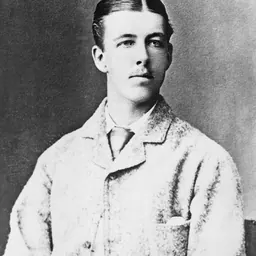
People in William Hewett's life
Named in this biography and alive at the same time

Contemporaries
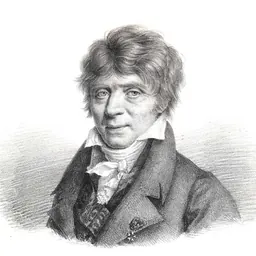
People whose lives overlapped William Hewett's





Frequently asked questions
Who was William Hewett?
(1795-1891)
When was William Hewett born?
William Hewett was born on 2 July 1795.
When did William Hewett die?
William Hewett died on 26 October 1891.
Sources & further reading
· DBpedia: William Hewett (British Army officer)
Cite this page
APA: Biography.guide. (2026). William Hewett. https://biography.guide/william-hewett-1795/
MLA: "William Hewett." Biography.guide, https://biography.guide/william-hewett-1795/.
Chicago: "William Hewett." Biography.guide. https://biography.guide/william-hewett-1795/.
Data last updated: 2026-09-20 · Spot an error? Report a correction.
Page generated 2026-09-27 05:25 UTC