
Alexander, Margrave of Brandenburg-Ansbach
Margrave of Brandenburg-Ansbach and Brandenburg-Bayreuth
About Alexander, Margrave of Brandenburg-Ansbach
Lived 1736 – 1806 (aged 69). Alexander, Margrave of Brandenburg-Ansbach was a monarch, politician, marshal and general field marshal.
Christian Frederick Charles Alexander (; 24 February 1736 – 5 January 1806) was the last margrave of the two Franconian principalities, Bayreuth and Ansbach, which he sold to the King of Prussia, a fellow member of the House of Hohenzollern.
Life His parents were Charles William Frederick, Margrave of Brandenburg-Ansbach, and Friederike Luise of Prussia, daughter of King Frederick William I of Prussia, sister of Frederick II of Prussia, a granddaughter of the British King George I and niece of the reigning British King George II (who would die aged 76 and leave his grandson, Charles's second cousin, as King George III, when Charles was 24).
After the sudden death of his elder brother Carl Frederick August on 9 May 1737, "Alexander", as he later called himself, became Crown Prince of the principality. From 1748 to 1759, he studied at Utrecht. As the young "Count of Sayn" (the county of Sayn-Altenkirchen in the Westerwald having been absorbed into the Principality of Ansbach in 1741) he travelled to Turin and Savoy.
On 22 November 1754, in Coburg, Alexander married Princess Frederica Caroline of Saxe-Coburg-Saalfeld (1735–1791), daughter of Franz Josias, Duke of Saxe-Coburg-Saalfeld, and Anne Sophia, Princess of Schwarzburg-Rudolstadt.
On 3 August 1757, Alexander became the Margrave of Brandenburg-Ansbach. The Residenz of the principality was at Ansbach, but Alexander preferred his hunting estate and country seat in Triesdorf. Here, he renovated the "White Castle" for his mistress Hippolyte Clairon, the "Red Castle" for himself, and built the Villa Sandrina for another mistress, "Fräulein Kurz", and the "Round Villa" (Villa Rotunda) for his mistress (and later wife) Elizabeth, Baroness Craven.
In 1758, Alexander founded the porcelain factory in Ansbach and made ventures into agriculture by importing sheep. In 1769, he acquired the principality of Bayreuth pursuant to the Haus- und Reichsgesetze laws of the House of Hohenzollern.
In 1780, Alexander founded his own bank, the Hochfürstlich-Brandenburg-Anspach-Bayreuthische Hofbanco, out of which later came the Bayerische Hypotheken- und Wechselbank ("Bavarian Mortgage and Change Bank", today absorbed into the HypoVereinsbank). He evidently wanted to avoid supporting the Jewish banking houses that were then overseeing his financial affairs, and to keep as much of his revenue as possible in his own hands by setting himself up as a private banker.
American Revolutionary War One of Alexander's enterprises earned income from hiring auxiliary troops to King George III of Great Britain for the American Revolutionary War. He had nominal command over the "Frankish Army" of 1,644 mercenaries, of whom only some 1,183 returned to their homeland in 1783. The Margrave leased further troops to Holland. With these incomes, he paid down the principality's debts, which amounted to 5,000,000 guilders at the time he inherited the throne (1757). By the time of his abdication 34 years later, the principality's debt stood at only 1,500,000 guilders.
End of the Margraviate On 16 January 1791, Alexander sold his Margraviate to Prussia. The contract was arranged by Karl August von Hardenberg, who had been Acting Minister in Ansbach since 1790. Under the terms of the contract, Prussia paid the Margrave as compensation an annual stipend of 300,000 guilders. On 2 December, in Bordeaux, France, he signed his formal abdication as Margrave.
After abdication Alexander's first wife, Frederica Caroline, died on 18 February 1791 in Unterschwaningen, where she had lived since separating from her husband. On 19 May of the same year, Alexander left Triesdorf for England. On 13 October or 30 October 1791, in Lisbon, Alexander married Elizabeth Craven, Baroness Craven (1750–1828), the daughter of the Earl of Berkeley and the widow of the William Craven, 6th Baron Craven, who had died shortly before.
Alexander sailed to England as a private citizen with his new wife, and there the couple dedicated themselves to breeding horses. By December 1791, he had found a property near the River Thames, Brandenburgh House at Fulham, and in 1798, he acquired the Benham Park estate at Speen near Newbury in Berkshire. On 5 January 1806, aged 69, Alexander died after a short illness caused by lung disease. Today, a memorial in St Mary's Church in Speen, simply records "In Memory of the Margrave of Anspach, who died at Benham 5th January 1806".
The Franconian region over which Alexander had ruled changed hands many times. On 15 December 1805, in the first Treaty of Schönbrunn, Prussia ceded the Principality of Ansbach to France in exchange for the Electorate of Hanover; in 1806, Ansbach was acquired by the Kingdom of Bavaria in exchange for the Duchy of Berg, and soon afterwards the Prussian defeat at Jena on 14 October 1806 resulted in the Principality of Bayreuth also being ceded to the French in the Treaty of Tilsit of July 1807. In 1810, Bayreuth was acquired by Bavaria. In 1871, Bavaria became part of the new German Empire under the King of Prussia, but retained its internal independence, and it continues as a Land of the present-day Germany.
Arms
Ancestors
Don’t just read it —
keep it.
Full-length biographies made to live with: read them, listen on the way to work, watch them tonight.
- E-book
- Audio
- Video
Instant download · yours to keep · every purchase keeps this site free
Important facts
Family & relationships
People in Alexander, Margrave of Brandenburg-Ansbach's life
Named in this biography and alive at the same time
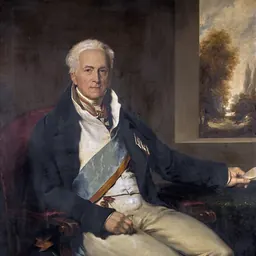

Related people
Same field, nearest in time
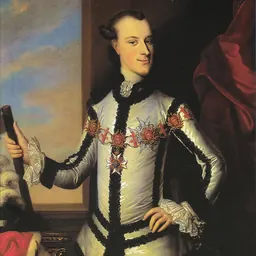
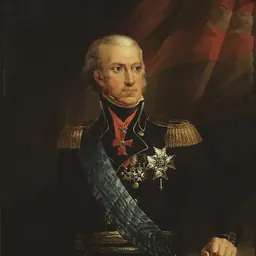




Contemporaries
People whose lives overlapped Alexander, Margrave of Brandenburg-Ansbach's






Frequently asked questions
Who was Alexander, Margrave of Brandenburg-Ansbach?
margrave of Brandenburg-Ansbach and Brandenburg-Bayreuth (1736-1806)
When was Alexander, Margrave of Brandenburg-Ansbach born?
Alexander, Margrave of Brandenburg-Ansbach was born on 24 February 1736 in Ansbach.
When did Alexander, Margrave of Brandenburg-Ansbach die?
Alexander, Margrave of Brandenburg-Ansbach died on 5 January 1806 in Speen.
What was Alexander, Margrave of Brandenburg-Ansbach's occupation?
Alexander, Margrave of Brandenburg-Ansbach was a monarch, politician, marshal and general field marshal.
What nationality was Alexander, Margrave of Brandenburg-Ansbach?
Alexander, Margrave of Brandenburg-Ansbach's recorded nationality: Principality of Bayreuth, Principality of Ansbach.
Sources & further reading
· Wikipedia: Alexander, Margrave of Brandenburg-Ansbach
· DBpedia: Alexander, Margrave of Brandenburg-Ansbach
Cite this page
APA: Biography.guide. (2026). Alexander, Margrave of Brandenburg-Ansbach. https://biography.guide/alexander-margrave-of-brandenburg-ansbach/
MLA: "Alexander, Margrave of Brandenburg-Ansbach." Biography.guide, https://biography.guide/alexander-margrave-of-brandenburg-ansbach/.
Chicago: "Alexander, Margrave of Brandenburg-Ansbach." Biography.guide. https://biography.guide/alexander-margrave-of-brandenburg-ansbach/.
Data last updated: 2026-09-20 · Spot an error? Report a correction.
Page generated 2026-09-27 05:20 UTC