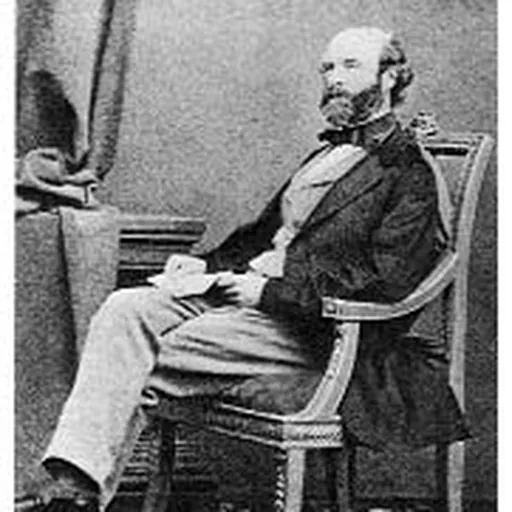
About Alexander Henry Haliday
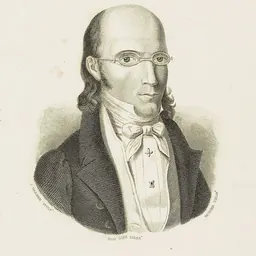
Lived 1807 – 1870 (aged 62). Alexander Henry Haliday was a British entomologist, physician, politician and naturalist.
Alexander Henry Haliday (1806–1870, also known as Enrico Alessandro Haliday, Alexis Heinrich Haliday, or simply Haliday) was an Irish entomologist. He is primarily known for his work on Hymenoptera, Diptera, and Thysanoptera, but worked on all insect orders and on many aspects of entomology.
Haliday was born in Carnmoney, County Antrim later living in Holywood, County Down, Ireland. A boyhood friend of Robert Templeton, he divided his time between Ireland and Lucca, where he co-founded the Italian Entomological Society with Camillo Rondani and Adolfo Targioni Tozzetti. He was a member of the Royal Irish Academy, the Belfast Natural History Society, the Microscopical Society of London, and the Galileiana Academy of Arts and Science, as well as a fellow of the (now Royal) Entomological Society of London.
Alexander Haliday was among the greatest dipterists of the 19th century and one of the most renowned British entomologists. His achievements were in four main fields: description, higher taxonomy, synonymy, and biology. He erected many major taxa including the order Thysanoptera and the families Mymaridae and Ichneumonidae.
Biography
Early life Alexander Henry Haliday was born in Carnmoney Ireland on 21 November 1806.The family later lived in Holywood, County Down, a small seaside town in County Down in a house named Clifden. He was the eldest child of Dr William Haliday (1763-1836) and Marion Webster. Haliday had a brother named William Robert and a sister named Hortense. His father was the nephew and heir of Dr Alexander Henry Haliday, one of Belfast's best known physicians and political activists. The Haliday family was Protestant, though not religious, and clearly well-placed, holding of farmland in County Antrim valued at £3,054.00 in 1820 (£246,763.20 in 2017). The family also owned properties in Holywood and Dublin and had a cloth merchant business and shipping interests. The Haliday family was related to the wealthy Luccan Pisani family, whom Haliday visited often throughout his life.
Education Haliday began his education at the Belfast Academical Institution, a school that had strong leanings towards natural history. Haliday studied Classics when he was twelve, Arithmetic when he was fourteen, and Mathematics when he was sixteen. He learned several other subjects, including natural history from George Crawford Hyndman. Haliday left the Belfast Academical Institution and the family home in nearby Holywood at fifteen, moving to Dublin where he entered Trinity College in 1822. He graduated in 1827, and was awarded a gold medal in classics. Haliday then went to Paris, where he stayed for almost a year. at the Darent river and Southgate. In 1835, he joined William Thompson on a tour of England and Wales which began in London at the British Museum and the Zoological Gardens and included visits to Matlock, the Lake District (Vale of Newlands), Crummock Water, Llangollen, and Snowdon. From 1841 and 1848, Haliday spent most, if not all, of his time away from Ireland, mainly at the Pisani family home in Lucca. In 1842, he was appointed High Sheriff of Antrim and lived in the townland of Ballyhowne in the parish of Carnmoney.
From 1854 to 1860, after having moved back to Dublin, Haliday was employed as an Invertebrate Zoology lecturer at the University of Dublin. During these years, he also edited parts of the Natural History Review, became a founding member of the Dublin University Geological Society, gave lectures at meetings of the Dublin University Zoological Association (Trinity College), and curated the insect collections at the same university. He also made regular visits to London, usually staying with Henry Tibbats Stainton. These visits often coincided with meetings of the Entomological Society of London.
Later life In February 1862, Haliday moved to Lucca. Following a trip to Sicily, he moved into Villa Pisani with his cousin, Mme. Pisani, and her family. Expeditions and meetings with entomologists became much more frequent. From 1862 until his death, Haliday travelled across Italy collecting insects, mainly in the North (Emilia-Romagna, Liguria, Lombardy, Piedmont, Aosta Valley, and Tuscany), although he made two trips to Sicily.
Major accomplishments Contributions to the species concept by the designation of type specimens. Contributions to the concept of synonymy. Establishing rules for systematics and nomenclature. Haliday's description of the genus Orphnephila (Diptera: Thaumalaeidae) and the accompanying plate set a new standard of descriptive taxonomy far in advance of anything of its time. Haliday's Essay on the classification of parasitic Hymenoptera is a seminal work of higher taxonomy. He was one of the pioneers of the group. The higher classification of the ichneumons is unstable but many of Haliday's higher taxa have survived. Haliday was a specialist, working full-time on Diptera in the families Sphaeroceridae and Dolichopodidae and on the Hymenoptera and Thysanoptera (excepting the arena of synonymy)
Taxa erected by Haliday Superfamilies Proctotrupoidea
Families Hymenoptera Mymaridae Platygastridae Scelionidae Trichogrammatidae Agaonidae (with Francis Walker) Encyrtidae (with Francis Walker) Eupelmidae (with Francis Walker) Eurytomidae (with Francis Walker) Torymidae (with Francis Walker)
Other Japygidae Sarcophagidae
Subfamilies Pireninae Spalangiinae Bethylinae Agriotypinae
Unranked taxa Terebrantia
Notable works 1832 The characters of two new dipterous genera with indications of some generic subdivisions and several species of Dolichopodidae. Zoological Journal 5: 350–368. 1 pl. 1833 with Francis Walker. Monographia Chalciditum. London, 1833–1842, Much of this work was collaborative with Haliday A.H. who was the sole author of the sectional diagnoses. 1833-1838 An essay on the classification of the parasitic Hymenoptera of Britain which correspond with the Ichneumones minuti of Linnaeus. Entomological Magazine 1: 259–276; 333–350; 48-491; 2: 93–106; 225–259; 4: 92–106; 203–221; 5:209-248. 1836 British species of the dipterous tribe Sphaeroceridae. Entomological Magazine 3: 315–336. 1836 An epitome of the British genera in the order Thysanoptera with indications of a few of the species. Entomological Magazine 3: 439–451. 1837 with John Curtis, James Charles Dale, Francis Walker, Second edition of A guide to the arrangement of British insects being a catalogue of all the named species hitherto discovered in Great Britain and Ireland 1839 Hymenoptera Britannica: Oxyura et Alysia. London, Balliére Fasc. 1: 15, Fasc. 2: 28 et 4.Category:Hymenoptera Britannica : Oxyura et Alysia - Wikimedia Commons 1839 Hymenopterorum Synopsis and Methodum Fallenii ut plurimum accommodata (Belfast) 8 4pg. s.titulo.Category:Hymenopterorum Synopsis and Methodum Fallenii ut plurimum accomodata - Wikimedia Commons 1851-6 in Francis Walker Insecta Britannica Diptera 3 vols. London Characters and synoptical tables of the order (vol.I: 1-9 of the Empidae (Vol.I:85-88) of the Syrphidae (Vol.I: 234–237) chapters on the Dolichopodidae (Vol.I: 144–221), on the Borborides (Vol.II: 171–184), on the Hydromyzides (Vol.II: 247–269)also the corrigenda and addenda (Vol.III: xi-xvi) and contributions to the J.O. Westwood plates. 1851 with Dohrn, C.A. Wissenschaftliche Mittheilungen Sendschreiben von Alexis H. Haliday an C. A. Dohrn über die Dipteren der in London befindlichen Linnéischen Sammlung Aus dem Englischen uberstez von Anna Dohrn and also (index) Haliday, A.H. Über die Dipteren der in London befindlichen Linnéischen Sammlung Stettiner Entomologische Zeitung 12: 131–145.Wissenschaftliche Mittheilungen Sendschreiben von Alexis H. Haliday an C. A. Dohrn über die Dipteren der in London befindlichen Linnéischen Sammlung Aus dem Englischen uberstez von Anna Dohrn - Wikimedia Commons 1857 Review Zoonomische Briefe: Allgemeine Darstellung der thierischen Organisation Von Dr. Hermann Burmeister, Professor der Zoologie zu Halle. Ersler und Zweiter Theil 8 vo. Otto Wigand: Leipzig 1856. Natural History Review (Proc.) 4: 69–77.
Arms
Don’t just read it —
keep it.
Full-length biographies made to live with: read them, listen on the way to work, watch them tonight.
- E-book
- Audio
- Video
Instant download · yours to keep · every purchase keeps this site free
Important facts
People in Alexander Henry Haliday's life
Named in this biography and alive at the same time




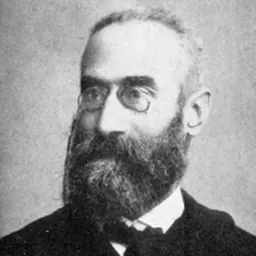
Related people
Same field, nearest in time
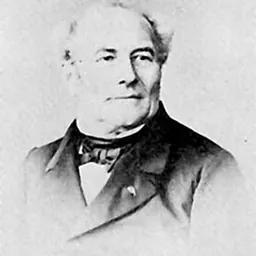
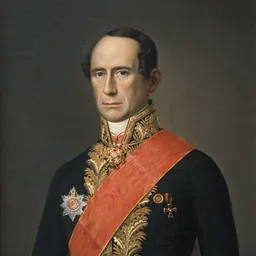

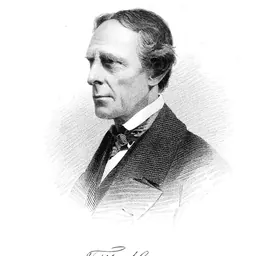
Contemporaries
People whose lives overlapped Alexander Henry Haliday's





Frequently asked questions
Who was Alexander Henry Haliday?
Irish entomologist (1807–1870)
When was Alexander Henry Haliday born?
Alexander Henry Haliday was born on 21 November 1807 in Holywood.
When did Alexander Henry Haliday die?
Alexander Henry Haliday died on 12 July 1870 in Lucca.
What was Alexander Henry Haliday's occupation?
Alexander Henry Haliday was an entomologist, physician, politician and naturalist.
What nationality was Alexander Henry Haliday?
Alexander Henry Haliday was British.
Sources & further reading
· Wikipedia: Alexander Henry Haliday
· DBpedia: Alexander Henry Haliday
Cite this page
APA: Biography.guide. (2026). Alexander Henry Haliday. https://biography.guide/alexander-henry-haliday-entomologist/
MLA: "Alexander Henry Haliday." Biography.guide, https://biography.guide/alexander-henry-haliday-entomologist/.
Chicago: "Alexander Henry Haliday." Biography.guide. https://biography.guide/alexander-henry-haliday-entomologist/.
Data last updated: 2026-09-23 · Spot an error? Report a correction.
Portrait: Wikimedia Commons · author & licence
Page generated 2026-09-27 05:06 UTC