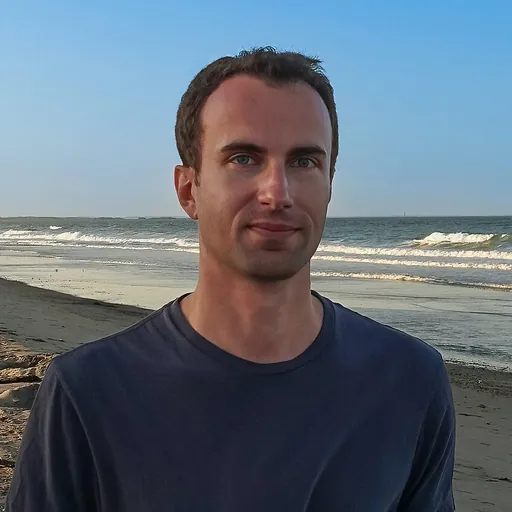
Alexander F. More
American scientist, economist, and science communicator
About Alexander F. More
Born 1982.
Alexander F. More is a European scientist (climate and health), economist, and historian of public health working in the US. His discoveries include the impact of climate change on the largest pandemics in the last two millennia, the impact of pandemics on air pollution, and the resetting of toxic air pollution standards through highly detailed interdisciplinary research. More also uncovered the creation of the first broad public health system during an environmental and climate crisis (the second pandemic). He frequently appears as a leading expert on national and global news stories on climate change and public health, as well as other issues of public policy, including immigration, sustainability and economic growth. He worked as a staff member for Senator Ted Kennedy when he was drafting the Affordable Care Act, and continues to engage in public service and non-profit activities as part of several foundations.
Early life and education More was born in Italy. The extreme pollution affecting the region where he grew up motivated his later focus in his work on environmental change and economic growth driving it. More attended the Liceo Classico and moved briefly to Venice for his secondary education at the Scuola Navale Militare Francesco Morosini, but decided to leave Europe to attend college in the United States.
In 2019, More took a position as associate professor of environmental health at Long Island University, where he also directed the Honors College and was named fellow of the Theodore Roosevelt Institute. In 2021, More was elected chair of the Department of Public Health at Long Island University and led efforts to organize two global summits on human and ecosystem health, in collaboration with the Embassy of France, the government of Portugal and the National Council for Science and the Environment. More is the main author of the Lisbon declaration of the Global Exploration Summit, committing all participants to the preservation of planetary health. In 2022, More accepted a position as associate professor at the University of Massachusetts Boston, which allowed him to be closer to Harvard and the Climate Change Institute where he continues to lead a research project on climate and health. He has been a Managing Editor of the Mapping Past Societies digital atlas at Harvard since 2014. By combining multiple climate, environmental and epidemiological records, More showed how the Spanish flu pandemic (caused by the avian H1N1 virus) was worsened if not caused by a six-year climate anomaly that affected Europe during World War I and until 1920.
More showed that torrential rains and unusual cold weather (with an anomalous low-pressure system) facilitated the spread of the virus through the battlefields and cities of Europe. The same climate anomaly interrupted the normal migration pattern of birds which were one of the major carriers of the disease, while floods from rivers and lakes where birds remained carried the disease to trenches and beyond. Lowered immune responses due to the cold, as well as well documented bacterial co-infections, increased the death toll of the pandemic.
Impact of pandemics on pollution and reset of toxic metal pollution standards More is renowned as the author of several studies that reset consensus on pollution standards for toxic metals worldwide, predicting the drop in air pollution that occurs during pandemic events three years before the COVID-19 pandemic. By showing that pollution levels dropped well below what scientists previously thought of as "natural levels" during pandemic events—when economic activity declines or ceases—More proved that no such "natural levels" of pollution exist. More pioneered this interdisciplinary work, using retrospective epidemiological (historical) data he sourced as well as ice core (from glaciers and ice sheets in the Northern Hemisphere and Arctic) data produced and analyzed by cutting-edge systems and a team under the guidance of Dr. Paul Andrew Mayewski at the Climate Change Institute. World renowned experts in lead pollution such as Philip J. Landrigan hailed More's research as revealing the true nature of modern pollution.
Consilience More is a well-known proponent of scientific approaches that lead to consilience, a concept popularized by Harvard ecologist E. O. Wilson, which describes the convergence of multiple independent data sources to remove bias and represent a reality or solve a problem which would not be clear if only one discipline or type of data were used. More has adopted Wilson's methodology and applied it to his research, arguing that only this type of systems approach would be able to solve complex crises such as climate change and pandemics. He pioneered the transdisciplinary use of ultra-high-resolution climate data in combination with highly detailed retrospective epidemiological and economic (historical) data. More demonstrated that the US Constitution contains clauses inspired by the same policies he uncovered, which were known to the framers. an interactive digital atlas website that combines research data in environmental science, public health, economics, genomics, archaeoscience, and several other disciplines. The site receives over 1 million visitors per year and has been the source of several groundbreaking discoveries, including recurring pandemic hotspots, and areas of enduring prosperity, as well as enduring poverty.
Awards and honors In 2021, More was elected Fellow of Royal Society for Public Health and Fellow of the Royal Geographical Society. Upon his recruiting by Long Island University, he was elected Fellow of the Theodore Roosevelt Institute (2019-2022). Discovery Channel also dedicated an episode to him on their Discovery+ network. In his TED talk and other interviews, More has emphasized the crucial role of scientists and historian in engaging the public in their discoveries. More directs a program (CHCR) dedicated to climate and health science communication, funded by the Burroughs Wellcome Fund. The program offers fellowships to journalists who educate scientists on how to combat science misinformation and connect to news media more effectively. More has also partnered with the Pulitzer Center in making scientific data more accessible to journalists.
Public service More has served as a staff member in the office of Senator Ted Kennedy while he was drafting the Affordable Care Act. After Kennedy's passing, More continued serving under his replacement, Paul G. Kirk, in 2009-10. He declined an offer to continue serving under Scott Brown. Blue Ocean Watch, Greenwater Foundation, and The Explorers Club (TEC). More chairs the program committee for Climate Week, at TEC, promoting cutting-edge scientific discoveries and partnerships between governments, scientists and the private sector. His sponsors and partners have included UNESCO, IUCN, Rolex, Pulitzer Center, XPRIZE, Prince Albert II of Monaco Foundation, African Parks, Nia Tero, Solutions Journalism Network, Mongabay, Woodwell Climate Research Center, and Discovery Channel. More has also led the organization of several global summits committing the participant nations and scientists to protecting ecosystem and human health in an endeavor to find solutions to climate and environmental change, as well as emerging epidemics.
Main works
Selected editorials
Don’t just read it —
keep it.
Full-length biographies made to live with: read them, listen on the way to work, watch them tonight.
- E-book
- Audio
- Video
Instant download · yours to keep · every purchase keeps this site free
Important facts
People in Alexander F. More's life
Named in this biography and alive at the same time
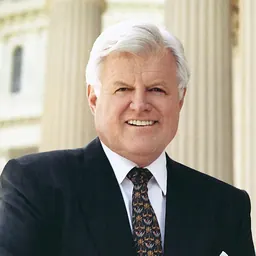
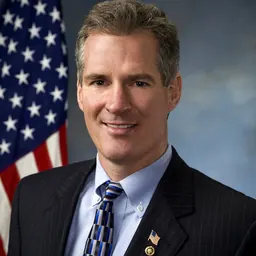

Contemporaries
People whose lives overlapped Alexander F. More's


Frequently asked questions
Who is Alexander F. More?
American scientist, economist, and science communicator
When was Alexander F. More born?
Alexander F. More was born in 1982.
Sources & further reading
· Wikipedia: Alexander F. More
Cite this page
APA: Biography.guide. (2026). Alexander F. More. https://biography.guide/alexander-f-more/
MLA: "Alexander F. More." Biography.guide, https://biography.guide/alexander-f-more/.
Chicago: "Alexander F. More." Biography.guide. https://biography.guide/alexander-f-more/.
Data last updated: 2026-09-23 · Spot an error? Report a correction.
Portrait: Wikimedia Commons · author & licence
Page generated 2026-09-27 05:08 UTC