
About Alexander Egorovich Varlamov
Lived 1801 – 1848 (aged 46). Alexander Egorovich Varlamov was a Russian composer, chapelmaster, singer, music critic, violinist and guitarist.
Alexander Egorovich Varlamov (or Aleksandr Yegorovich Varlamov; ; 27 November 1801 – 27 October 1848) was a 19th-century composer, singer, teacher, conductor, and one of the founding fathers of the genre of the Russian art song. He is recorded as being one of the first Russian creators to devise a technical process of singing in his monograph, Polnaya Shkola Penia - The Complete School of Singing (Moscow, 1840) He was also the notable father of Russian, 20th-century Actor Konstantin Varlamov and the great-grandfather of 20th-century composer Alexander Vladimirovich Varlamov. His art songs were famed for their Russian motives and authentic capture of everyday experiences. So much so that many of his songs were immortalized in literature by notable Russian and American authors and playwrights such as N. Gogol, I. Turgenev, and J. Galsworthy.
Family Alexander Egorovich Varlamov was born into a poor family on the 15th (27th) of November, 1801.
Education Alexander's vocal talent and musical acumen pronounced itself early. Around the age of nine, he was able to learn music solely by hearing and was said to have a beautiful singing voice. He showed a particular interest in church music and folk songs, along with an aptitude for violin playing, which he learned self-directly. Due to these factors, at the age of nine he was sent by his parents to St. Petersburg and quickly accepted as a young singer in the St. Petersburg State Academic Capella. He entered into his studies in/around 1809 and began studying music seriously under the direction of Dmitry Bortnyansky. He was quickly chosen to be the soloist in the Children's Choir. He also began to study the piano, cello, and guitar along with his other studies. He studied in the Academy for 10 years and graduated in 1819.
Upon graduating and having amassed exceptional technical prowess during his studious decade, in 1819 he was chosen to act as the singing teacher at The Russian Court Church in The Hague (Holland), where Anna Pavlovna, sister to Alexander I and wife of Prince Frederick of the Netherlands, was living at the time. However, due to less than adequate training at the Academy, he was lacking in his music theory skills and only had fundamental comprehension of theoretical principles. However, within The Hague and Brussels, there was a strong presence of French operatic culture and thus, he was able to quickly learn about the technicalities of vocalic singing and developed his pedagogical skills. Along with improving his theory acumen, during his time abroad, he often visited concerts, operas, and music performances, along with hosting public performances of his own talents as a singer and guitarist.
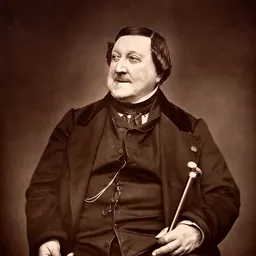
During his stay in Holland, he attended various operas, including Gioachino Rossini's Barber of Seville [Barbiere di Siviglia]. He was delighted in the way Rossini used the Russian folk-song "Ах, зачем же огород городить" [Oh, why fence in the Garden?] in the finale of Act 2 of the opera, most likely due to Rossini's relationship with Russian aristocrats and proximity to their musical heritage. But despite his vast network of musical connections and dilettante friends, he felt overstrung with responsibilities and requirements, all of which were leaving him with no time for his own artistic work and development.
He would stay in residence in Holland until 1823, returning to St. Petersburg after four years abroad.
Career In 1823, Alexander returned to St. Petersburg and restarted his singing pedagogy, taking a position within The St. Petersburg Theater School as a Vocal Teacher for the Preobrazhensky and Semyonovsky regiments. However, at this point he began to infrequently composer alongside hosting concerts of his music and singing in public recitals. The fluctuation in income drove him to seek employment and in 1829, he joined the faculty at the State Academic Capella where he held the position as Choir Director and teacher of singing for the young students. Because of Varlamov's close relationship with the imminent composer M. Glinka, in 1827 having made his acquaintance, he would be asked to become a regular attendee of his salons in St. Petersburg residence where Glinka held evening salons with the boys from the Acapella Academy. During the 1830-1840s, Varlamov's compositional career began to formally begin, some his first romances being created during this time. Many of the themes bear resemblance to the popular Symbolist movement and the idolization of the natural world in all of its transcendental and mysterious ways. Some of the titles of his romances being "Red sundress", "What is foggy, clear dawn", and "Do not make noise, violent winds." Alongside his personal compositions, he also began writing scores for shows at the Maly Theater as well as in St. Petersburg written by Western and European sources. Some of the plays during this time were A. Shakhovsky's The Two Man, Roslavlev based on the novel by L. A. Zagoskin, Shakespeare's Hamlet, and Victor Hugo's Esmeralda.
From 1832 to 1844, Alexander would also take up the position as Assistant Conductor and Kapellmeister at the Moscow Imperial Theater. During this period, Varlamov got to make acquaintances with a number of artists, including everyone from the troupe at the Maly Theater, actors S. F. Mochalov and M. S. Shchepkin, the composer A. Verstovsky and writer L.A. Zagoskin building rapport with the multi-talented musician. From these influences, Varlamov realized his passion of writing authentic music "in Russian," quickly turning to folk-music as his genre of choice. (1837) [also known as "The Thumb Boy"] having been staged at the Bolshoi Theater. He expanded his proficiency in writing romances and art songs. In 1833 alone, over 85 vocal works were published by the composer for public consumption in Moscow.
Varlamov is also accredited with producing two-song, folk-inspired, cycles, a style which was typical of the Russian 19th-century. These curt cycles would were composed of two, diametric songs, both in compositional style and theme. The first song would be slow and methodical, often using more sedate textures and expansive harmonic gestures, while the second would be more lively and up-tempo, using bright sonorities and exuberant effects. Thematically, the songs would mirror these diametrics, the first talking about solemn and morose themes, while the second would deal with lively atmospheres. A peculiarity of these songs would be the emphasis on recreating the folk-song accompaniment, so polyphonic motion would often furnish the underpinnings to the vocal melody above, mimicking the Russian folk traditions of Podgolosnaya ["under the voice"].
As a Composer, his corpus is said to be filled with over 150 original vocal songs, several vocal ensembles, and numerous folk arrangements. However, many of them do not survive to the present day. where he outlined in detail the main attributes of his pedagogical style and accumulated experiences. This publication would prove to be the first available source in Russia on the methodology of the vocal arts.
Artistic Style Varlamov's affinity for the rustic, agrarian heritage that Russian folk-songs afforded caused his compositional style to match in return. His works are noted for their thematic and musical buoyancy, clarity, and natural elegance. While the social themes did not draw a direct connection to his life as his contemporary Alexander Alyabyev, another notable 'father' of the Russian art song tradition, his song's themes were analogous to the social reality of the Russian 1830s. Because of his adeptness in capturing the sentiments of his surroundings, he became a notable figure in the Russian musical culture of his time, transcending the rigid class boundaries with his melodic tunes which were able to radiate the intrinsic beauty of the Russian everyday experience. Because his compositional prowess at utilizing folk material was so great, stemming all the way back to his childhood development into the musical art form, many of his tunes were mistaken for authentic, agrarian folk-tunes during his time.
Works like "The Red Sarafan," with its fluid lyricism and rustic harmonies, encased within the waves of easy rhythmicity and content tempi, showcased his indelible fidelity to the true natures of the Russian traditional music and her practices. Another song entitled "Don't Wake Her Up at Dawn," won the composer praise for its solemnly pensive yet majestically lush evocativity, albeit using sparse texture and a simplistic accompaniment. It is regarded as one of the composer's best art songs due to its purified musical rhetoric and humble warmth.
This extended even to his singing, being praised for his sincerity of delivery. The contemporarily little-known but historically important Russian composer Nikolai Titov, yet another 'father' of the Russian art song genre, had expressed his praise of the composer's bucolic timbral ability. He is noted as saying he could sing "both in the living room of the grandee, and in the man's chicken hut."
Books
1840: Polnaya Shkola Penia - The Complete School of Singing (Moscow)
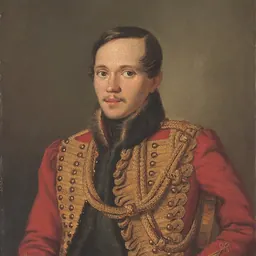
Recordings Songs of A. Varlamov are performed by modern singers: of Mikhail Lermontov, Sergei Lemeshev sings , Afanasy Fet's poems of Mikhail Lermontov (Oleg Pogudin sings) of Dmitriy Glebov of Aleksey Koltsov (Anatoliy Aleksandrovich sings) , Dmitri Hvorostovsky sings of N. Tsyganov (ru: Николай Григорьевич Цыганов). Olga Kulichova sings
Don’t just read it —
keep it.
Full-length biographies made to live with: read them, listen on the way to work, watch them tonight.
- E-book
- Audio
- Video
Instant download · yours to keep · every purchase keeps this site free
Important facts
People in Alexander Egorovich Varlamov's life
Named in this biography and alive at the same time

Related people
Same field, nearest in time
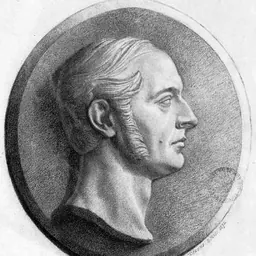

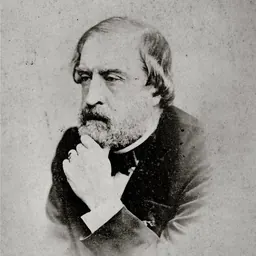
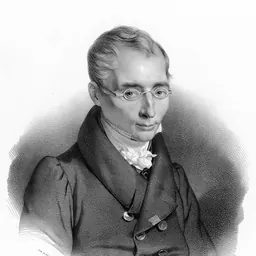

Contemporaries
People whose lives overlapped Alexander Egorovich Varlamov's





Frequently asked questions
Who was Alexander Egorovich Varlamov?
Russian composer (1801–1848)
When was Alexander Egorovich Varlamov born?
Alexander Egorovich Varlamov was born on 27 November 1801 in Moscow.
When did Alexander Egorovich Varlamov die?
Alexander Egorovich Varlamov died on 27 October 1848 in Saint Petersburg.
What was Alexander Egorovich Varlamov's occupation?
Alexander Egorovich Varlamov was a composer, chapelmaster, singer, music critic, violinist and guitarist.
What nationality was Alexander Egorovich Varlamov?
Alexander Egorovich Varlamov was Russian.
Sources & further reading
· Wikipedia: Alexander Egorovich Varlamov
· DBpedia: Aleksandr Varlamov (composer, born 1801)
Cite this page
APA: Biography.guide. (2026). Alexander Egorovich Varlamov. https://biography.guide/alexander-egorovich-varlamov/
MLA: "Alexander Egorovich Varlamov." Biography.guide, https://biography.guide/alexander-egorovich-varlamov/.
Chicago: "Alexander Egorovich Varlamov." Biography.guide. https://biography.guide/alexander-egorovich-varlamov/.
Data last updated: 2026-09-20 · Spot an error? Report a correction.
Page generated 2026-09-27 05:26 UTC