
About Alexander Allan Innis Wedderburn
Lived 1935 – 2017 (aged 81). Alexander Allan Innis Wedderburn was a British neuroscientist and psychologist.
Alexander Allan Innes "Zander" Wedderburn (9 May 1935 – 23 February 2017) was a British psychologist renown for his research on shiftwork and for the development of the teaching of occupational psychology.
Biography Wedderburn was born in Edinburgh in 1935. After graduation, he worked in various industrial relations positions until he was appointed as a lecturer at Heriot-Watt University in Edinburgh in 1968. He rose through the ranks and retired as Professor Emeritus in 2000. After his retirement, he founded the publishing company Fledgling Press.
At Heriot-Watt, he taught occupational psychology in the School of Management. Most of his teaching was in the area of making occupational psychology available to business students and engineers, and in his final three years he established a part-time MSc in Occupational Psychology taught jointly with Strathclyde University.
His main research impact was on hours of work and shiftwork, where he became an internationally known authority, building on a British Steel Corporation Fellowship from 1970 to 1972. In 1991, Heriot-Watt University awarded him a PhD in 1991 for his research on shiftwork.
His particular interest was in the interface between research and practice, with several measured practical interventions, a ten-year stint as editor of the Bulletin of European Shiftwork Topics, and founding editor of the Shiftwork International Newsletter. He was President of the British Psychological Society in 2003/2004,
He died of oesophageal cancer on 23 February 2017, aged 81.
Honours President, British Psychological Society (2003-2004) Fellow, Working Time Society.
Personal life In 1960, Wedderburn married Bridget Johnstone. They had four children and eight grandchildren.
Works Wedderburn, A. A. I. (1967) Social factors in swiftly rotating shifts. Occupational Psychology, 41, 85–107. Wedderburn, A. A. I. (1972) Sleep patterns on the 25-hour day in a group of tidal shiftworkers. Studia Laboris et Salutis, 11, 101–106. Keenan, A. and Wedderburn, A. A. I., (1975) Effects of non-verbal behaviour of interviewers on candidates' impressions. Journal of Occupational Psychology, 48, 129–132. Wedderburn, A. A. I. (1975) EEG and self-recorded sleep of two shiftworkers over four weeks of real and synthetic work. In Experimental Studies of Shiftwork, edited by W. P. Colquhuoun et al., Forschungsberichte des Landes Nordrhein-Westfalen 2513. Wedderburn, A. A. I. (1978) Some suggestions for increasing the usefulness of psychological and sociological studies of shiftwork. Ergonomics, 21, 827–833. Keenan, A. and Wedderburn, A. A. I. (1980), Putting the boot on the other foot: candidates' descriptions of interviewers. Journal of Occupational Psychology, 53, 81–89 Wedderburn, A. A. I. (1987) Unintentional falling asleep at work: what can you do about it In Contemporary advances in shiftwork research, ed. Oginski et al., Krakow, Medical Academy. Wedderburn, A. A. I. (1987) Sleeping on the job: the use of anecdotes for recording rare but serious events. Ergonomics, 30, 1229–1233. Wedderburn, A. A. I. (1991) Guidelines for shiftworkers. Bulletin of European Shiftwork Topics 3. European Foundation for the Improvement of Living and Working Conditions, Dublin. Wedderburn, A. A. I. (1992) How fast should the night shift rotate? A rejoinder. Ergonomics, 35, 1447–1451 Wedderburn A. A. I. and Scholarios, D. (1993) Guidelines for shiftworkers: trials and errors. Ergonomics, 36, 211–217 Wedderburn, A. A. I. (1993) Teaching grandmothers how to suck eggs: do shiftworkers need rules or guidelines? Ergonomics, 36. Wedderburn, A. A. I. (1995) Men and women who like continuous shiftwork are more 'hardy': but what does it mean? Work & Stress, 9, 206–210. Quinn, K. M., King, C., Slawek, K. and Wedderburn, A. A. I. (1995) The effectiveness of an individually tailored health education intervention for 24hr shiftworkers. Paper presented at the XII Symposium on Night and Shiftwork, Connecticut. Monk, T. H., Folkarc, S. and Wedderburn A. A. I. (1996) Maintaining safety and high performance on shiftwork. in Applied Ergonomics, 27, 17–23 Wedderburn A. A. I. Rankin D. (2001) An intervention using a self-help guide to improve the coping behaviour of nightshift workers and its evaluation. HSE Books.
Don’t just read it —
keep it.
Full-length biographies made to live with: read them, listen on the way to work, watch them tonight.
- E-book
- Audio
- Video
Instant download · yours to keep · every purchase keeps this site free
Important facts
People in Alexander Allan Innis Wedderburn's life
Named in this biography and alive at the same time


Related people
Same field, nearest in time




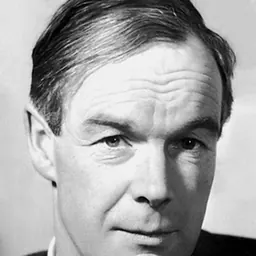
Contemporaries
People whose lives overlapped Alexander Allan Innis Wedderburn's

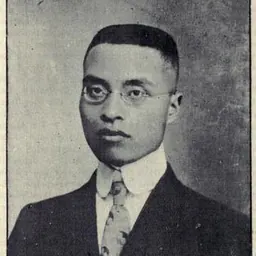


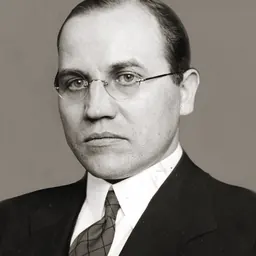

Frequently asked questions
Who was Alexander Allan Innis Wedderburn?
British psychologist (1935-2017)
When was Alexander Allan Innis Wedderburn born?
Alexander Allan Innis Wedderburn was born on 9 May 1935 in Edinburgh.
When did Alexander Allan Innis Wedderburn die?
Alexander Allan Innis Wedderburn died on 23 February 2017 in Edinburgh.
What was Alexander Allan Innis Wedderburn's occupation?
Alexander Allan Innis Wedderburn was a neuroscientist and psychologist.
What nationality was Alexander Allan Innis Wedderburn?
Alexander Allan Innis Wedderburn was British.
Sources & further reading
· Wikipedia: Alexander Allan Innis Wedderburn
Cite this page
APA: Biography.guide. (2026). Alexander Allan Innis Wedderburn. https://biography.guide/alexander-allan-innis-wedderburn/
MLA: "Alexander Allan Innis Wedderburn." Biography.guide, https://biography.guide/alexander-allan-innis-wedderburn/.
Chicago: "Alexander Allan Innis Wedderburn." Biography.guide. https://biography.guide/alexander-allan-innis-wedderburn/.
Data last updated: 2026-09-20 · Spot an error? Report a correction.
Page generated 2026-09-27 05:02 UTC