
About Alessandro Longhi
Lived 1733 – 1813 (aged 79–80). Alessandro Longhi was an Italian printmaker, painter, copper engraver and visual artist.
Alessandro Longhi (12 June 1733 – 8 November 1813) was a Venetian portrait painter and printmaker in etching (mostly reproductions of paintings). He is known best for his oil portraits of Venetian nobles of state. Like Sebastiano Bombelli in the prior century, Alessandro Longhi is noted for his zealous full-length depictions of robes and emblems of office. According to Olimpia Theodoli, his "tumultuous and unusual (etching) technique shows first-hand knowledge of Rembrandt's etchings".
Biography
Early life and education Alessandro Longhi was born in Venice on 12 June 1733. His father was the famed genre painter Pietro Longhi. He must have received his first artistic training from his father, although the only evidence of this is the similarity of their styles. He was apprenticed to Giuseppe Nogari, one of the best Venetian portrait painters of the first half of the eighteenth century, and his earliest works are bust-length, mostly life-size portraits in Nogari’s style.
Early work He first exhibited in 1757 and by 1758 must have been considered a reasonably established artist, for by the end of that year, he had painted two life-size group portraits of the Pisani family. One of thesethe Family of the Procurator Luigi Pisani (Venice, Bentivoglio d’Aragona priv. col.)survives. It includes a number of allegorical figures and, despite a certain facility in the handling of the sitters’ clothes, is reminiscent of a work by Pietro Longhi, only enlarged to life size.
Maturity In 1759, Alessandro was elected a member of the Accademia dei Pittori, for which he later painted imaginary portraits of the great artists of Renaissance Venice. His reputation was secured in 1760 when he exhibited a portrait of an innkeeper that was praised for its ‘nuova maniera’. Considering the exalted portraiture typical of Venice over the preceding century, the subject was novelthe innkeeper is depicted with hand raised, ready to carve a roastand Longhi was praised for his rendering of ‘reality’.
The scarcity of documented works by Alessandro has made attribution and chronology of his oeuvre difficult to establish. His style appears to have varied little; his formal state portraits woodenly depict gentlemen in full wigs and brocade costumes, with appropriately grand background trappings: imagery that accurately reflected the ossified ritualism of the dying Venetian republic. It is his portraits of less noble patrons that display his gifts. The Portrait of a Nun (1771; Milan, priv. col.) is sombre and straightforward; the portrait of Captain Pietro Buldinich (1781; Venice, I. Brass priv. col.) is a sensitively rendered likeness that suggests that Longhi may have been familiar with English portrait mezzotints. An undated Portrait of a Wine Butler (Venice, P. Mentasti priv. col.) is a good example of Alessandro’s skill. Its subject is shown coming through a doorway onto a balustraded porch; carrying a rough-hewn basket of wine flasks in his right hand, he gestures back inside with his left hand, while his severely rendered face confronts the viewer. There appears to be little flattery in the likeness but considerable sympathy for the man’s well-worn countenance. The difference between this and Longhi’s official portraits is almost shocking and enables the viewer to appreciate Longhi’s reputation for realism.
Alessandro made engravings of his own and his father’s works. In 1762, he published his Compendio delle vite de’ pittori veneziani istorici …, a group of biographies of contemporary Venetian artists, each illustrated with an engraved portrait by himself.
Works Luigi and Alvise III Pisani and family Portrait of Carlo Goldoni Portrait of a Composer, erroneously to be the Portrait of Domenico Cimarosa Portrait of a Lady Portrait of a Gentleman Portrait of a Gentleman Portrait of Bartholomeo Ferracino Ca' Rezzonico Venice Couple 1 of 2 Couple 2 of 2 Portrait of Giambattista Piazzetta Portrait of Giuseppe Chiribiri (Cherubini) Portrait of Giulio Contarini Portrait of Giacomo Casanova Portrait of Antonio Renier Portrait of a Magistrate Painting and Merit The Visitation of the Virgin in Sant'Antonio Taumaturgo, Trieste
Gallery
Don’t just read it —
keep it.
Full-length biographies made to live with: read them, listen on the way to work, watch them tonight.
- E-book
- Audio
- Video
Instant download · yours to keep · every purchase keeps this site free
Important facts
People in Alessandro Longhi's life
Named in this biography and alive at the same time

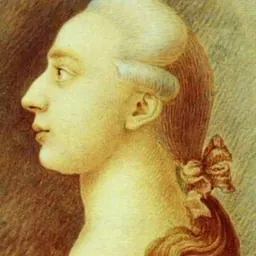
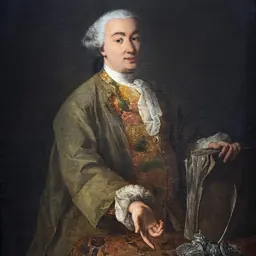


Related people
Same field, nearest in time



Contemporaries
People whose lives overlapped Alessandro Longhi's



Frequently asked questions
Who was Alessandro Longhi?
Italian painter and engraver (1733-1813)
When was Alessandro Longhi born?
Alessandro Longhi was born on 12 June 1733 in Venice.
When did Alessandro Longhi die?
Alessandro Longhi died in 1813 in Venice.
What was Alessandro Longhi's occupation?
Alessandro Longhi was a printmaker, painter, copper engraver and visual artist.
What nationality was Alessandro Longhi?
Alessandro Longhi was Italian.
Sources & further reading
· Wikipedia: Alessandro Longhi
Cite this page
APA: Biography.guide. (2026). Alessandro Longhi. https://biography.guide/alessandro-longhi-printmaker/
MLA: "Alessandro Longhi." Biography.guide, https://biography.guide/alessandro-longhi-printmaker/.
Chicago: "Alessandro Longhi." Biography.guide. https://biography.guide/alessandro-longhi-printmaker/.
Data last updated: 2026-09-20 · Spot an error? Report a correction.
Page generated 2026-09-27 05:25 UTC