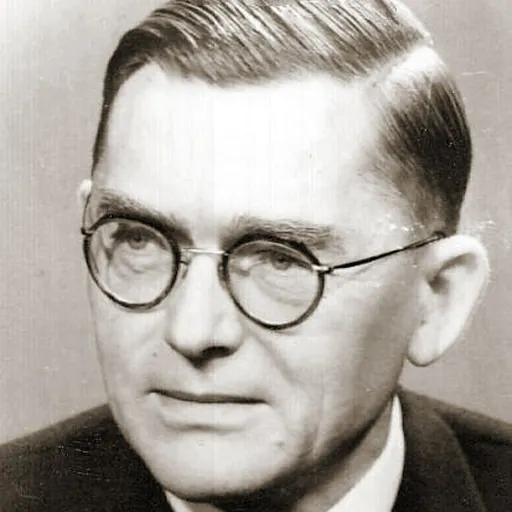
About Aleksander Zawadzki
Lived 1899 – 1964 (aged 64). Aleksander Zawadzki was a Polish politician, military personnel and coal miner.
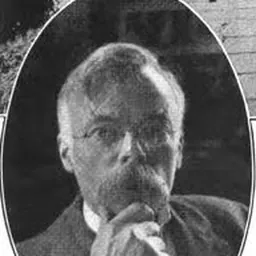
Aleksander Zawadzki, alias Kazik, Wacek, Bronek, One (; 16 December 1899 – 7 August 1964), was a Polish communist politician, divisional general of the Polish Army, and the Chairman of the Council of State of the Polish People's Republic from 1952 until his death in 1964.
Biography Son of Wawrzyniec, a steelworker and Marianna née Chojkowska. He was born in the Ksawera working group between Będzin and Dąbrowa Górnicza. Thanks to the relatively good material position of the family, he studied at the local elementary school. As a result of an accident suffered by his father in 1913, he was forced to stop his education and take up a job. After the outbreak of World War I, he left for agricultural work in Thuringia. He worked there until 1917, when he was arrested for hitting his overseer and sent to the prisoners of war camp in Erfurt. After escaping from there, he found himself in Upper Silesia, where he worked in a coal mine in Bytom and in the steelworks in Siemianowice Śląskie. After the outbreak of the revolution in November 1918 in Germany, he crossed the German-Polish border and settled in Dąbrowa Górnicza, where in December 1918 he volunteered for the Polish Army. He took part in the battles in defense of Lviv, and then in war activities on the Lithuanian-Belarusian Front of the Polish-Bolshevik war. In 1921, he was demobilized as a non-commissioned officer of the Polish Army, after which he returned to Dąbrowa Górnicza. For participating in the fighting in 1920, he was awarded the Cross of Valor.
After returning from the war, he was initially unemployed, and then he worked at the coal mine "Paris" in Dąbrowa Górnicza. There, he also encountered the communist movement and joined the Young Communist League of Poland. In 1923, he became a member of the Communist Party of Poland. During this period, he was wanted by state police for communist activities. He operated in the Łódź District until 1924, after which he was sent to a party school in Moscow, where he stayed for several weeks. On 9 July 1925, he was arrested in Vilnius on charges of involvement in the murder of a supposed police informant. In December 1925, despite the lack of evidence for his involvement, he was sentenced to six years in prison. He served his sentence in Kielce, Łomża and Drohobych. He left prison on 2 March 1932, and because of illness, was sent to the Soviet Union for treatment. There, he healed and taught at the party school of the WKP (b) and the OGPU near Moscow.
He returned to Poland in 1934. On 27 May 1934, he was arrested in Warsaw. He was detained in custody until February 1935, when he was released on bail. On 13 January 1936, he was arrested again. He was then accused of acting to the detriment of the Republic of Poland. The trial took place on 4–21 April 1938. Along with Zawadzki, who was the main accused, 55 other people were tried. Zawadzki was sentenced to 15 years' imprisonment. After upholding the judgment of 23 November 1938 by the Court of Appeals, he was imprisoned in Brest. He stayed there until September 1939, when, after the Soviet invasion of Poland, the city was occupied by the Red Army. He took up work in the Byelorussian Soviet Socialist Republic in the Pinsk district office.
During World War II, he was active in the foundation of the Union of Polish Patriots and the Polish Workers' Party, being elected to the Politburo of the latter. He was also a political organiser of the Polish Army in the Soviet Union and was promoted to the rank of brigadier general.
After the war, he became the government representative in Silesia, then the voivode of the Silesian-Dąbrowskie Voivodeship. From December 1948, he became a member of the Politburo of the Central Committee of the Polish United Workers' Party. From 1949 to 1952 he was deputy chairman of the Council of Ministers.
Zawadzki was elected to the Sejm in 1947, and on 20 November 1952, he was appointed chairman of the Council of State of the Polish People's Republic, to replace Bolesław Bierut.
Zawadzki died on 7 August 1964 of cancer at the age of 64 and was buried at the Powązki Military Cemetery in Warsaw.
Honours and awards National honours
Foreign honours
Don’t just read it —
keep it.
Full-length biographies made to live with: read them, listen on the way to work, watch them tonight.
- E-book
- Audio
- Video
Instant download · yours to keep · every purchase keeps this site free
Important facts
People in Aleksander Zawadzki's life
Named in this biography and alive at the same time
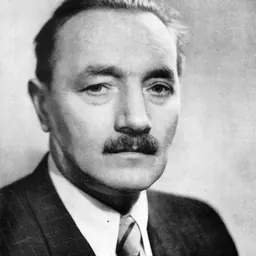
Related people
Same field, nearest in time
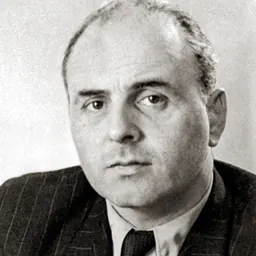
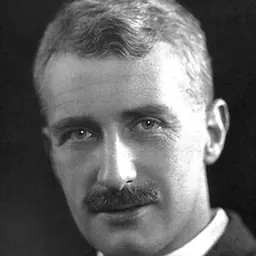
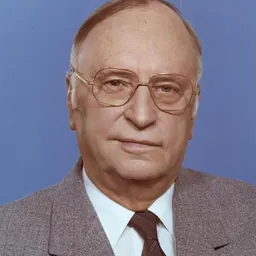
Contemporaries
People whose lives overlapped Aleksander Zawadzki's

Frequently asked questions
Who was Aleksander Zawadzki?
Polish politician (1899-1964)
When was Aleksander Zawadzki born?
Aleksander Zawadzki was born on 16 December 1899 in Dąbrowa Górnicza.
When did Aleksander Zawadzki die?
Aleksander Zawadzki died on 7 August 1964 in Warsaw.
What was Aleksander Zawadzki's occupation?
Aleksander Zawadzki was a politician, military personnel and coal miner.
What nationality was Aleksander Zawadzki?
Aleksander Zawadzki was Polish.
Sources & further reading
· Wikipedia: Aleksander Zawadzki
· DBpedia: Aleksander Zawadzki
Cite this page
APA: Biography.guide. (2026). Aleksander Zawadzki. https://biography.guide/aleksander-zawadzki-politician/
MLA: "Aleksander Zawadzki." Biography.guide, https://biography.guide/aleksander-zawadzki-politician/.
Chicago: "Aleksander Zawadzki." Biography.guide. https://biography.guide/aleksander-zawadzki-politician/.
Data last updated: 2026-10-01 · Spot an error? Report a correction.
Portrait: Wikimedia Commons · author & licence
Page generated 2026-10-04 14:38 UTC