
About Albin Kasper Longren
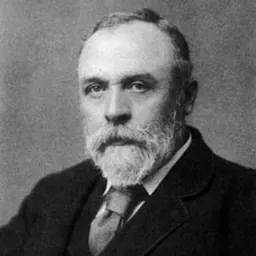
Lived 1882 – 1950 (aged 68). Albin Kasper Longren was an American aircraft pilot and aircraft designer.
Albin Kasper Longren (January 18, 1882 – November 19, 1950) was an American aviation pioneer from the state of Kansas. Beginning in 1911, Longren successfully flew airplanes of his own design and construction. Fully self-taught as an aircraft designer and pilot, he built a thriving career as a barnstormer with his own craft, becoming known throughout the Midwest as the "Birdman".
He established his own aeronautics manufacturing company, Longren Aircraft Corporation, which produced several models through the 1920s. The handcrafted Longren planes were well regarded by aviation professionals of the era. Longren created several innovations including the design for the first semi-monocoque airplane body. In addition to his own independent enterprises, he worked for many years with some of the best-known companies in the industry – Spartan, Luscombe, and Cessna – until his retirement in 1945.
Early life Albin K. Longren was born on January 18, 1882, in a rural cabin just outside Leonardville, Kansas. Known familiarly as "A.K.", he was one of the eight children of local farmers Charles and Emma Longren. As a young man he worked as a hardware dealer, but was also known as a handyman and an avid tinkerer who built his own automobiles and motorcycles out of spare parts.
He served in the Clay Center Kansas National Guard and in that capacity was called to assist in crowd safety at one of the popular flying demonstrations in Topeka in June 1910. Longren's interest in aircraft was ignited after he witnessed the featured airplane spin out shortly after takeoff and crash to the ground. The 28-year-old tinkerer immediately set upon building his own improved version of a flying machine.
The new biplane was long with a wingspan, and weighed . Three days later, in his first public demonstration, Longren piloted the plane through a brief but satisfying circular pattern at in the air, for a total distance of about . A beaming Longren told the local newspaper, "I'm glad now to let the people of Topeka know what I've built."
Longren AK Returning to Topeka, he set upon constructing what he billed as "The New Longren Airplane", also known as the Longren AK. A small biplane powered by a 60-hp Anzani three-cylinder radial engine, the AK was sturdy, fast, and nimble. Its most arresting feature, however, was the folding set of wings which, when turned inward on the fuselage, shrank the plane's width from to a mere . Longren hoped that buyers would keep the tidy craft in barns or car garages; it was thought that the AK could become "the Ford of the air". With its new products, the struggling company had achieved national stature by 1921, just a decade after Longren's first flight.
Fuselage design The AK was not the commercial breakthrough that Longren would have liked, but it featured a design innovation that would burnish his reputation greatly. Improving upon the day's standard airplane bodyform – essentially a wooden frame with a fabric skin – Longren designed the first semi-monocoque fuselage. The AK body was formed by joining two mirroring halves into a simple but aerodynamic shape. The two halves formed a hard shell, made of strong vulcanized fibrous material and reinforced on both sides with wood veneer. The advanced design of the AK was remarkable for its day, and presents what Air & Space/Smithsonian calls "the world's first semi-monocoque, truly composite shell fuselage". Longren went on to work as a prized consultant for several other aeronautics firms including Spartan and Luscombe. His most significant work concerned the process of "stretch-forming" metal into assembly-ready fuselage panels. Luscombe was the first of many manufacturers to benefit from this patent when it produced its Luscombe Phantom, the first mass-produced airplane with an all-aluminum, semi-monocoque fuselage.
Death and legacy After his 1945 retirement, Longren moved to a ranch in Adin, California, where he stayed until his death in 1950. His body was brought back to Kansas and buried near his birthplace in Leonardville. A single example of Longren's aircraft – the 1914 pusher biplane that he crashed in Abilene – remains on permanent exhibit at the Kansas Museum of History.
Longren remains a local Kansas hero: the state's Aviation Hall of Fame recognizes him for "outstanding aviation contributions". Kansas is home to Amelia Earhart and Clyde Cessna, and the city of Wichita is celebrated as the "Air Capital of the World", but Longren holds the distinction of being the state's first successful pilot and its first aircraft manufacturer.
Don’t just read it —
keep it.
Full-length biographies made to live with: read them, listen on the way to work, watch them tonight.
- E-book
- Audio
- Video
Instant download · yours to keep · every purchase keeps this site free
Important facts
People in Albin Kasper Longren's life
Named in this biography and alive at the same time

Related people
Same field, nearest in time



Contemporaries
People whose lives overlapped Albin Kasper Longren's



Frequently asked questions
Who was Albin Kasper Longren?
American pilot
When was Albin Kasper Longren born?
Albin Kasper Longren was born on 18 January 1882 in Leonardville.
When did Albin Kasper Longren die?
Albin Kasper Longren died on 19 November 1950.
What was Albin Kasper Longren's occupation?
Albin Kasper Longren was an aircraft pilot and aircraft designer.
What nationality was Albin Kasper Longren?
Albin Kasper Longren was American.
Sources & further reading
· Wikipedia: Albin Kasper Longren
Cite this page
APA: Biography.guide. (2026). Albin Kasper Longren. https://biography.guide/albin-kasper-longren/
MLA: "Albin Kasper Longren." Biography.guide, https://biography.guide/albin-kasper-longren/.
Chicago: "Albin Kasper Longren." Biography.guide. https://biography.guide/albin-kasper-longren/.
Data last updated: 2026-09-26 · Spot an error? Report a correction.
Page generated 2026-09-27 05:15 UTC