
About Alberto Spaini
Lived 1892 – 1975 (aged 82). Alberto Spaini was an Italian writer, journalist, film screenwriter, prose writer, literary critic and germanist.
Alberto Spaini (6 July 1892 - 25 January 1975) was an Italian journalist-commentator and author. He was also a scholar of German literature, producing through his career many translations into Italian of traditional and contemporary German classics.
Life Provenance and early years Alberto Spaini was born and, till shortly after his eighteenth birthday, grew up in Trieste, the multi-ethnic bi-lingual administrative and commercial capital of the so-called "Austrian Littoral". Federico Spaini, his father, was a bank worker. His mother, born Luigia Antoniani, was from Venice. Alberto attended the Ginnasio Dante Alighieri (secondary school) in Trieste. Over the next few years he became a regular contributor, using the pseudonym "Aspa".
After approximately a year he transferred to Rome where he attended the university courses in German literature conducted by Giuseppe Antonio Borgese. Student contemporaries who became friends included Bonaventura Tecchi. He also undertook a lengthy study trip to Avignon where he met the widely respected poet Frédéric Mistral. Together they made plans for Spaini to produce Italian language translations of some of Mistral's works. It was also during this period that he embarked on what would become a sixty-year correspondence with Prezzolini, whose career as a hands-on magazine proprietor was continuing to progress back in Florence.
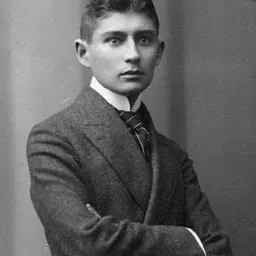
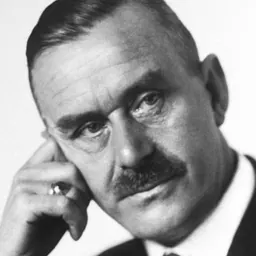
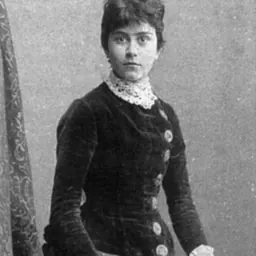
Berlin In September 1912 Spaini moved to Berlin, accompanied by Rosina Pisaneschi. They remained in the German capital till May 1913. Fascinated to the point of obsession by the cultural life of the city, and thanks in the first instance to an intervention by his friend Italo Tavolato, he was able to take part in the "cultural soirees" organised by the recently launched weekly expressionist review magazine Der Sturm. Fellow participants, identified by name in his letters back to Italy, included leading figures from Germany's younger generation of (mainly expressionist) writers, such as Else Lasker-Schüler, Thomas Mann, Franz Kafka (who met Felice Bauer in Berlin in September 1912), Franz Werfel, Hugo von Hofmannsthal and Rainer Maria Rilke. In Berlin, Spaini was taught by Norbert von Hellingrath who was already working on the first critical edition of the complete collected works of Hölderlin. In a letter to Prezzolini he described Berlin as a "catasrophic" and "impenetrable" city. His eight-month visit nevertheless proved decisive in terms both of his student studies and of his subsequent literary career. He was still living in Berlin when he was offered the position. The appointment marked the beginning of an intensive journalistic career, between 1913 and 1974, during the course of which Spaini would contribute approximately one thousand articles. Throughout that time, many of his pieces related to German culture and, in particular, German literature. The daily papers to which he contributed most could all be considered mass-circulation publications in at least in their home regions, and three of the five were distributed nationally. These were "Il Messaggero", "Il Piccolo" (published in Trieste), "Il Secolo XIX", "La Stampa" and "Giornale di Sicilia".
Professional translator 1913 was also the year in which Spaini launched himself on a parallel career as a professional translator from German into Italian. The selected work was Goethe's very substantial second novel, known in English as "Wilhelm Meister's Apprenticeship". Two translators are credited jointly: Alberto Spaini and his future wife Rosina Pisaneschi. For the Italian language version Goethe's eight volumes were adapted into two volumes, each comprising more than 1,000 pages. The appearance of the first Italian language volume was quickly followed by a lengthy article from Spaini himself, appearing in La Voce, entitled "La modernità di Goethe" (loosely, "Goethe's modernity"). The translation marked not just a turning point in the translator's career, but also in the history of German literature in Italy. Its appearance provided the occasion for a major controversy on the translation into Italian of foreign language novels. Spaini lined up with the brilliant young scholar of Germanistics from Milan, Lavinia Mazzucchetti, whose own reputation among scholars had recently been greatly elevated by publication of her book "Schiller in Italia". The target of their indignation was an aging librarian and authority of Slavic culture called Domenico Ciampoli who had recently republished an old translation of the same Goethe novel. The version promoted by Ciampoli came not from Goethe's text, but from an "intermediate" French translation of it, "filled with cuts and manipulations". For Spaini and Mazzucchetti, Ciampoli had compounded his error by attributing the old translation, incorrectly, to Giovanni Berchet. During the nineteenth century, with French widely regarded as the only universal language across much of Europe and beyond, it had not been uncommon for Italian publishers to sell foreign language books translated into Italian via an intermediate French language version rather from the original language text, but by the end of the nineteenth century, following major advances in relevant communications technologies, the practice was increasingly frowned upon. In the aftermath of the literary attacks on Ciampoli's application of it to an important work by Goethe himself, the use of an intermediate language for translations into Italian - at least when the original text had been printed in German - was no longer considered acceptable.
During the first couple of decades of their marriage in particular, many of Spaini's translations were produced jointly with his wife. Some were of the eighteenth and nineteenth century German classics, including several more works of Goethe, such as the novel known in English as "The Sorrows of Young Werther", the reminiscences "Italian Journey" and the "Letters to the Lady von Stein". He produced Italian translations of Hoffmann's "Princess Brambilla" and of Tieck's "Knight Bluebeard". The fantastical fairy-tale spirit of these last two clearly found its way into three of the novels that Spaini authored on his own account during the later 1920s and early 1930s: "Bertoldo's Travels", "The Bishop's Wife" and "Malintesi". Another twentieth century icon of German language literature whose works Spaini translated into Italian was Franz Kafka. His Italian edition of "The Trial" was published in 1933 and that of "America" in 1945. Of particular interest to those with an interest in the translator's craft were the prefaces that Spaini included in his published translations. These often included the translator's musings on theoretical and practical challenges encountered in producing the Italian language texts. The preface to the Italian version of Döblin's "Berlin Alexanderplatz" deals in some detail with the challenges of translating Berlin dialect into Italian. Over the years Spaini produced a number of essays dealing with translation, such as one entitled "Traduzioni e traduttori" ("Translations and translators"). In 1918 Giuliana was born, the first child of Alberto Spaini's marriage to Rosina.
Correspondent Despite his increasing predilection for translation, through the 1920s Spaini pursued his journalism career with energy, frequently credited in his contributions as a "foreign correspondent". During the first part of the decade he was based for a time in Katowice, reporting on the Upper Silesia plebiscite and the contentious partition of the ethnically divided region that ensued. In 1925 - the year in which his son was born - he was reporting from Paris There were also frequent assignments involving visits to Germany and Austria. Between 1944 and 1946 the Milanese publishing house republished the stage play translations he had produced for Bragaglia during the 1920s and 30s; and in 1945 Einaudi Editore in Turin published the translation of Kafka's "Amerika" which Spaini had completed shortly before the outbreak of the war.
Loss: final years Spaini's first wife, Rosina, died in 1960. His second marriage was to the writer Laura Farina Moschini, but she then died in 1963. Spaini remained in Rome, during his later years living with his widowed daughter Giuliana and his grandchildren Paolo and Albertina. He continued to write for a number of daily newspapers, and in 1964 released "La moglie di Noè" ("Noah's wife"), a collection of animal stories. Alberto Spaini died at Rome on 3 January 1975 aged 82.
Don’t just read it —
keep it.
Full-length biographies made to live with: read them, listen on the way to work, watch them tonight.
- E-book
- Audio
- Video
Instant download · yours to keep · every purchase keeps this site free
Important facts
People in Alberto Spaini's life
Named in this biography and alive at the same time


Related people
Same field, nearest in time


Contemporaries
People whose lives overlapped Alberto Spaini's

Frequently asked questions
Who was Alberto Spaini?
Italian writer and journalist (1892-1975)
When was Alberto Spaini born?
Alberto Spaini was born on 5 July 1892 in Trieste.
When did Alberto Spaini die?
Alberto Spaini died on 24 January 1975 in Rome.
What was Alberto Spaini's occupation?
Alberto Spaini was a writer, journalist, film screenwriter, prose writer, literary critic and germanist.
What nationality was Alberto Spaini?
Alberto Spaini was Italian.
Sources & further reading
Cite this page
APA: Biography.guide. (2026). Alberto Spaini. https://biography.guide/alberto-spaini/
MLA: "Alberto Spaini." Biography.guide, https://biography.guide/alberto-spaini/.
Chicago: "Alberto Spaini." Biography.guide. https://biography.guide/alberto-spaini/.
Data last updated: 2026-09-20 · Spot an error? Report a correction.
Page generated 2026-09-27 05:15 UTC