
About Alberto Randegger
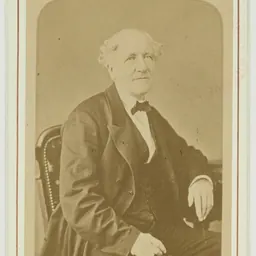
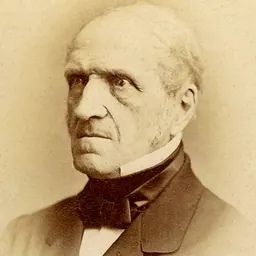
Lived 1832 – 1911 (aged 79). Alberto Randegger was an Italian conductor, composer, music educator and teacher.
Alberto Randegger (13 April 1832 – 18 December 1911) was an Austro-Hungarian composer, conductor and singing teacher, best known for promoting opera and new works of British music in England during the Victorian era and for his widely used textbook on singing technique. His compositions included ballets, masses and other church music, operas and numerous other vocal pieces. He also edited several collections of vocal music.
He began his composing and conducting career in Trieste, where he met Giuseppe Verdi, but in 1854 he moved to London, which became his base for the rest of his life. From 1857 he conducted Italian opera at the St. James's Theatre and was professor of singing at the Royal College of Music and the Royal Academy of Music, retaining both posts for the rest of his life. From 1859 to 1870 he was organist at St Paul's Church, Regent's Park.
Randegger served as musical director of the Carl Rosa Opera Company from 1879 to 1885, gaining a reputation for high quality productions, and helping to revive interest in opera in England. He also became conductor of the Norwich Musical Festival, which he directed until 1905. From 1885 to 1887, he conducted Henry Leslie's Choir. In the 1890s, he conducted at Queen's Hall, the Theatre Royal, Drury Lane and the Royal Opera House, where he became known for his performances of Wagner, Verdi and Mozart operas. His most enduring legacy was a textbook titled Singing, published in 1879.
Life and career
Early years Randegger was born in Trieste, Austro-Hungarian Empire, the son of a musician mother and schoolteacher father. He studied the piano with Jean Lafont and composition with Luigi Ricci.
In 1854 Randegger was engaged to conduct a season of Italian opera in New York and was on his way there when news arrived of a cholera outbreak in the city. Instead, he spent a month in Paris, and on the recommendation of his elder brother he moved on to London, which became his base for the rest of his life. Alice Barth, Liza Lehmann, Greta Williams and Ellen Beach Yaw; mezzo-soprano Mary Davies; tenors Arthur Byron, William Hayman Cummings, William Lavin and Ben Davies; baritones David Bispham, Andrew Black, Charles W. Clark, David Ffrangcon-Davies and Frederick Ranalow; and basses Darrell Fancourt, Putnam Griswold and Robert Radford.
As a composer, in addition to his early works, Randegger wrote a comic opera, The Rival Beauties (1864); a dramatic cantata, the 150th Psalm, for soprano solo, choir, orchestra and organ (1872); Fridolin (1873), with a libretto by Hermine Küchenmeister-Rudersdorf; two scenas for soprano and orchestra, Medea (1869) and Sappho (1875); a funeral anthem, An Angel Came Out of the Temple, in memory of the Prince Consort; The Prayer of Nature (1887); and numerous other vocal pieces. The Oxford Dictionary of National Biography observes that Randegger's compositions were distinguished by practical qualities, were always tasteful and externally effective, but had no deep originality, and soon fell into disuse. On the resignation of Julius Benedict in 1881, Randegger became conductor of the Norwich Musical Festival, which he directed until 1905. There he conducted new works by John Barnett, Frederic Cowen, Edward German, Alexander Mackenzie, Hubert Parry, Ebenezer Prout, Charles Villiers Stanford and others. At the 1905 Festival he invited 14 British composers to conduct performances of their own works. In his Mozart performances he removed the spurious orchestral parts added by his Covent Garden predecessors; a small collection of the composer's manuscripts was among his most treasured possessions. In 1882, Randegger was elected an honorary member of the Royal Philharmonic Society.
Randegger died at his home in Marylebone, London, at the age of 79, after a short illness. He was cremated at Golders Green crematorium.
Don’t just read it —
keep it.
Full-length biographies made to live with: read them, listen on the way to work, watch them tonight.
- E-book
- Audio
- Video
Instant download · yours to keep · every purchase keeps this site free
Important facts
People in Alberto Randegger's life
Named in this biography and alive at the same time
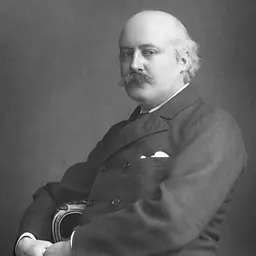



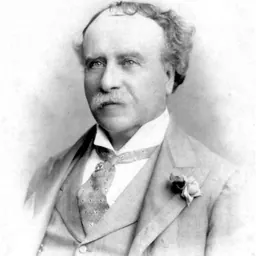

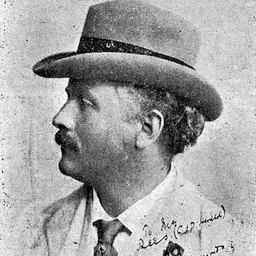

Related people
Same field, nearest in time
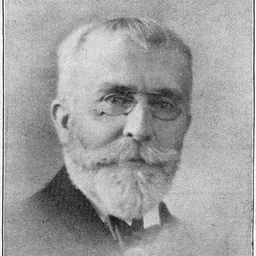

Contemporaries
People whose lives overlapped Alberto Randegger's





Frequently asked questions
Who was Alberto Randegger?
composer (1832–1911)
When was Alberto Randegger born?
Alberto Randegger was born on 13 April 1832 in Trieste.
When did Alberto Randegger die?
Alberto Randegger died on 18 December 1911 in London.
What was Alberto Randegger's occupation?
Alberto Randegger was a conductor, composer, music educator and teacher.
What nationality was Alberto Randegger?
Alberto Randegger was Italian.
Sources & further reading
· Wikipedia: Alberto Randegger
Cite this page
APA: Biography.guide. (2026). Alberto Randegger. https://biography.guide/alberto-randegger/
MLA: "Alberto Randegger." Biography.guide, https://biography.guide/alberto-randegger/.
Chicago: "Alberto Randegger." Biography.guide. https://biography.guide/alberto-randegger/.
Data last updated: 2026-09-20 · Spot an error? Report a correction.
Page generated 2026-09-27 05:31 UTC