
About Darrell Fancourt
Lived 1886 – 1953 (aged 67). Darrell Fancourt was a British opera singer.
Darrell Louis Fancourt Leverson (8 March 1886 – 29 August 1953), known as Darrell Fancourt, was an English bass-baritone and actor, known for his performances and recordings of the Savoy operas.
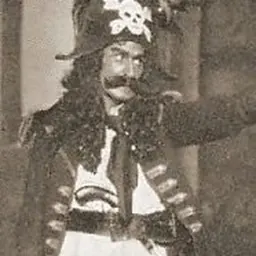
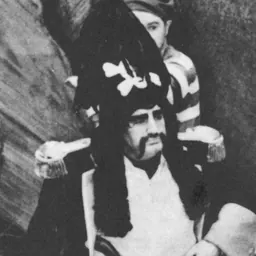
After a brief concert career, Fancourt joined the D'Oyly Carte Opera Company, where he starred in more than 10,000 performances over a 33-year period until his death. He regularly played about ten different roles for the company over these years, including the Pirate King in The Pirates of Penzance, Dick Deadeye in H.M.S. Pinafore, and the title character in The Mikado, which he played more than 3,000 times. Fancourt was famous for his melodramatic style, creating the controversial Mikado laugh that was later adopted by some of his successors. His performances are preserved in nineteen of the company's recordings made between 1923 and 1950.
Early years
Fancourt was born Darrell Louis Fancourt Leverson, the younger son of three children of a Jewish family in Kensington, London. His father, Louis George Leverson (1860–1909), was a diamond merchant who had made a fortune in South Africa. His mother, Amelia (Amy) de Symons, née Lewis-Barned (1865–1931), was "a clever vivacious young artist of the musical comedy type". Fancourt was baptised into the Church of England when he was fourteen years old.
Fancourt was educated at Bedford School and with a private tutor in Germany. He continued his vocal studies in Germany with Lilli Lehmann. Upon his return to England, he won a scholarship to the Royal Academy of Music. and drama with Richard Temple, creator of many of the Savoy roles in which Fancourt was later famous. While a student, Fancourt performed in opera productions at the Academy, creating the role of Tackleton, the toy merchant, in Alexander Mackenzie's opera The Cricket on the Hearth, and playing Colas in Mozart's Bastien und Bastienne, and Benoit in La bohème. The Times thought him "amusing but not noticeably musical" in the last.
Even before completing his studies, Fancourt was building a concert career in London, the British provinces and the European continent. The Times said of an Aeolian Hall recital in 1912, "Mr. Fancourt has some noble notes in his voice, except when he forces it occasionally ... Schubert's Tod und das Mädchen was remarkably well characterized; it was quite his best and he made it into a thing of great beauty." In World War I, Fancourt volunteered for military service and was commissioned in the London Regiment as a lieutenant. In 1917, while still serving in the army, Fancourt married a beautiful Welsh singer, Eleanor Evans, at St Mark's Church, Hamilton Terrace, London. She had been a fellow student at the Royal Academy. After returning to civilian life in 1919, Fancourt sang in a single performance of Prince Igor in Sir Thomas Beecham's opera season at Covent Garden as Prince Galitsky under the baton of Albert Coates. This was his only professional appearance in a grand opera, and his only paid acting experience up to that point.
Fancourt joined the D'Oyly Carte Opera Company in May 1920 to succeed Frederick Hobbs, who had announced his decision to leave the company. Fancourt went on for Hobbs as Mountararat in Iolanthe, Arac in Princess Ida and the title character in The Mikado. In June 1920, Hobbs left, and Fancourt took over the bass-baritone roles, including the above parts, Dick Deadeye in H.M.S. Pinafore, the Pirate King in The Pirates of Penzance, Colonel Calverley in Patience, Sir Roderic Murgatroyd in Ruddigore and Sergeant Meryll in The Yeomen of the Guard. In 1921, when Cox and Box and The Sorcerer were revived, Fancourt added the roles of Sergeant Bouncer and Sir Marmaduke Pointdextre to his repertoire. He also appeared as the Usher in Trial by Jury in 1926, but he thought himself "simply bloody" in the role and soon dropped it. In 1921, his wife, Eleanor Evans, joined the company as a chorister, also playing some smaller principal soprano roles. She was nicknamed "Snookie" in the company; and, according to fellow D'Oyly Carte performer Derek Oldham, "she was so beautiful, was Snookie! We all fell for her, and we gave Darrell a busy time keeping us 'off'." Later in Fancourt's career, his wife was made the company's stage director and director of productions.
Later years
Fancourt continued to play most of the principal bass-baritone roles for D'Oyly Carte until 1953. The company performed almost year-round in repertory during these 33 years, and Fancourt appeared in well over 10,000 performances; he played the title role in The Mikado more than 3,000 times. Over the years, he performed with the company on seven tours in North America. Known for his excellent diction and vocal technique, Fancourt was an audience favourite during his long tenure. J. C. Trewin called Fancourt "the lord of Gilbert-and-Sullivan playing. ... Fancourt is both a fine singer and, within the Savoy convention, a fine and zestful actor with the gift of a dominating personality. Roderic's song 'When the night wind howls', as Fancourt sings it in the second act of Ruddigore, is at the meridian of that opera and one of the glories of Gilbert-and-Sullivan in the contemporary theatre." The Times later said, "nobody who heard it will ever forget his singing of 'When the night wind howls'." The Times thought that he "undoubtedly loses a good deal of the Mikado's humour... his 'humane Mikado' scene is the one which seems to have travelled farthest from the 'Savoy tradition'." A later Times review commented more favourably: "Mr Darrell Fancourt... can (and did) add a terrifying aspect to the benignity of his humaner punishment manifesto, and left us wondering how his vocal cords ever managed to function normally after those expressions of emphasis with which he punctuated its paragraphs." The Manchester Guardian praised Fancourt's fresh approach and added, "He makes more of the punishment-fitting-the-crime song than we can remember having seen from any other actor." The Pall Mall Gazette said, "Mr Fancourt has recognised that people can do with a 'thrill' in these Grand Guignol days. So he has given us a Mikado who really does curdle the blood, with a voice like a steam hammer slowly crushing a ton of Brazil nuts, and a make up of ghastly villainy, and a fiendish, gurgling laugh, which must be heard to be appreciated." Another critic described the sound of Fancourt's laugh as "a dragon getting up steam". By the late 1940s, his health began to fail, and in 1950 he gave up the role of Mountararat. In his last year, he continued to perform although he was very ill. The Illustrated London News commented, "He will be the greatest loss to professional Gilbert-and-Sullivan since Henry Lytton retired … Besides his voice and presence, he has the priceless gift of attack. To watch him attacking The Mikado is to watch high tide flooding across the beach: it is an irresistible surge and swell." Fancourt was too ill to make his scheduled final appearance, and as a last gesture he asked a friend to take his make-up to his successor, Donald Adams.
Fancourt died in August 1953 at the age of 67, 33 days after giving his last performance.
Recordings Fancourt participated in nineteen D'Oyly Carte recordings between 1923 and 1950 in the following roles: Mountararat (1922, shared with Peter Dawson, and 1930), Dick Deadeye (1922, shared with Frederick Hobbs, 1930 and 1949), Sir Roderic (1924, 1931 and 1950), Arac (1925 and 1932), Colonel Calverley (1930 and 1952), Sir Marmaduke in an abridged Sorcerer (1933), the Mikado (1926, 1936 and 1950), the Pirate King (1931 abridged set and 1950), and Sergeant Meryll (1950). He also sang the title role in a 1926 BBC radio broadcast of The Mikado and appeared in a four-minute silent promotional film made of the D'Oyly Carte Mikado in 1926.
Don’t just read it —
keep it.
Full-length biographies made to live with: read them, listen on the way to work, watch them tonight.
- E-book
- Audio
- Video
Instant download · yours to keep · every purchase keeps this site free
Important facts
People in Darrell Fancourt's life
Named in this biography and alive at the same time




Related people
Same field, nearest in time
Contemporaries
People whose lives overlapped Darrell Fancourt's


Frequently asked questions
Who was Darrell Fancourt?
British opera singer and actor
When was Darrell Fancourt born?
Darrell Fancourt was born on 8 March 1886 in London.
When did Darrell Fancourt die?
Darrell Fancourt died on 29 August 1953.
What was Darrell Fancourt's occupation?
Darrell Fancourt was an opera singer.
What nationality was Darrell Fancourt?
Darrell Fancourt was British.
Sources & further reading
Cite this page
APA: Biography.guide. (2026). Darrell Fancourt. https://biography.guide/darrell-fancourt/
MLA: "Darrell Fancourt." Biography.guide, https://biography.guide/darrell-fancourt/.
Chicago: "Darrell Fancourt." Biography.guide. https://biography.guide/darrell-fancourt/.
Data last updated: 2026-09-20 · Spot an error? Report a correction.
Page generated 2026-09-27 05:31 UTC