
Albert Wigand
German physicist and meteorologist
About Albert Wigand
Lived 1882 – 1932 (aged 50). Albert Wigand was a German physicist, meteorologist and university teacher.
Ernst Heinrich Paul Albert Wigand (21 October 1882 – 18 December 1932), known as Albert Wigand, was a German professor who lectured in the fields of physics, geodesy, meteorology and climatology. His is most well known as one of the earliest physicists to successfully devise a method of studying fog and cloud matter in midair. In his later years, he became a fierce supporter of the xenophobic and nationalist thinking that would underpin Nazi ideology, and that association has clouded his legacy.
Biography Early life Albert Wigand was born in Kassel, then part of the Prussian Province of Hesse-Nassau, to Dr. Paul Wigand, a Catholic Apostolic clergyman, and his wife Luise (née Thiersch; 12 September 1856 – 23 April 1919). He was a descendant of two old families of theologians and natural philosophers; his paternal grandfather (and namesake) was the botanist, pharmacologist and staunch creationist Albert Wigand, and his maternal grandfather was the philologist and theologian H. W. J. Thiersch. Through his father he was descended from the evangelical theologian Johann Jakob Pfeiffer and the jurist Friedrich Kulenkamp, and was a relative of Burkhard Wilhelm Pfeiffer, Louis Pfeiffer, Carl Jonas Pfeiffer, Franz Pfeiffer and Adolf von Deines. His mother's relatives included her aforementioned father, her grandfather Friedrich Thiersch, her brother Friedrich von Thiersch, her uncles Karl and Ludwig Thiersch, and her nephew Paul Thiersch.
After completing his studies at Frankfurt-am-Main's humanistic Lessing Gymnasium, Wigand studied natural sciences, mathematics, and philosophy from 1901 to 1906 at Marburg University and the Ludwig-Maximilians-Universität München. In 1906, he received the degree of Dr. phil. from Marburg University, where he completed his thesis (On the temperature dependence of the specific heat of solid elements and on the specific heat and specific gravity of their allotropic modifications) under his advisor, Dr. Franz Richarz. In the same year, he also passed the state propaedeutical examination for university-level instructors of physics, mathematics, chemistry, mineralogy and philosophy. Wigand worked as an assistant to his advisor Richarz until 1907, at which point he was engaged as an assistant to Wilhelm Hallwachs in the physics department at Technische Hochschule Dresden. In 1910, Wigand continued his career as an assistant in physics, this time at the Physical Institute of the University of Halle in Dorn, and in 1911 became qualified as a in physics and physical chemistry.
During the First World War, Wigand was wounded in combat, and was awarded the Iron Cross, 2nd class. It was also during this period that Wigand met and married Else von Hippel (21 August 1895 – 18 December 1932), daughter of the German ophthalmologist, Eugen von Hippel. Einstein was instrumental in approving an institutional grant to support Wigand's research into aeronautics. This acquaintance led to a years-long correspondence between the two on matters of physics and their shared interest in the development of the science. In 1925, Wigand accepted a position as professor of physics and meteorology at the Landwirtschaftliche Hochschule Hohenheim-Stuttgart (now the University of Hohenheim), while also teaching courses in meteorology at the Technische Hochschule Stuttgart.
Wigand's particular scientific focus was on clouds, especially Cloud condensation nuclei, their origin, and the effect they had on both clouds and objects passing through them. He was also particularly interested in the role of CCNs as cloud seeds, especially as it pertained to their possible importance in the then-theoretical science of Weather modification. Indeed, as part of his study of cloud matter, Wigand was one of the first scientists to successfully collect and study cloud particles in midair. He was quoted as having described German politics as an "Augean stable" that needed cleansing from the "stain" of "foreign influence," and even took it upon himself to introduce classes in military science to the curriculum, promising to "lead his students into a riot with banners flying". After his death in 1932, the student body presented the university with a bronze bust of Wigand at the 1933 Labor Day celebrations. For many years after, the bust was the site of gatherings of Nazi and Nazi-sympathizing students, which ultimately led to the toppling of the bust by student activists in 2007.
Published works
Wigand, Albert. "Die vertikale Verteilung der Kondensationskerne in der freien Atmosphäre." Annalen der Physik 364, no. 16 (1919): 689–741. Wigand, A. (1919). a Method of Measuring Visibility. Monthly Weather Review, 47(11), 808-808. Wigand, A. (1921). Die elektrische Leitfähigkeit in der freien Atmosphäre, nach Messungen bei Hochfahrten im Freiballon. Annalen der Physik, 371(18), 81–109. Everling, E., & Wigand, A. (1921). Spannungsgefälle und vertikaler Leitungsstrom in der freien Atmosphäre, nach Messungen bei Hochfahrten im Freiballon. Annalen der Physik, 371(20), 261–282.
Halle, A. S., & Wigand, A. (1925). Summary of atmospheric-electric investigations during airplane flights. Terrestrial Magnetism and Atmospheric Electricity, 30(1), 33–34. Wigand, A., & Kircher, K. (1927). Schnellwirkende luftelektrische Kollektoren. Gerlands Beitr. Geophys., 17, 379–379. Wigand, A., & Wenk, F. (1928). Der Gehalt der Luft an Radium-Emanation, nach Messungen bei Flugzeugaufstiegen. Annalen der Physik, 391(13), 657–686. Die Atmosphäre als Kolloid (with August Schmauß), 1929. Wigand, A., & Frankenberger, E. (1930). Stability and Coagulation of Mists and Clouds. Physik. Z, 31, 204–15.
Don’t just read it —
keep it.
Full-length biographies made to live with: read them, listen on the way to work, watch them tonight.
- E-book
- Audio
- Video
Instant download · yours to keep · every purchase keeps this site free
Important facts
People in Albert Wigand's life
Named in this biography and alive at the same time
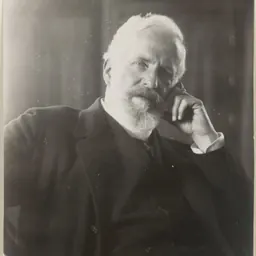

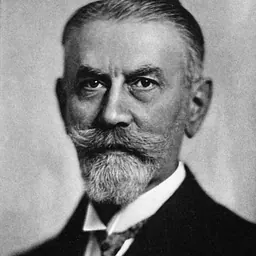

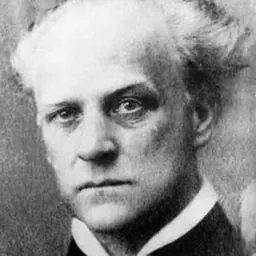
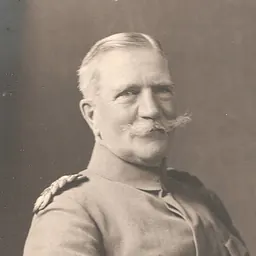

Related people
Same field, nearest in time



Contemporaries
People whose lives overlapped Albert Wigand's





Frequently asked questions
Who was Albert Wigand?
German physicist and meteorologist (1882-1932)
When was Albert Wigand born?
Albert Wigand was born on 21 October 1882 in Kassel.
When did Albert Wigand die?
Albert Wigand died on 18 December 1932 in Hamburg.
What was Albert Wigand's occupation?
Albert Wigand was a physicist, meteorologist and university teacher.
What nationality was Albert Wigand?
Albert Wigand was German.
Sources & further reading
· DBpedia: Albert Wigand (meteorologist)
Cite this page
APA: Biography.guide. (2026). Albert Wigand. https://biography.guide/albert-wigand/
MLA: "Albert Wigand." Biography.guide, https://biography.guide/albert-wigand/.
Chicago: "Albert Wigand." Biography.guide. https://biography.guide/albert-wigand/.
Data last updated: 2026-09-20 · Spot an error? Report a correction.
Page generated 2026-09-27 05:27 UTC