
About Albert Pinkham Ryder
Lived 1847 – 1917 (aged 70). Albert Pinkham Ryder was an American painter.
Albert Pinkham Ryder (March 19, 1847 – March 28, 1917) was an American painter best known for his poetic and moody allegorical works and seascapes, as well as his eccentric personality. While his art shared an emphasis on subtle variations of color with tonalist works of the time, it was unique for accentuating form in a way that some art historians regard as a precursor to modernism.
Early life Ryder was born in New Bedford, Massachusetts. New Bedford, a bustling whaling port during the 19th century, had an intimate connection with the sea that probably supplied artistic inspiration for Ryder later in life. He was the youngest of four sons; little else is known of his childhood. He began to paint landscapes while in New Bedford. Ryder applied to the National Academy of Design but his application got rejected.
Training and early career The early view of Ryder was that he was a recluse, holding that he developed his style in isolation and without influence from contemporary American or European art, but this view has been contradicted by later scholarship that has revealed his many associations and exposures to other artists.
Work and legacy
Ryder completed fewer than two hundred paintings, nearly all of which were created before 1900. Artists whose work was influenced by Ryder include Marsden Hartley, who befriended him, and Jackson Pollock.
Ryder used his materials liberally and with little regard for sound technical procedures. His paintings, which he often worked on for ten years or more, were built up of layers of paint, resin, and varnish applied on top of each other. He would use a wet-on-wet technique, and would often paint into wet varnish, or apply a layer of fast-drying paint over a layer of slow-drying paint. He incorporated unconventional materials, such as candle wax, bitumen, and non-drying oils, into his paintings. By these means, Ryder achieved a luminosity that his contemporaries admired—his works seemed to "glow with an inner radiance, like some minerals"—but the result was short-lived. Because of his own restorations, and because some Ryder paintings were completed or reworked by others after his death, many Ryder paintings appear very different today than they did when first created.
Forgeries In their book, Albert Pinkham Ryder: Painter of Dreams, William Innes Homer and Lloyd Goodrich wrote, "There are more fake Ryders than there are forgeries of any other American artist except his contemporary Ralph Blakelock." The authors, experts on Ryder, estimate the number of forged works at over one thousand. They also claimed (as of 1989) that some remained in private and museum collections, in addition to being offered through art dealers and auction houses. Part of the reason why so many fake Ryders exist is that his style is easily copied. Forgers can go to great lengths to fabricate the age of a painting, including painting it on antique canvas and baking it to add cracks. Forgeries can be discovered through visual and chemical examination, and through a provable provenance—a collection of written documentation detailing a painting's ownership history.
For instance, Ryder's piece, Elegy, while on loan to the Whitney Museum, was examined by Lloyd Goodrich, then a curator at the Whitney. A layer of consistent brushstrokes was revealed through an x-ray examination, which was uncharacteristic of Ryder's often generously layered pieces. It was concluded that Elegy was likely painted to be an imitation of The Lone Horseman, a genuine Ryder piece.
Selected works
Don’t just read it —
keep it.
Full-length biographies made to live with: read them, listen on the way to work, watch them tonight.
- E-book
- Audio
- Video
Instant download · yours to keep · every purchase keeps this site free
Important facts
People in Albert Pinkham Ryder's life
Named in this biography and alive at the same time

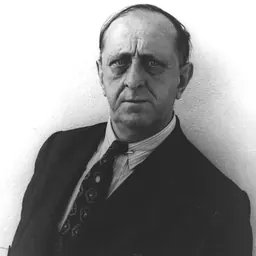
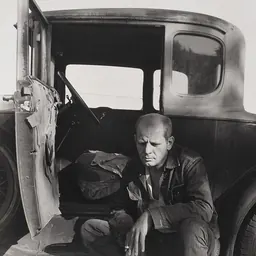
Related people
Same field, nearest in time
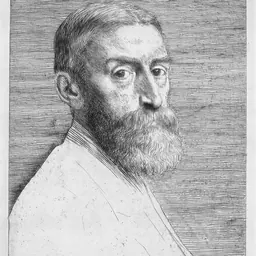
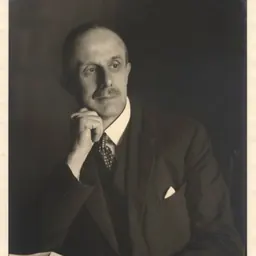

Contemporaries
People whose lives overlapped Albert Pinkham Ryder's




Frequently asked questions
Who was Albert Pinkham Ryder?
American painter (1847–1917)
When was Albert Pinkham Ryder born?
Albert Pinkham Ryder was born on 19 March 1847 in New Bedford.
When did Albert Pinkham Ryder die?
Albert Pinkham Ryder died on 28 March 1917 in New York City.
What was Albert Pinkham Ryder's occupation?
Albert Pinkham Ryder was a painter.
What nationality was Albert Pinkham Ryder?
Albert Pinkham Ryder was American.
Sources & further reading
· Wikipedia: Albert Pinkham Ryder
· DBpedia: Albert Pinkham Ryder
Cite this page
APA: Biography.guide. (2026). Albert Pinkham Ryder. https://biography.guide/albert-pinkham-ryder/
MLA: "Albert Pinkham Ryder." Biography.guide, https://biography.guide/albert-pinkham-ryder/.
Chicago: "Albert Pinkham Ryder." Biography.guide. https://biography.guide/albert-pinkham-ryder/.
Data last updated: 2026-09-20 · Spot an error? Report a correction.
Page generated 2026-09-27 05:29 UTC